
The Illusionist (film)
A concise encyclopedia-style article on The Illusionist, a period drama directed by Neil Burger about a magician in turn-of-the-century Vienna, its themes, cast, production, and critical context.
Overview
The Illusionist is a period drama written and directed by Neil Burger that follows a mysterious stage performer in fin-de-siècle Vienna. The film stars Edward Norton, Jessica Biel, and Paul Giamatti in principal roles. It is an adaptation of a short story and received multiple award nominations, including an Academy Award nomination, for its craft and cinematography.
Image gallery
1 Image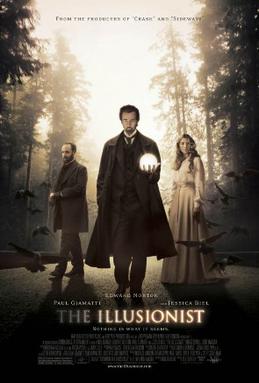
Plot summary
The central figure, Eisenheim, is a gifted magician who rises from humble origins to become one of Europe’s most celebrated illusionists. When he reunites with his childhood love, now a married noblewoman, the rekindled relationship triggers jealousy and political maneuvering by the ruling classes. A skeptical police inspector investigates Eisenheim’s feats as rumors grow that his performances may cross the boundary between trickery and the supernatural.
Cast and production
The film features a compact ensemble cast:
- Edward Norton as Eisenheim
- Jessica Biel as the Duchess Sophie
- Paul Giamatti as Chief Inspector Uhl
Production emphasized period detail—costume, set design, and a muted color palette—to evoke the social textures of late 19th–early 20th-century Europe. The screenplay draws inspiration from a literary source and was staged to balance theatrical spectacle with intimate drama.
Themes and style
The Illusionist explores recurring themes such as love across social boundaries, the tension between rational authority and wonder, and the power of performance to shape public belief. Stylistically it favors suggestion and atmosphere over overt explanation, using lighting, camera framing, and deliberate pacing to foster ambiguity about whether Eisenheim’s acts are mere conjuring or something more uncanny.
Context and comparisons
Released around the same time as other magician-themed films, it is often compared with contemporaries for its different emphasis: where some works stress rivalry and technological spectacle, The Illusionist leans toward romance, moral ambiguity, and period mood. Its setting—an imagined Vienna of the imperial era—grounds the narrative in a world of strict social ranks and courtly intrigue (turn-of-the-20th-century Vienna).
Reception and legacy
Critics highlighted the film’s performances and visual craftsmanship, noting its elegant production values and evocative atmosphere. It has become a reference point in modern cinematic portrayals of magic and illusion, appreciated for how it weaves a personal love story into broader questions about belief, spectacle, and power.
Related articles
Author
AlegsaOnline.com The Illusionist (film) Leandro Alegsa
URL: https://en.alegsaonline.com/art/98190