
The Incredible Shrinking Woman (1981 film)
1981 science-fiction comedy directed by Joel Schumacher in his feature debut, starring Lily Tomlin; a satirical, gender-flipped riff on The Incredible Shrinking Man that examines consumer culture and environmental anxieties.
Overview
The Incredible Shrinking Woman is a 1981 science-fiction comedy film that marked the feature debut of director Joel Schumacher. Presented as a comic, feminist-tinged reworking of mid-century shrinking-man stories, it credits inspiration to Richard Matheson’s novel The Shrinking Man and echoes the premise of earlier screen adaptations while aiming for a lighter, satirical tone. The picture was distributed by Universal Pictures and features a cast led by Lily Tomlin.
Image gallery
1 Image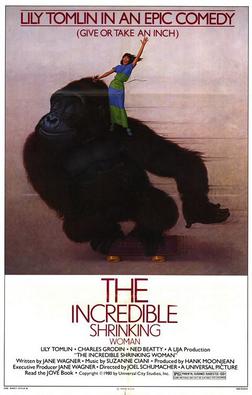
Premise and themes
The film follows a suburban woman who begins to shrink after unexpected exposure to chemical agents. Rather than playing the concept strictly for suspense, the movie uses the shrinking condition as a vehicle for satire: it lampoons advertising, corporate power, consumerism, and domestic life while also touching on gender expectations and public anxieties about modern technology and toxic substances. The tone blends slapstick and social commentary rather than straightforward horror or hard science fiction.
Cast and production
The lead role is played by Lily Tomlin, supported by a mix of comic and character actors including Charles Grodin, Ned Beatty, Henry Gibson, and Sally Kirkland. The production emphasized visual gags and practical effects to convey the heroine’s changing scale, and its comedic approach distinguished it from more somber earlier entries in the shrinking-man subgenre.
Reception and legacy
Upon release the film received a mixed critical response: some reviewers praised its performances and satirical ambition, while others found the tone uneven. Over time it has been noted for its unusual place as a gender-flipped, comedic riff on a well-known science-fiction premise and for launching the director’s career. It remains of interest to fans of offbeat comedies and those studying how mainstream films translate Cold War–era science-fiction ideas into later social satire.
Notable distinctions
- Directorial debut of Joel Schumacher and a departure from the darker tone of prior 'shrinking' stories.
- Uses comedy and satire to explore consumer culture, rather than focusing solely on existential dread.
- Features a prominent female protagonist in a role traditionally occupied by men in earlier genre examples.
Questions and answers
Q: What is "The Incredible Shrinking Woman"?
A: "The Incredible Shrinking Woman" is a 1981 science fiction comedy directed by Joel Schumacher, and is a take off of the 1957 film "The Incredible Shrinking Man".
Q: Who directed "The Incredible Shrinking Woman"?
A: Joel Schumacher directed "The Incredible Shrinking Woman".
Q: Which novel is "The Incredible Shrinking Woman" credited to?
A: "The Incredible Shrinking Woman" is credited to Richard Matheson's 1956 novel "The Shrinking Man".
Q: Who are the stars in "The Incredible Shrinking Woman"?
A: The stars in "The Incredible Shrinking Woman" are Lily Tomlin, Charles Grodin, Ned Beatty, Henry Gibson, and Sally Kirkland.
Q: When was "The Incredible Shrinking Woman" released?
A: "The Incredible Shrinking Woman" was released in 1981.
Q: What genre is "The Incredible Shrinking Woman"?
A: "The Incredible Shrinking Woman" is a science fiction comedy.
Q: Which movie is "The Incredible Shrinking Woman" a take off of?
A: "The Incredible Shrinking Woman" is a take off of the 1957 film "The Incredible Shrinking Man".
Related articles
Author
AlegsaOnline.com The Incredible Shrinking Woman (1981 film) Leandro Alegsa
URL: https://en.alegsaonline.com/art/98202