
The Dream of Gerontius — Elgar's choral vision
A comprehensive overview of Edward Elgar's large-scale choral work The Dream of Gerontius: its text, musical structure, history, themes, and place in the choral repertory.
Overview
The Dream of Gerontius is a major late-Romantic choral composition for choir, soloists and orchestra by Edward Elgar. Written at the turn of the 20th century and first performed in 1900, it sets a long religious poem in two parts and is commonly classified as an oratorio, a label Elgar himself sometimes resisted. The work tells the imagined dying thoughts and afterlife journey of a man named Gerontius and is widely regarded as one of Elgar’s finest choral achievements.
Image gallery
4 Images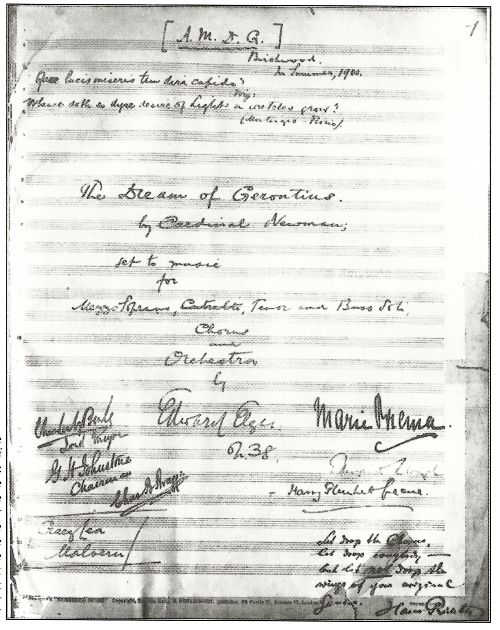


Text and dramatic outline
The libretto is drawn almost entirely from a poem by John Henry Newman. It presents an intimate, narrative meditation: Gerontius on his deathbed, the consolations and anxieties that attend his passing, a meeting with God, and the soul’s hope for heaven. Voices in the poem include Gerontius himself, a guiding angel, and an officiating priest, plus chorus passages representing friends, demons, and angelic chorus. The work unfolds in two continuous parts; the first concentrates on the departure from life and immediate afterlife perceptions, the second follows a spiritual journey toward judgment and redemption.
Structure, roles and musical forces
The piece is written for three principal soloists and full chorus with a large orchestra. Elgar uses recurring musical ideas and contrasting textures—intimate solos, urgent choruses, and expansive orchestral interludes—to shape the narrative. Typical performances place the two parts side by side: Part I is shorter and more concentrated (approximately forty minutes in many performances), while Part II is broader and more contemplative (often lasting about an hour), together making a substantial concert evening.
Musical characteristics
Musically the work is notable for its rich orchestration, chromatic harmony and expressive vocal writing that follow late-Romantic aesthetics while remaining distinctly Elgarian. Themes recur and transform to reflect psychological and spiritual shifts; the orchestra often paints atmospheres and inner states rather than merely accompanying the singers. Choral writing ranges from intimate devotional passages to dramatic outbursts, giving the chorus roles that move beyond simple commentary to active participants in the drama.
History and reception
At its first performances the work provoked a mix of admiration and controversy: some listeners were overwhelmed by its emotional directness and scale, while others found its religious intensity or novel dramatic approach challenging. Over the decades it has moved into the central choral repertoire, admired for its seriousness of purpose and the depth of its musical response to Newman’s poem. It is now commonly performed and recorded and is frequently cited as Elgar’s greatest choral accomplishment.
Legacy and distinctions
The Dream of Gerontius occupies a distinct place among large-scale British works of its era: it combines devotional poetry with symphonic choral writing and helped to shape expectations for English choral-orchestral music in the 20th century. Its demanding solo and choral parts, together with substantial orchestral requirements, mean it is usually given in concert halls rather than liturgical spaces. Listeners and performers continue to value its dramatic honesty, theological nuance, and powerful musical invention.
- Composer: Edward Elgar
- Text: poem by John Henry Newman
- Form: two-part sacred drama often called an oratorio
- Forces: choir, three soloists, orchestra (large forces)
Questions and answers
Q: What is The Dream of Gerontius?
A: The Dream of Gerontius is a large musical work for choir, three solo singers and orchestra composed by Edward Elgar.
Q: When was The Dream of Gerontius first performed?
A: The Dream of Gerontius was first performed in 1900.
Q: What kind of musical work is The Dream of Gerontius?
A: The Dream of Gerontius is an oratorio.
Q: Did Edward Elgar like The Dream of Gerontius being called an oratorio?
A: No, Edward Elgar did not like it being called an “oratorio”, but this is how it is usually described.
Q: What is the subject matter of The Dream of Gerontius?
A: The subject matter of The Dream of Gerontius is a man named Gerontius who is dying and imagines what will happen to him when he dies and meets God who will judge whether he has been good enough to go to heaven.
Q: Who wrote the words for The Dream of Gerontius?
A: The words for The Dream of Gerontius were written by John Henry Newman.
Q: How many parts is The Dream of Gerontius divided into, and how long are they?
A: The Dream of Gerontius is divided into two parts. Part I is about 40 minutes long and Part II lasts about an hour.
Related articles
Author
AlegsaOnline.com The Dream of Gerontius — Elgar's choral vision Leandro Alegsa
URL: https://en.alegsaonline.com/art/97893