
Be Here Now
Be Here Now is Ram Dass's 1971 spiritual classic blending memoir, practical guidance, and Eastern teachings that popularized present-moment awareness in Western counterculture.
Be Here Now is a 1971 book by the teacher Ram Dass (born Richard Alpert) that helped introduce many Western readers to practices of meditation, mantra, and present‑moment awareness. Written after his travels in India and influenced by encounters with local teachers, the work mixes autobiography with instruction and became widely read among seekers in the 1970s and beyond. A brief, memorable phrase from his time in India—"be here now"—became the book's title and central injunction.
Image gallery
1 Image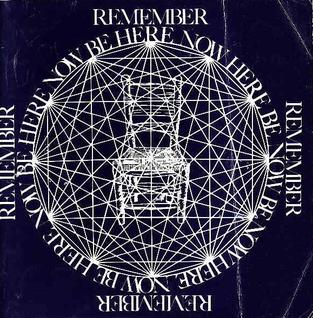
Structure and content
The book combines several modes: personal narrative of the author's transformation, a middle section of condensed teachings and visual layout, and practical advice for beginning meditation and spiritual practice. Its pages use unconventional typography, drawings, and aphorisms to emphasize immediacy and direct experience rather than doctrinal exposition. Readers find both evocative stories of inner change and concise pointers for daily practice.
Themes and practices
Key themes include present-moment awareness, the use of mantra and meditation, the interplay of ego and self, and the idea of spiritual teachers as guides. Practical elements in the book encourage simple daily exercises, breathing awareness, and a shift from intellectualizing experience to direct observation. These accessible suggestions helped many readers adapt Eastern contemplative tools to Western lifestyles.
History and influence
Ram Dass wrote the book after years of study and a turn away from his earlier academic career in the United States. His encounters in India—among them teachers who offered short, memorable guidance—shaped both his name change and his approach to teaching. The book arrived at a moment of wide Western interest in alternative spiritualities and played a role in popularizing meditation, yoga, and mindfulness practices in subsequent decades. It has been reprinted and discussed in many introductions to modern spirituality.
Reception and distinctions
Rather than presenting a single, systematic doctrine, the work is noted for its experiential tone and collage-like presentation. It is often recommended as an introductory text for those curious about Eastern spiritual traditions filtered through a Western sensibility. Critics and supporters alike point to its cultural context in the late 1960s and early 1970s as essential to understanding its style and appeal.
Further reading
- For the original book listing and editions, see book page.
- Background on publications and reprints can be found via publisher information.
- Broader discussions of spirituality and mindfulness: spirituality resources.
- Biographical context about the author: Ram Dass biography.
Related articles
Author
AlegsaOnline.com Be Here Now Leandro Alegsa
URL: https://en.alegsaonline.com/art/9779
Sources
- taosnews.com : "'Be Here Now' turns 40 - The Taos News: Entertainment"
- saradavidson.com : "Sara Davidson - Leap! What will we do with the rest of our lives?"
- nytimes.com : "Books of The Times - Don Lattin's 'Harvard Psychedelic Club' - Be There Then - Review - NYTimes.com"
- worldcat.org : 0362-4331
- drwaynedyer.com : "Be Here for Him Now - Dr. Wayne Dyer"
- nytimes.com : "The Beat Goes On - New York Times"