
BCS National Championship Game
Annual college football title game of the Bowl Championship Series (BCS), matching the top two teams as determined by the BCS rankings; played in early January at rotating venues.
The BCS National Championship Game was the annual postseason contest that determined the national champion of top-level U.S. college football under the Bowl Championship Series system. It matched the two teams ranked highest by the BCS formula and was held each year in early January at major bowl or stadium sites. The contest was one of the most watched events in college sports and carried substantial prestige, television revenue and recruiting impact.
Image gallery
1 Image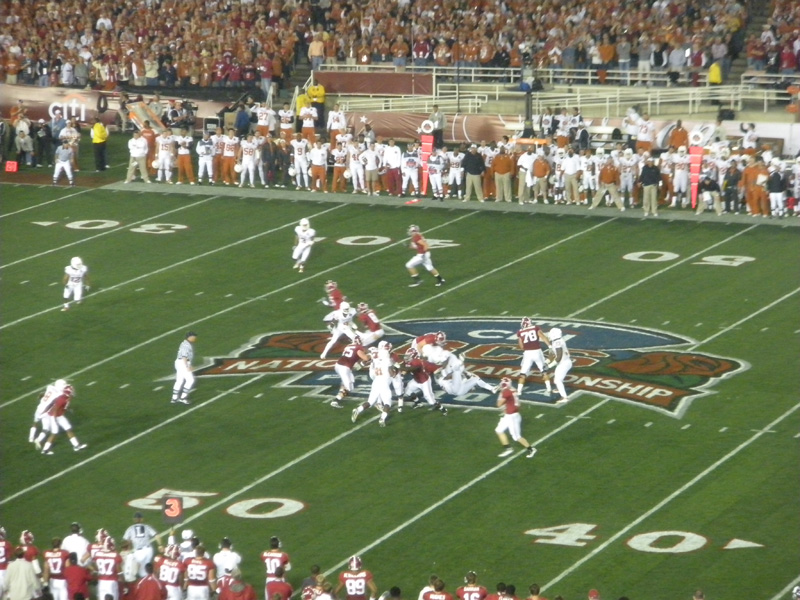
Format and selection
The teams invited to the game were selected by the Bowl Championship Series, a system that combined human polls and multiple computer rankings into a composite standing. That process was designed to identify the leading two teams in the Football Bowl Subdivision and to produce a single title game. The result was intended to pair the top teams for a definitive championship, though the selection method often prompted spirited discussion among fans and media.
Where and when
The title game took place in early January each season at a rotating host city and was sometimes integrated with one of the major bowl games. Host sites varied and included several large stadiums and traditional bowl venues across the United States. The timing and location helped make the game a focal point of the winter sports calendar.
Appearance and awards
The winning team received a national championship trophy, a distinctive clear or crystal-style football mounted on a base that became a symbolic prize of the BCS era. The physical trophy was frequently photographed and displayed by winning programs as a hallmark of college football success.
History and legacy
Instituted as part of the BCS era in the late 1990s, the game sought to provide a definitive title matchup. Over time it generated memorable contests as well as debate over ranking methods, computer inputs and poll influence. Those controversies contributed to later changes in the sport’s postseason format. After the BCS period, the national championship evolved into a playoff-based model, but the BCS National Championship Game remains an important chapter in the modern history of American football and college football.
- Timing: held in early January.
- Venues: rotated among major stadiums and bowl sites (stadium hosts changed year to year).
- Trophy: featured a clear, glass-like football award (trophy resembling a glass football).
The BCS National Championship Game is still referenced in discussions about college football championships, ranking fairness, and the evolution from human-and-computer formulas to the current playoff structures. For further contemporary resources and historical game results, consult official archives and sports history summaries.
Related articles
Author
AlegsaOnline.com BCS National Championship Game Leandro Alegsa
URL: https://en.alegsaonline.com/art/9773