
The Big Lebowski
1998 crime-comedy by Joel and Ethan Coen starring Jeff Bridges as "The Dude", a cult-classic film known for its eccentric characters, bowling scenes, and lasting cultural influence.
The Big Lebowski is a 1998 crime-comedy written, produced and directed by Joel and Ethan Coen. It follows Jeffrey "The Dude" Lebowski, an easygoing Los Angeles slacker whose life is disrupted when he is mistaken for a wealthy namesake. The film blends elements of noir parody, slapstick and surrealism and is widely remembered for its idiosyncratic lead, memorable dialogue and recurring bowling scenes. For production details and credits see the film entry and the Coens' profile at their page.
Image gallery
6 Images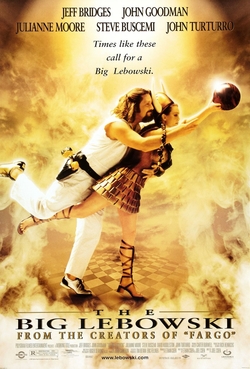




Plot and principal characters
The story starts with a case of mistaken identity: two thugs urinate on The Dude's rug, believing he is the affluent Jeffrey Lebowski. Seeking restitution, The Dude visits the other Lebowski and becomes entangled in a strange case involving a missing woman, errant ransom demands, and a group of eccentric figures. Central characters include The Dude (played by Jeff Bridges), his volatile friend Walter Sobchak (played by John Goodman), the enigmatic Bunny Lebowski (played by Julianne Moore), and the small-time criminal Donny (played by Steve Buscemi). The wealthy Jeffrey Lebowski is portrayed by David Huddleston, and the peculiar bowler Jesus Quintana by John Turturro.
Style, themes and notable features
The Coen brothers mix detective-story motifs with offbeat comedy, creating scenes that oscillate between the mundane and the absurd. The film features dreamlike sequences, a distinctive soundtrack, and recurring motifs such as bowling alleys, white Russians (the cocktail associated with The Dude), and repeated comic set pieces. Critics and scholars have noted its pastiche of film-noir conventions and its resistance to tidy resolution, preferring character-driven confusion to conventional plot closure.
Reception and legacy
Upon release the movie drew a range of critical responses and modest box-office returns, but it steadily grew in esteem and became a cult favorite. Quotable lines and the character of The Dude inspired devoted fan activity, academic interest and popular references in other media. In recognition of its cultural, historical, and aesthetic significance the film was selected for preservation in the National Film Registry by the Library of Congress—see the official registry entry at National Film Registry.
Cultural impact and events
The film spawned fan conventions, informal gatherings and a playful spiritual movement called Dudeism. Regular events such as Lebowski-themed festivals celebrate the movie through costume, trivia and recreated bowling parties. Its characters and lines have been widely referenced and parodied, and the film remains a common subject of retrospectives and critical reassessment; for interviews and cast retrospectives consult pages for Bridges, Goodman and other performers via cast listings and archival material at related resources. Additional scholarly and fan analysis can be found through curated collections at archive resources and cinema studies portals covering the Coens. For festival schedules and community events search listings at festival pages or fan networks devoted to the film.
- Genre: Crime comedy / neo-noir parody
- Directors/Writers: Joel and Ethan Coen (profile)
- Notable fact: Became a cult classic after an initially mixed reception
Related articles
Author
AlegsaOnline.com The Big Lebowski Leandro Alegsa
URL: https://en.alegsaonline.com/art/97609