
The Big Lift (1950) — Hollywood drama about the Berlin Airlift
1950 American drama directed by George Seaton depicting the 1948–49 Berlin Airlift; notable for on-location footage, a cast led by Montgomery Clift and contemporary interest in postwar Europe.
Overview
The Big Lift is a 1950 American drama film directed by George Seaton that dramatizes events surrounding the Berlin Airlift of 1948–1949. Released by 20th Century Fox, the picture mixes fictional characters with documentary-style sequences to depict life and operations in a divided, postwar Berlin. The film is often described as a wartime-to-cold-war transitional work that aimed to bring recent history to American audiences.
Image gallery
2 Images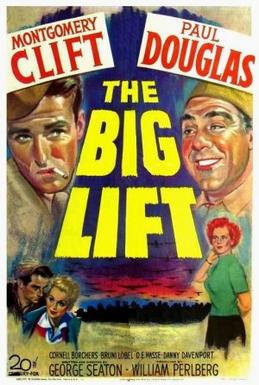

Plot and themes
At its core the story follows U.S. airmen and Berlin civilians as they take part in the massive logistical effort to sustain the city after Soviet ground blockades. The narrative combines personal relationships, moral choices, and the practical challenges of flying supplies into a beleaguered urban center. Themes include duty, international cooperation, and the human cost of political division.
Production and principal cast
Director George Seaton sought authenticity by incorporating real footage of cargo aircraft and aircrews. The film stars Montgomery Clift alongside Paul Douglas and German actress Cornell Borchers, with a supporting cast that includes Bruni Löbel. Principal photography blended studio scenes with on-location material to convey both scale and atmosphere.
- Montgomery Clift — lead U.S. airman
- Paul Douglas — fellow crew member
- Cornell Borchers — German civilian role
- Bruni Löbel — supporting character
Historical context and legacy
The film arrived soon after the real Berlin Airlift, so it functioned as both entertainment and a form of documentation for contemporary viewers. While not a strict documentary, The Big Lift remains notable for its effort to portray logistical details and everyday life during a major Cold War crisis. Critics and historians often point to its blend of drama and reportage when discussing Hollywood responses to early Cold War events.
Reception and notable facts
Contemporary reviews praised the film's topicality and some on-location realism, though opinions varied on dramatic elements. The movie is remembered for bringing international postwar concerns to mainstream American screens and for performances that reflected both star presence and emergent realism in 1950s cinema.
Related articles
Author
AlegsaOnline.com The Big Lift (1950) — Hollywood drama about the Berlin Airlift Leandro Alegsa
URL: https://en.alegsaonline.com/art/97610