
Coen brothers: an overview of Joel and Ethan Coen's filmmaking career
Joel and Ethan Coen are American siblings who write, direct and produce distinctive films spanning comedy, crime and art-house cinema, known for stylistic variety and repeated collaborations.
The Coen brothers—Joel and Ethan Coen—are an American filmmaking team whose work blends dark humor, genre play, and precise craftsmanship. They write, direct and produce their movies as a partnership and are widely recognized for shifting between comedy, crime drama, neo-noir and literary adaptations while maintaining a distinct voice. Critics and audiences value their films for sharp dialogue, carefully composed visuals, and recurring themes such as fate, morality and the absurdities of everyday life. Many viewers describe their tone as equal parts irony and empathy.
Image gallery
3 Images

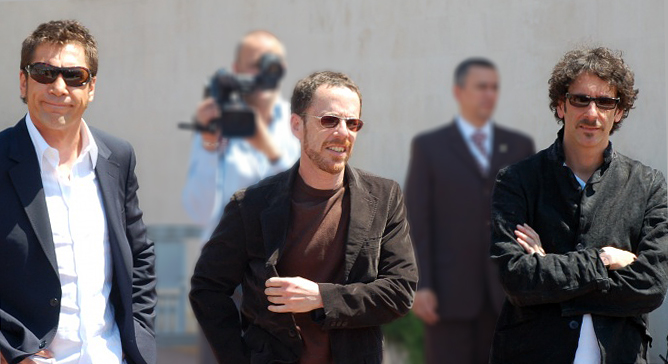
Roles and collaborative method
Joel and Ethan generally share writing, producing and creative leadership on projects, and they have established a reputation for making collaborative choices that treat the film as the product of a single creative unit rather than two separate auteurs. Industry descriptions sometimes call them a two-headed director to capture this cooperative method: cast and crew report that questions can be answered by either brother and that their decisions behave as if coming from a single directing voice. They are widely credited together as screenwriters and producers and are listed jointly on many credits as both directors and producers.
Style, themes and recurring features
The Coens refuse to be pinned to one genre. They are as comfortable with broad, cartoonish comedy as with bleak, suspenseful crime stories. Their films often combine tonal contrasts—comic situations set against serious, even violent outcomes—and experiments with regional dialect and period detail. Recurrent features include strong, idiosyncratic characters, moral ambiguity, visually composed framing and a soundtrack or musical sensibility that helps establish atmosphere. Their work shows influences from film noir, American folk culture, and classic studio-era craftsmanship.
Major films and notable examples
Several titles have become closely associated with the Coens' reputation. Their films range from lighthearted to severe: the zany, fast-paced energy of Raising Arizona and the cult popularity of The Big Lebowski demonstrate their comic range; the stark, suspense-driven No Country for Old Men illustrates their ability to handle existential crime drama; and Fargo mixes dark comedy with a bleak crime story to striking effect. Individual performances and characters from these films have entered popular culture, and the Coens have worked repeatedly with certain actors and collaborators.
Awards, reception and cultural influence
The brothers have received major industry recognition, including multiple Academy Awards and festival honors such as the Palme d'Or at the Cannes Film Festival. They have won several Oscars and other prizes: their films and screenplays have been celebrated for originality, craft and influence on contemporary filmmakers. Film scholars often discuss the Coens in studies of American cinema, citing their genre experiments, linguistic wit and sustained collaboration as important contributions.
Further reading and how to explore their work
Audiences discovering the brothers can sample a range of entry points: start with a widely admired crime drama like No Country for Old Men, try a cult favorite such as The Big Lebowski for a comedic angle, or watch Fargo to see tonal blending. For information on specific projects, production histories and critical essays, look for interviews, anthology books and film festival program notes. Many overviews of their career also highlight recurring motifs such as violence (violence) and dark humor, and point to the close working relationship embodied in credits that present their films as shared authorship. For awards and filmography specifics consult reputable film databases and festival archives referenced in critical guides and program materials (Academy Awards).
- Representative films: Raising Arizona, Fargo, The Big Lebowski, No Country for Old Men, O Brother, Where Art Thou?
- Common collaborators: a small pool of actors and technicians appears again across multiple titles.
- Why they matter: a combination of formal control, inventive genre reworking, and memorable dialogue.
Questions and answers
Q: Who are Joel and Ethan Coen?
A: Joel and Ethan Coen are movie directors, producers and screenwriters who work together and are brothers.
Q: How many times have Joel and Ethan Coen won the Academy Award (Oscar)?
A: Joel and Ethan Coen have won the Academy Award (Oscar) four times.
Q: Have Joel and Ethan Coen won the Palme d'Or at the Cannes International Film Festival?
A: Yes, Joel and Ethan Coen have won the Palme d'Or at the Cannes International Film Festival.
Q: What types of genres do Joel and Ethan Coen's movies have?
A: Joel and Ethan Coen's movies have different genres, ranging from funny movies like Raising Arizona to movies with a lot of violence like No Country for Old Men.
Q: Can Joel and Ethan Coen mix different styles in one movie?
A: Yes, Joel and Ethan Coen can mix different styles in one movie, as shown in Fargo.
Q: What are some of the roles that Joel and Ethan Coen perform in the making of their movies?
A: Joel and Ethan Coen write, direct and produce their movies and they share the credits.
Q: Why do some people call Joel and Ethan Coen "A two-headed director"?
A: Some people call Joel and Ethan Coen "A two-headed director" because when actors who work in their movies have a question they can ask either Joel or Ethan and get the same answer.
Related articles
Author
AlegsaOnline.com Coen brothers: an overview of Joel and Ethan Coen's filmmaking career Leandro Alegsa
URL: https://en.alegsaonline.com/art/116736
Sources
- afp.google.com : "Coen brothers prove two heads are better than one"
- ambidextrouspics.com : "Joel and Ethan Coen: Biography"
- berlinale.de : "Berlinale: 1998 Programme"