
The Birth of a Nation (1915 film)
D. W. Griffith’s 1915 silent feature noted for pioneering cinematic techniques and for provoking sustained controversy and debate over its racist portrayals and political impact.
Overview
The Birth of a Nation is a 1915 American silent feature film directed by D. W. Griffith and adapted from Thomas Dixon Jr.'s novel and play The Clansman. On release it attracted wide attention for its length, staging and technical innovations and became one of the most debated works in American cultural history because of its depiction of race and politics. The production staged large-scale crowd and battle sequences and used a variety of camera and editing methods that helped shape early narrative cinema.
Image gallery
10 Images






Plot and source material
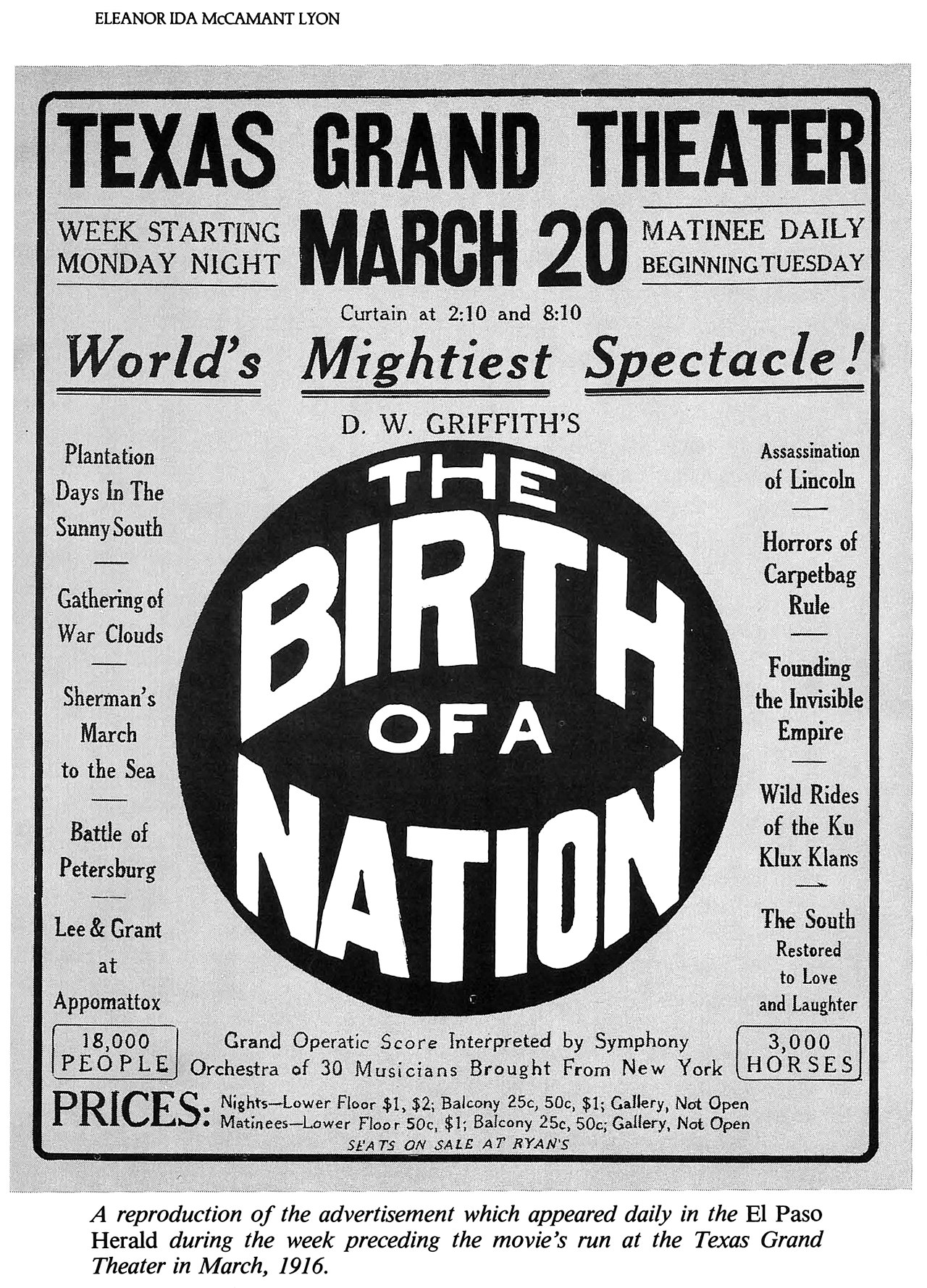
The story follows two families, one Northern and one Southern, across the era of the American Civil War and Reconstruction, and dramatizes episodes such as the assassination of President Abraham Lincoln and disruptive public conflicts that followed. The screenplay closely follows the partisan perspective of Dixon's source material and reframes Reconstruction through a perspective that supports Lost Cause narratives. The result is a long-form cinematic retelling that interweaves personal melodrama with public events.
Filmmaking techniques
Griffith and his collaborators employed then-advanced methods including continuity editing, cross-cutting between simultaneous scenes, staged crowd direction, and varied camera distances to build rhythm and dramatic tension. These techniques helped formalize elements of cinematic storytelling — for example, how to link parallel actions and how to maintain audience attention across extended sequences. Film historians study the movie for these formal contributions while also debating the ethical consequences of its content.
Reception and controversy
The film was a commercial success in many venues but provoked immediate controversy. Critics, civil rights organizations and many civic leaders condemned its racist depictions of African Americans, the use of white actors in blackface, and its sympathetic treatment of the Ku Klux Klan. Public protests, calls for censorship and local bans occurred in numerous cities. Screenings sometimes became flash points for public disorder and intense debate about race, representation and morality in mass entertainment.
Political and social impact
Historians have linked the film to the broader cultural moment that saw a revival of the Ku Klux Klan in the 1910s; the film was used by some groups as a recruitment and publicity tool. It was also the first motion picture reported to have been screened at the White House in 1915, an event that intensified public discussion about the film's themes and influence. The combination of cinematic innovation and political messaging made the film a particularly charged cultural product.
Legacy, criticism and preservation
The legacy of The Birth of a Nation is contested. It is often taught and analyzed for its technical achievements and its role in establishing long-form narrative film grammar, while simultaneously condemned for its racist ideology and for contributing to harmful historical myths. In academic, museum and festival contexts the film is typically presented with historical introduction and critical commentary. Preservation and restoration efforts have kept copies of the film available in archives and for study, enabling continued examination of both its form and its social effects.
Further reading and resources
For primary materials, scholarly analysis and historical context, consult curated resources and archival collections:
- Contemporary reviews and press from 1915
- Biographical material on D. W. Griffith
- Studies of Thomas Dixon Jr. and The Clansman
- Production and direction records
- Profiles of Lillian Gish and principal cast
- Background on the American Civil War
- Union and Northern perspectives in the era
- Historical accounts of Reconstruction
- Southern perspectives and memory studies
- Confederate memory and cultural legacies
- Coverage of Lincoln's assassination in drama and film
- Biographical sources on Abraham Lincoln
- Historical accounts of the assassination's aftermath
- Information on John Wilkes Booth and related events
- Box-office and distribution histories
- Controversy and censorship reports
- Discussion of blackface and performance practices
- Race and representation in early American cinema
- Research on the Ku Klux Klan's history
- Primary documents on protests and civil responses
- Records of riots and public disturbances linked to screenings
- Legal and municipal responses to film exhibition
- Notes on the White House screening and its significance
The film continues to be a focal point in discussions about how cultural works combine artistic technique, historical narrative and political influence. Scholars, curators and educators approach it as both a milestone in film form and a cautionary example of how entertainment can reinforce harmful ideologies; contemporary presentations generally pair the film with critical framing and historical context.
Questions and answers
Q: What is The Birth of a Nation?
A: The Birth of a Nation is a 1915 silent drama movie directed by D. W. Griffith and based on the book The Clansman by Thomas Dixon, Jr., starring Lillian Gish.
Q: What is the movie about?
A: The movie is about two families during the American Civil War and Reconstruction era - the Northern Stoneman family who are pro-Union, and the Southern Cameron family who are pro-Confederacy. It also dramatizes the assassination of President Abraham Lincoln by John Wilkes Booth.
Q: Why was it controversial?
A: The movie was very controversial because it showed African-American men (played by white actors in blackface) as stupid and sexually aggressive towards white women, and portrayed the Ku Klux Klan as heroic forces.
Q: How did people respond to it?
A: People responded to it with protests, bans in several cities, outcries of racism, screenings followed by riots and attacks, and even credited in part with formation of "second era" Ku Klux Klan that same year.
Q: Where was it first shown?
A: In 1915, The Birth of a Nation was first shown at the White House.
Q: Was it successful?
A: Yes, despite its controversy, The Birth of a Nation was a great success when released in 1915.
Related articles
Author
AlegsaOnline.com The Birth of a Nation (1915 film) Leandro Alegsa
URL: https://en.alegsaonline.com/art/97622
Sources
- cobbles.com : D. W. Griffith: Hollywood Independent
- themovingarts.com : "Revered and Reviled: D.W. Griffith's 'The Birth of a Nation'"
- massmoments.org : Mass Moments: “The Birth of a Nation” Sparks Protest
- alternativereel.com : Top Ten - Top 10 Banned Films of the 20th Century - Top 10 - Top 10 List - Top 10 Banned Movies - Censored Movies - Censored Films
- megaessays.com : A Birth of a Nation essays
- guardian.co.uk : Perks in the White House
- variety.com : Variety: The Ultimate Screening: ’42′ Gets a White House Endorsement