
Thallium — properties, occurrence, uses and toxicity
Thallium (Tl, atomic number 81) is a soft, silvery post‑transition metal. It occurs as a trace byproduct of sulfide ore processing, has specialized industrial and medical uses, and is highly toxic.
Overview
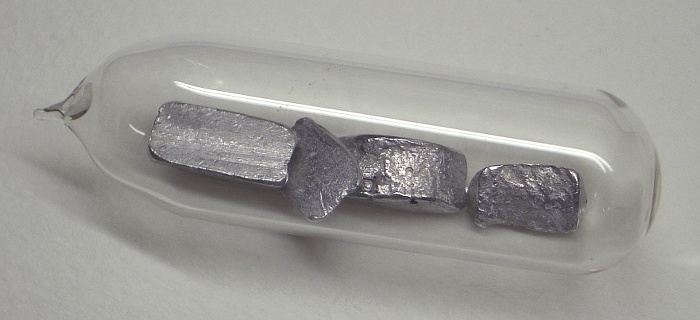
Thallium is a chemical element with the symbol Tl and atomic number 81. It is a soft, malleable metal that belongs to the p‑block, commonly classified among the post‑transition metals in Group 13 of the periodic table. Its standard atomic weight is approximately 204.4. Freshly cut thallium has a silvery lustre, but it tarnishes easily on exposure to air.
Image gallery
6 Images



Physical and chemical characteristics
Thallium has properties intermediate between the heavier post‑transition metals and the alkali metals. Typical characteristics include:
- Softness — it can be cut with a knife at room temperature.
- Relatively low melting point for a metal (about 304 °C) and substantial density (around 11.8 g/cm³).
- Common oxidation states of +1 and +3, with the monovalent state (+1) being more stable in many compounds.
- Two naturally occurring stable isotopes, 203Tl and 205Tl.
History and occurrence
Thallium was discovered independently in 1861 by spectroscopic observation of a bright green spectral line; the element’s name derives from the Greek thallos, meaning a green shoot or twig. It is not found as a free element in nature but is present in trace amounts within sulfide ores of other metals such as zinc, copper and lead. Commercial thallium is obtained mainly as a byproduct of smelting and refining those ores.
Uses and applications
Although not widely used in bulk applications because of its toxicity, thallium has several specialized uses. Examples include:
- Small amounts in electronic components and infrared detectors.
- Additives in certain optical glasses and low‑melting alloys.
- Radioisotope 201Tl is used in nuclear medicine for myocardial perfusion imaging.
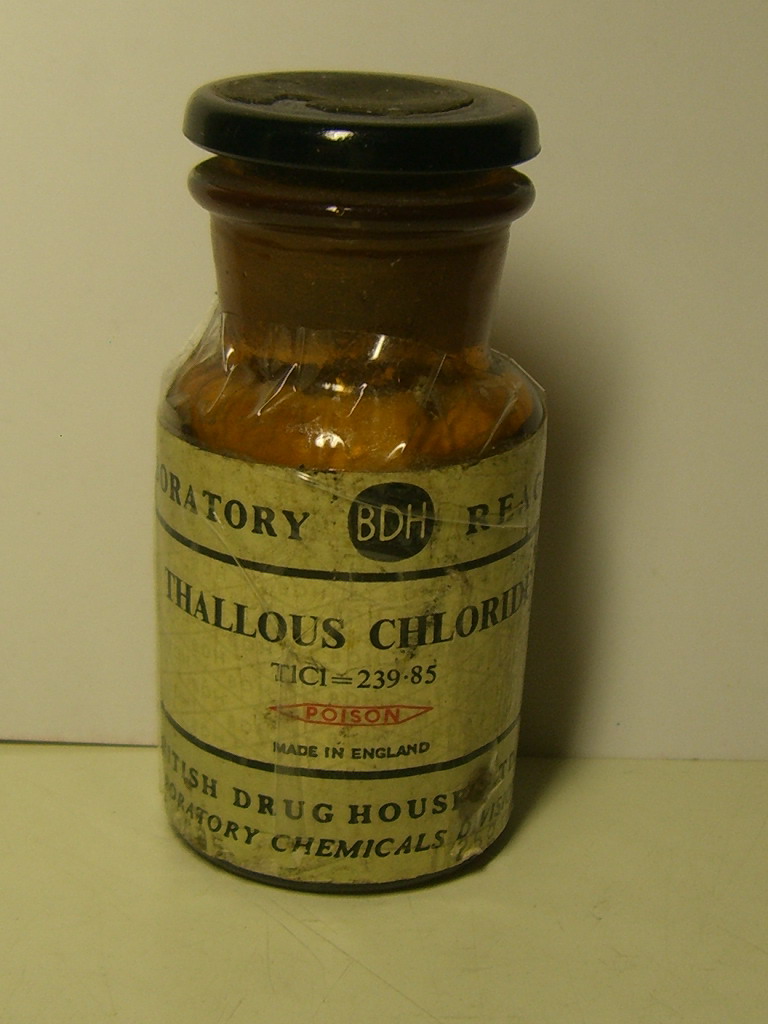
- Historic applications included rodenticides and medicinal compounds; many such uses are now restricted or banned because of safety concerns.
Toxicity, health effects, and treatment
Thallium and many of its soluble salts are highly toxic. Thallium interferes with biological processes that normally use potassium and can affect the nervous system, gastrointestinal tract, and hair follicles — hair loss (alopecia) is a characteristic sign of significant poisoning. Management of thallium poisoning focuses on supportive care and reducing absorption and retention; chelation and specific agents such as Prussian blue or potassium administration are used in clinical settings. Because of its hazards, handling and disposal of thallium compounds are tightly regulated.
Further reference
For elemental data and technical summaries see general element profiles and chemical databases: element overview, the atomic number entry at 81, and the standard atomic weight listing at 204.4.
Related articles
Author
AlegsaOnline.com Thallium — properties, occurrence, uses and toxicity Leandro Alegsa
URL: https://en.alegsaonline.com/art/97366
Sources
- doi.org : 10.1016/j.envint.2004.09.003
- pubmed.ncbi.nlm.nih.gov : 15788190