
Thallium(I) sulfate (thallous sulfate)
Thallium(I) sulfate (Tl2SO4) is a colorless, water-soluble inorganic salt of thallium and sulfate. It is highly toxic, historically used as a rodenticide, and now tightly regulated; handled mainly in research.
Overview
Thallium(I) sulfate, commonly called thallous sulfate, is an inorganic ionic compound with the formula Tl2SO4. It consists of thallium cations and sulfate anions: the thallium is present in its monovalent +1 oxidation state and pairs with the divalent sulfate ion. The salt typically forms colorless, odorless crystals that dissolve in water to give a solution containing Tl+ and SO4(2−) species.
Image gallery
1 Image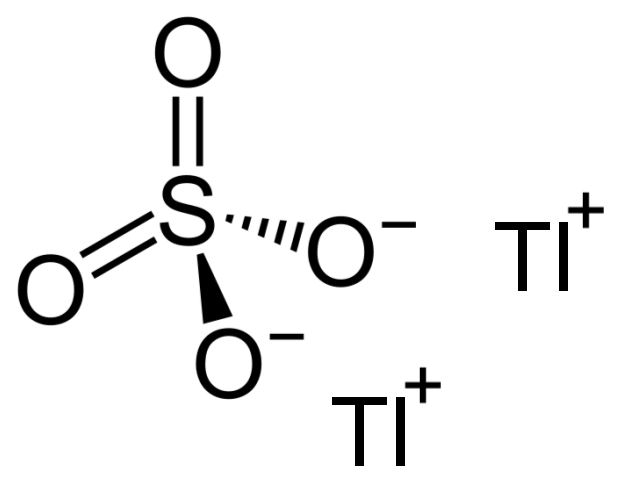
Characteristics
Physically, thallium(I) sulfate is noted for being odorless and crystalline and for its good water solubility. Chemically it behaves as a typical salt: its solid state is ionic, and in aqueous solution thallium ions can interact biologically in ways similar to potassium because of comparable ionic radius, which underlies much of its toxic action.
Uses and historical notes
Historically, thallium(I) sulfate was used as a rodenticide and insecticide and found occasional applications in industry and laboratory chemistry. Due to frequent accidental and intentional human poisonings, most civilian uses were discontinued and are now restricted or banned in many countries. Today it is encountered primarily in specialized research, analytical chemistry, and in the study of thallium toxicology.
Toxicity, effects and treatment
Thallium salts are highly toxic. Exposure can produce gastrointestinal symptoms, neurological effects including peripheral neuropathy, and characteristic alopecia (hair loss). Poisoning is a medical emergency. Clinical management focuses on rapid decontamination, supportive care, and measures to enhance elimination; specific decorporation agents such as ion-exchange compounds have been used. Because Tl+ interferes with physiological potassium pathways, even small amounts can be dangerous.
Preparation, handling and regulation
In laboratory settings, Tl2SO4 can be prepared by combining soluble thallium(I) sources with a sulfate source or by neutralizing basic thallium compounds with sulfuric acid. Handling requires gloves, eye protection and containment to prevent inhalation or ingestion. Many jurisdictions place strict controls on storage, sale and use of thallium compounds; research and industrial users must follow hazardous materials regulations and disposal rules to limit environmental and human exposure.
Key facts
- Formula: Tl2SO4; contains Tl+ and SO4(2−) ions (thallium ion, sulfate ion).
- Highly toxic: causes systemic and neurological harm; restricted or banned for many public uses.
- Primarily of interest now in research and analytical contexts rather than consumer products.
Questions and answers
Q: What is Thallium(I) sulfate?
A: Thallium(I) sulfate, also known as thallous sulfate, is a chemical compound.
Q: What is the chemical formula of Thallium(I) sulfate?
A: The chemical formula of Thallium(I) sulfate is Tl2SO4.
Q: What ions are present in Thallium(I) sulfate?
A: Thallium and sulfate ions are present in Thallium(I) sulfate.
Q: What is the oxidation state of thallium in Thallium(I) sulfate?
A: The oxidation state of thallium in Thallium(I) sulfate is +1.
Q: Is Thallium(I) sulfate a stable compound?
A: Thallium(I) sulfate is considered a stable compound.
Q: What are the other names of Thallium(I) sulfate?
A: Thallium(I) sulfate is also known as thallous sulfate.
Q: What is the molecular weight of Thallium(I) sulfate?
A: The molecular weight of Thallium(I) sulfate is approximately 728.96 g/mol.
Related articles
Author
AlegsaOnline.com Thallium(I) sulfate (thallous sulfate) Leandro Alegsa
URL: https://en.alegsaonline.com/art/97374