
Tetanospasmin — the tetanus neurotoxin
Tetanospasmin is the potent neurotoxin produced by Clostridium tetani; it causes the muscle rigidity and spasms of tetanus and is important in clinical care, prevention and neuroscience research.
Overview
Tetanospasmin, often called tetanus toxin or abbreviated TeNT (also spasmogenic toxin), is the protein neurotoxin released by Clostridium tetani under anaerobic conditions. The toxin is the principal cause of tetanus, a disease of increased muscle tone and painful spasms. It is produced when bacterial cells replicate in oxygen-poor wounds or devitalized tissue and release toxin on lysis.
Image gallery
3 Images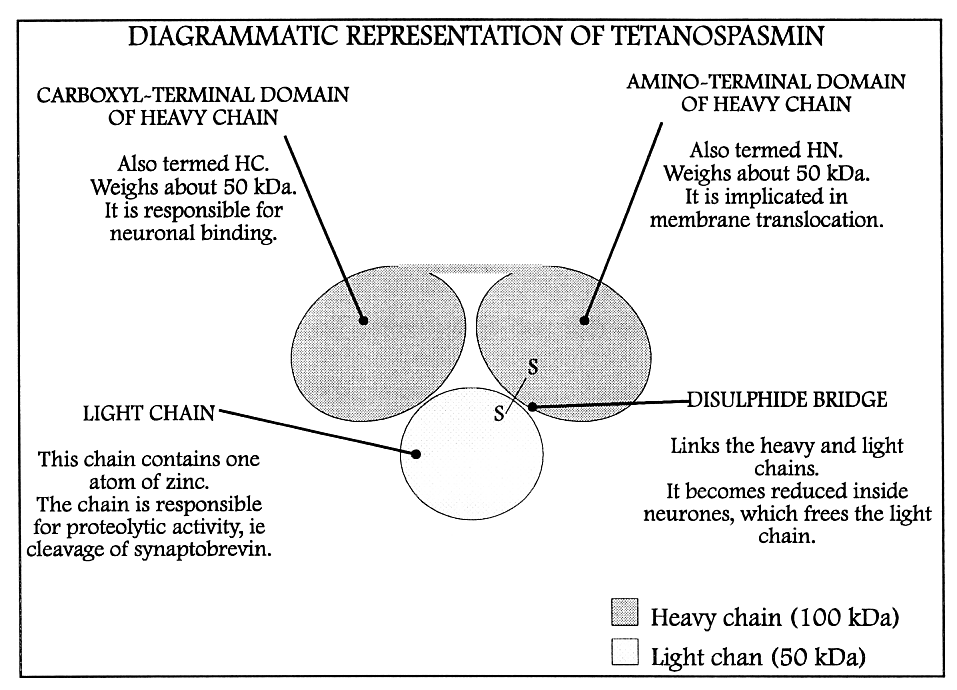


Structure and mechanism
The toxin is synthesized as a single polypeptide that is proteolytically cleaved into a heavy and a light chain held by a disulfide bond. The heavy chain mediates neuronal binding and retrograde transport, while the light chain is a zinc-dependent endopeptidase that cleaves proteins of the synaptic vesicle fusion machinery. By disrupting inhibitory neurotransmission (notably glycine and GABA pathways) in the spinal cord and brainstem, tetanospasmin produces the characteristic spastic paralysis.
Clinical importance and prevention
Clinically, tetanus manifests as trismus (lockjaw), generalized rigidity, and painful spasms that can compromise breathing. Management includes wound care, supportive measures, human tetanus immunoglobulin, and antibiotics. Active prevention relies on vaccination with inactivated tetanus toxoid and booster doses; these immunizations neutralize toxin and have dramatically reduced tetanus incidence worldwide. For more on clinical aspects see relevant clinical sources.
History and research uses
Recognized during 19th-century studies of tetanus, the toxin has been extensively studied for its molecular action on synapses. Fragments of tetanospasmin, particularly the non-toxic C-terminal binding fragment, have been used as neuronal tracers and tools in neurobiology to study connectivity and transport within axons. Comparative study with botulinum neurotoxins clarified shared mechanisms and divergent clinical effects.
Key facts and distinctions
- Source: anaerobic growth of C. tetani and release on cell lysis.
- Effect: blocks inhibitory neurotransmitter release → spastic paralysis.
- Contrast: unlike botulinum toxins that cause flaccid paralysis, tetanospasmin causes sustained muscle contraction.
- Prevention: effective toxoid vaccination and prompt wound care reduce risk; see background material at toxin overviews.
Ongoing research explores therapeutic targeting of the toxin's trafficking and proteolytic activity, and continued public health efforts aim to eliminate vaccine-preventable tetanus, especially neonatal tetanus, in underserved regions.
Related articles
Author
AlegsaOnline.com Tetanospasmin — the tetanus neurotoxin Leandro Alegsa
URL: https://en.alegsaonline.com/art/97220