
Tengwar: Tolkien’s Elvish Script and Its Uses
Tengwar is a writing system devised by J. R. R. Tolkien for his invented languages and other tongues. It combines alphabetic letters and diacritics and has multiple modes for different languages.
Overview
Tengwar is a constructed script created by J. R. R. Tolkien for use in his fictional world Middle-earth. The word tengwar is the plural of tengwa (a single letter) in the Quenya tongue. Though conceived to write Elvish languages such as Quenya and Sindarin, Tengwar was designed with enough flexibility to be adapted to many other languages, and Tolkien himself used its signs to render English passages in his writings, notably in The Lord of the Rings. Scholarly and fan interest has since extended its application far beyond the original stories.
Image gallery
3 Images

Structure and features
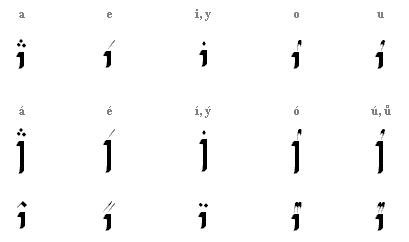
Tengwar functions primarily as an alphabet but can behave like an abugida when vowels are indicated by diacritical marks. Its basic elements are the individual letters (tengwar) and a set of diacritic signs usually called tehtar. Consonants are represented by distinct glyphs, while vowels may be written as separate letters or as marks above and below consonants depending on the chosen mode.
- Letterforms: Characters are organised in a regular pattern tied to articulation—series for place of articulation and grades for manner.
- Tehtar: Vowel signs that sit over or under consonants in many modes, enabling compact syllabic spelling.
- Modes: Systematic conventions that adapt the script to a particular language’s sounds and orthographic needs.
Because of this systematic design, Tengwar can be used to write languages with very different phonologies, and modern adapters have created fonts and keyboard mappings to support that versatility. For an introductory discussion on scripts and how Tengwar fits into that category see writing system resources and general articles on the alphabet concept.
History and development
Tolkien developed Tengwar over many years as part of his lifelong philological hobby and imaginative worldbuilding. It evolved alongside other invented scripts, such as the runic Cirth, and reflects Tolkien’s interest in how form and sound interact in real-world orthographies. Within his fiction, Tengwar is associated chiefly with the Elves, but Tolkien and later editors used it to represent the speech of Men and other peoples in inscriptions and manuscripts.
Uses, examples, and modern influence
Aside from its role in Tolkien’s legendarium, Tengwar has gained wide use among enthusiasts for calligraphy, artwork, tattoos, and encoded inscriptions. Fans and type designers have produced many fonts and transliteration guides that allow English and numerous modern languages to be written in Tengwar. Academic treatments and reliable introductory materials on Tolkien’s languages and scripts help readers learn standard modes for Quenya and Sindarin; see general resources on Elvish languages for further study.
Notable distinctions and cautions
Tengwar is notable for the distinction between its flexible orthographic modes and a single fixed alphabet: the same set of glyphs can represent different sounds or spelling conventions depending on the mode chosen. This adaptability is a strength but also a source of confusion—transcriptions in popular use sometimes mix conventions or present nonstandard spellings. For comparative context with Tolkien himself and scholarly commentaries, readers can consult introductory biographies and bibliographies at Tolkien studies sources and related bibliographic listings.
Overall, Tengwar stands as one of the most fully developed fictional scripts, reflecting Tolkien’s combined interests in linguistics, aesthetics, and mythology and continuing to inspire both scholarly and creative activity.
Related articles
Author
AlegsaOnline.com Tengwar: Tolkien’s Elvish Script and Its Uses Leandro Alegsa
URL: https://en.alegsaonline.com/art/96972