
Tetris: the falling-block puzzle that shaped video games
Tetris is a tile-matching puzzle game created in the Soviet Union in 1984. Players rotate and place tetrominoes to clear lines; its gameplay, history, and cultural impact have made it one of the best-known games worldwide.
Overview
Tetris is a minimalist puzzle game in which shaped blocks fall into a rectangular well and the player must arrange them to form complete horizontal lines. When a line is filled without gaps, it clears, freeing space and scoring points. The player's objective is to manage the incoming pieces so the stack does not reach the top of the playfield. Originating in the mid-1980s, Tetris is widely recognized for its simple rules yet deep strategic potential.
Image gallery
8 Images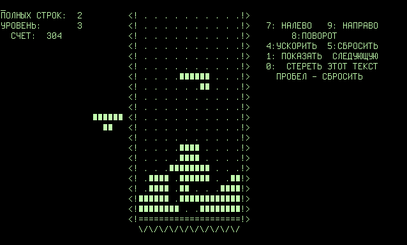




Core mechanics and pieces
Falling shapes in Tetris are composed of four square cells connected orthogonally; these shapes are commonly called "tetrominoes." There are seven standard tetrominoes, often labeled by letter or color: I, J, L, O, S, T and Z. Gameplay revolves around moving pieces left or right, rotating them, and dropping them quickly into place. Modern variants add features such as a hold queue (store one piece for later), a preview of upcoming pieces, and advanced scoring for specific maneuvers like the "T-Spin." Clearing multiple lines at once yields higher rewards and is a core strategy for skilled play.
Rules, scoring, and difficulty
Basic rules are straightforward, but Tetris systems differ in scoring and level progression. Most implementations increase the game speed after clearing a set number of lines or when reaching higher levels, making timely decision-making more difficult. Scoring typically rewards single-line clears modestly while awarding exponentially more points for double, triple, and "Tetris" (four-line) clears. Competitive and modern single-player versions often use standardized systems to compare performances across players and platforms.
History and development
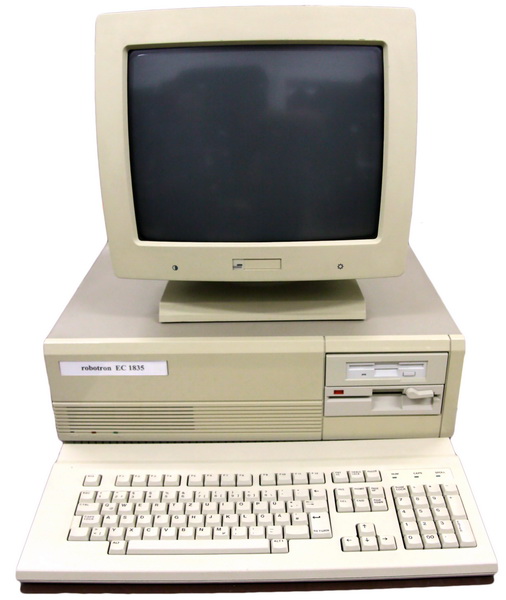
Tetris was originally programmed in the Soviet Union by computer scientist Alexey Pajitnov in 1984. It spread quickly through trade shows, academic networks, and early software distribution, arriving on numerous personal computers and early consoles. The game's legal and commercial history is notable for disputes over licensing rights as it moved from the Eastern Bloc to Western markets. Despite complex rights negotiations in the late 1980s and early 1990s, Tetris became widely available on many devices and inspired countless variations and licensed editions.
Platforms, variants, and availability
Tetris has been adapted to almost every gaming platform, from home computers and dedicated consoles to handhelds, mobile phones, and web browsers. Its portability and low technical requirements made it an early staple on portable systems and a familiar title across generations of hardware. For information about platform histories and notable releases, see resources on video game platforms and collections of licensed editions.
Cultural impact and legacy
The game's accessible design and compelling emergent play helped it reach a broad audience. Tetris is often cited in discussions of ludic design, cognitive effects of gameplay, and the idea of "easy to learn, hard to master." It has appeared in popular culture, academic research, and competitive gaming. With hundreds of millions of copies distributed across official and unofficial versions, Tetris holds a prominent place as one of the best-selling and most influential video games. Its designer and origins are frequently mentioned in accounts of game history, including references to the Soviet roots of the original program (Soviet Union). For biographical and historical background, see sources on Alexey Pajitnov and early 1980s software development.
- Key features: tetrominoes, line clearing, rising speed, simple controls.
- Common goals: maximize score, survive longest, achieve high-line clears.
- Notable concepts: Tetris effect (psychological phenomenon), competitive Tetris scenes, and numerous official and fan-made variants.
For further reading and archived materials, consult retrospective collections and interviews that document Tetris' technical evolution and cultural significance across decades.
Questions and answers
Q: What is Tetris?
A: Tetris is a tile-matching puzzle game that was developed in the Soviet Union in 1984.
Q: What is the objective of Tetris?
A: The objective of Tetris is to destroy lines of blocks before they reach the top of the playing area.
Q: What is a Tetrimino?
A: A Tetrimino is a shape made up of four connected blocks that fall down in the game of Tetris.
Q: How can the player clear lines of blocks in Tetris?
A: The player can clear lines of blocks in Tetris by using the Tetriminos to create lines that fill the box.
Q: What happens to the lines of blocks that are not completely filled?
A: The lines of blocks that are not completely filled will drop down as many lines that were cleared.
Q: Does Tetris have different levels of difficulty?
A: Yes, Tetris has levels of difficulty that increase as the game is being played.
Q: What is the significance of Tetris in video game history?
A: With over 500 million copies sold across all of its different versions, Tetris is the best-selling video game of all time and has appeared on many video game systems, making it a highly significant game in video game history.
Related articles
Author
AlegsaOnline.com Tetris: the falling-block puzzle that shaped video games Leandro Alegsa
URL: https://en.alegsaonline.com/art/97255
Sources
- polygon.com : "This is how Tetris wants you to celebrate for its 30th anniversary"
- tetrisfriends.com : tetrisfriends.com