
Adélie penguin (Pygoscelis adeliae)
A small, charismatic Antarctic penguin known for its black-and-white plumage, white eye ring, stone-built nests, widespread colonies around Antarctica, and sensitivity to sea-ice changes.
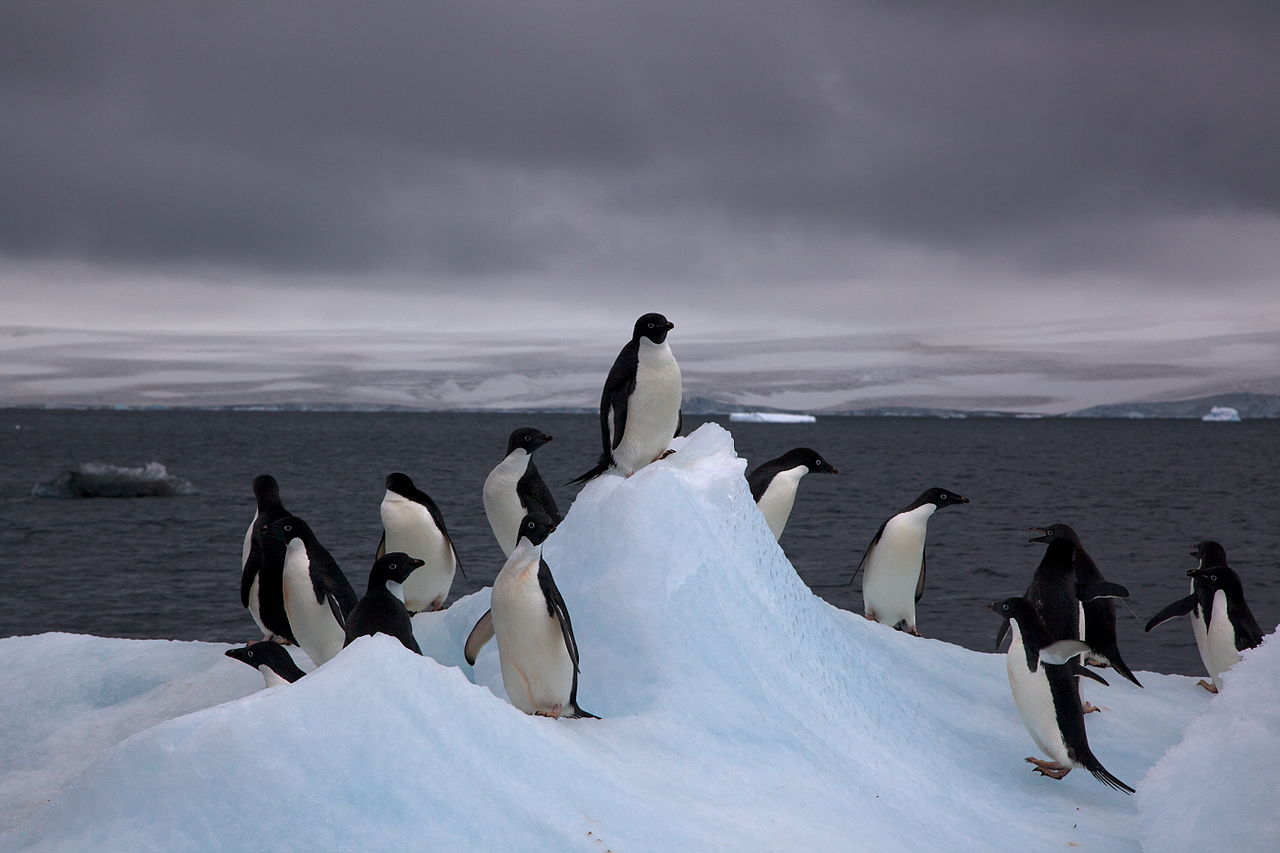
The Adélie penguin (Pygoscelis adeliae) is a commonly seen Antarctic species with distinctive black upperparts, white underparts and a conspicuous white ring around each eye. It is one of the best-known seabirds of the Southern Ocean and forms large, dense breeding colonies on the rocky coasts and islands of Antarctica.
Image gallery
10 Images




Characteristics
Adélies are medium-sized penguins with a compact, streamlined body adapted to fast swimming. Their plumage and contrasting facial markings help identify them at a distance. The species is often described by its white eye ring and stark head coloration; more on this marking and identification can be found here. They are strong divers and forage mainly in coastal waters.
Distribution and habitat
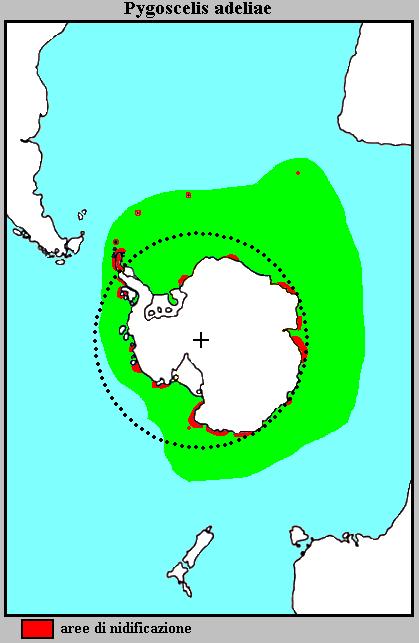
Adélie penguins occur around most of the Antarctic continent and the nearby islands. Estimates place the global population at roughly 2.5 million individuals, making them one of the more numerous Antarctic penguins. Their colonies are located where exposed rock and access to open water coincide; many colonies are counted and mapped across the Southern Ocean. The birds travel from the sea to land to breed; details about seasonal movements and breeding timing are summarized here.
Breeding and life cycle
During the austral summer, Adélies come ashore to breed. They build nests from stones — a behavior that can force adults to travel considerable distances to find suitable nesting material — and form crowded, noisy colonies. Eggs are incubated by both parents and chicks are reared in nests and crèches until they fledge. In the non-breeding season they are closely associated with floating sea ice; for information about wintering and movement patterns see this summary and resources about sea-ice habitats.
Diet, predators and conservation
Adélies feed mainly on Antarctic krill, small fish and squid; they forage by diving and can travel several kilometres from colonies to find food. Predators include marine mammals such as leopard seals and avian predators like south polar skuas, which take eggs and chicks. Because their life cycle is closely tied to sea ice and coastal access, Adélie populations are considered useful indicators of environmental change. Long-term monitoring by scientists tracks population trends and distribution, and conservation efforts are linked to broader Antarctic management and climate considerations.
Notable among Antarctic penguins for their wide distribution and colonial nesting on stones, Adélie penguins remain a focus of ecological research and public interest as observers study how shifting ice and ocean conditions affect polar ecosystems.
Author
AlegsaOnline.com Adélie penguin (Pygoscelis adeliae) Leandro Alegsa
URL: https://en.alegsaonline.com/art/958
Sources
- iucnredlist.org : "Pygoscelis adeliae"