
T helper cell (CD4+ T cell): role, types and clinical importance
T helper cells (CD4+ T cells) coordinate adaptive immune responses by recognizing antigen on MHC II, secreting cytokines, and activating B cells and cytotoxic T cells. They are central to immunity and are targeted by HIV.
Overview
T helper cells are a subset of lymphocytes that bear the CD4 surface marker and act as central coordinators of adaptive immunity. They arise from bone marrow progenitors that migrate to and mature in the thymus, then circulate as naive cells until they encounter antigen. Unlike phagocytes, T helper cells do not directly engulf or kill microbes; instead they direct other immune cells by producing signalling molecules called cytokines.
Image gallery
3 Images

Functions and mechanisms
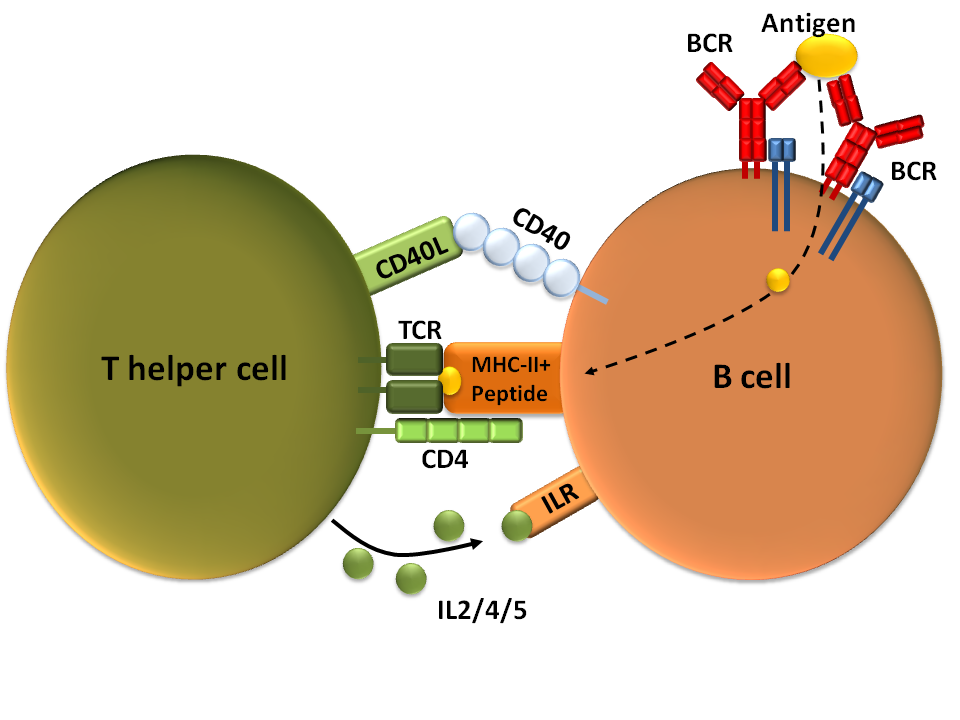
T helper cells recognize peptide fragments presented on MHC class II molecules of antigen-presenting cells. After activation they provide essential help to effector cells: they stimulate antibody production by B cells, and enhance the activity of cytotoxic T cells and phagocytes. Their actions make immune responses more effective against pathogens such as bacteria and viruses. Key features include antigen recognition, co-stimulatory signals, and cytokine secretion to shape the nature of the response.
Subsets and specialized roles
- Th1 — promotes cellular immunity against intracellular microbes.
- Th2 — supports antibody production and responses to parasites.
- Th17 — involved in defence at mucosal surfaces and inflammation.
- Tfh (follicular helper) — helps B cells in germinal centers to produce high-affinity antibodies.
- Treg (regulatory) — limits immune responses and maintains tolerance.
Development, activation and memory
Naive T helper cells are activated when antigen-presenting cells (for example dendritic cells) display antigen on MHC II along with co-stimulatory signals. The local cytokine environment and other signals drive differentiation into one of the functional subsets. Some activated cells become long-lived memory T helper cells that respond more rapidly on re-exposure to the same pathogen, an important principle behind vaccination.
Clinical significance and notable facts
T helper cells are central to effective immunity but also play roles in disease. The human immunodeficiency virus (HIV) selectively infects CD4+ T helper cells, undermining immune coordination and leading to immunodeficiency. Abnormal T helper responses contribute to autoimmune disorders and allergies. Clinically, CD4 counts are used to monitor immune status in HIV infection, and many vaccines aim to elicit durable T helper responses. Important distinctions include the MHC-II restriction of CD4+ cells versus CD8+ cytotoxic cells and the therapeutic targeting of T helper pathways in immunology and oncology.
Related articles
Author
AlegsaOnline.com T helper cell (CD4+ T cell): role, types and clinical importance Leandro Alegsa
URL: https://en.alegsaonline.com/art/95753