
Lymphocyte
Lymphocytes are a class of white blood cells central to vertebrate immunity, including B cells, T cells and natural killer cells that provide antibody production, cell-mediated defense and immune memory.
Overview
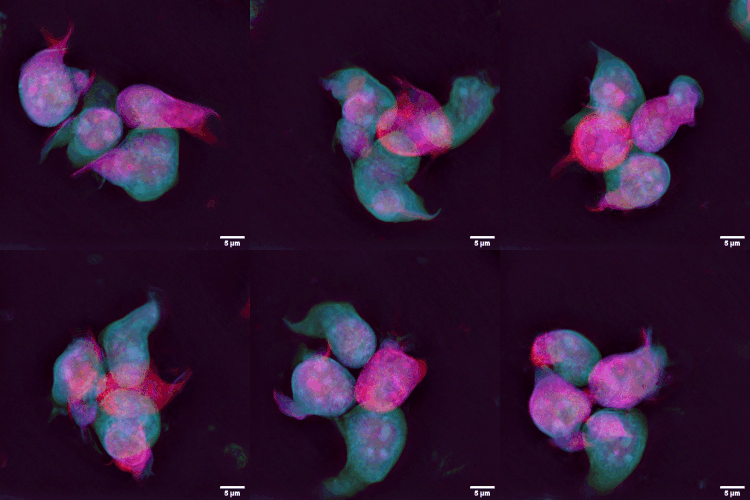
Lymphocytes are a major class of white blood cells that play central roles in the immune defenses of vertebrates. They are found in blood, lymph and lymphoid organs and participate in protecting the body from pathogens and abnormal cells. Morphologically, lymphocytes are recognizable by a relatively large, often spherical nucleus surrounded by a thin rim of cytoplasm; this feature helps distinguish them from other leukocytes and is noted in many anatomical descriptions as a prominent, compact nucleus. Their functions range from producing antibodies to directly killing infected or transformed cells.
Image gallery
8 Images



Principal types and functions
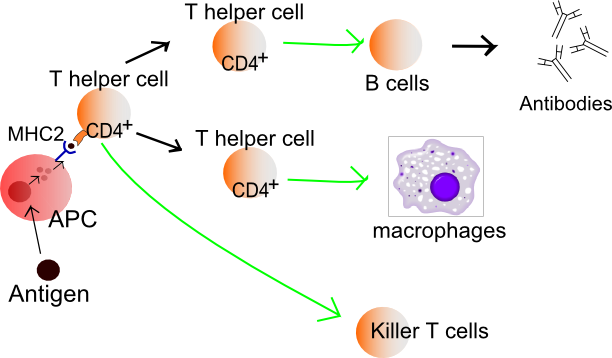
Three major functional classes are commonly recognized. B lymphocytes (B cells) are chiefly responsible for producing antibodies and can differentiate into antibody-secreting plasma cells. T lymphocytes (T cells) mediate cell-based immunity: helper T cells coordinate immune responses, cytotoxic T cells kill infected or malignant cells, and regulatory T cells help maintain tolerance. Natural killer (NK) cells are cytotoxic lymphocytes that act without prior antigen sensitization and are considered part of the innate immune arm. Collectively these cells enable both targeted adaptive responses and rapid innate defenses against infection.
Development and distribution
Lymphocytes originate from hematopoietic stem cells in bone marrow. In most vertebrates, some subsets mature within that marrow while others, most notably T cells, complete development in the thymus. After maturation they populate peripheral blood and lymphoid tissues such as lymph nodes, spleen and mucosa-associated lymphoid tissue. Lymphocytes also patrol tissues and can proliferate and differentiate in response to specific antigens, a process that underlies vaccine effectiveness and long-term immunity.
Characteristics and laboratory features
Under routine microscopy they appear smaller than many other leukocytes with minimal cytoplasm and a dense nucleus. Functionally they can persist for long periods as memory cells after an immune challenge. Laboratory measurements of lymphocyte numbers and types are used clinically to assess immune status; deviations from expected ranges may reflect infection, immune deficiency, inflammation or hematologic malignancy.
Clinical importance and examples
Lymphocytes are central to how vaccines protect against disease and to many clinical conditions. Infections commonly elicit changes in lymphocyte activity and counts, and disorders such as immunodeficiencies, autoimmune diseases and lymphoid cancers arise from defects or dysregulation of lymphocyte function. Therapies that target lymphocytes, including monoclonal antibodies and cellular immunotherapies, are important in treating cancers and autoimmune disorders.
History and distinctions
The recognition of lymphocytes as a distinct group within leukocytes developed as microscopy and immunology advanced; their subdivision into B and T lineages and later recognition of NK cells reflected growing understanding of immune organization. Key distinctions are functional: adaptive lymphocytes (B and T cells) require antigen-specific activation and form memory, while NK cells provide immediate, antigen-independent cytotoxicity. For more general information on immune cells and related topics see immune system resources and brief overviews of how lymphocytes respond to infections.
Related articles
Author
AlegsaOnline.com Lymphocyte Leandro Alegsa
URL: https://en.alegsaonline.com/art/60103
Sources
- mercksource.com : "Dorlands Medical Dictionary:lymphocyte"
- ncbi.nlm.nih.gov : Immunobiology; 5th ed
- pubmedcentral.nih.gov : "Lymphocyte subsets in term and significantly preterm UK infants in the first year of life analysed by single platform flow cytometry"
- doi.org : 10.1111/j.1365-2249.2005.02767.x
- ncbi.nlm.nih.gov : 1809375
- pubmed.ncbi.nlm.nih.gov : 15807853