
T. Jack Lee — NASA Engineer and Director of Marshall Space Flight Center
Thomas Jack (T. Jack) Lee (1935–2019) was an American engineer who led NASA's Marshall Space Flight Center in Huntsville from 1989 to 1994 and contributed to U.S. spaceflight programs.

Thomas Jack "T. Jack" Lee (1935–2019) was an American engineer and manager who played a senior leadership role within the U.S. civilian space program. Best known for serving as the sixth director of the NASA Marshall Space Flight Center, Lee presided over the center's activities in a period that bridged Cold War-era practice and evolving post‑1980s mission priorities. He was born in Wedowee, Alabama, and his career reflected both technical training and program management in large-scale aerospace projects.
Image gallery
4 Images

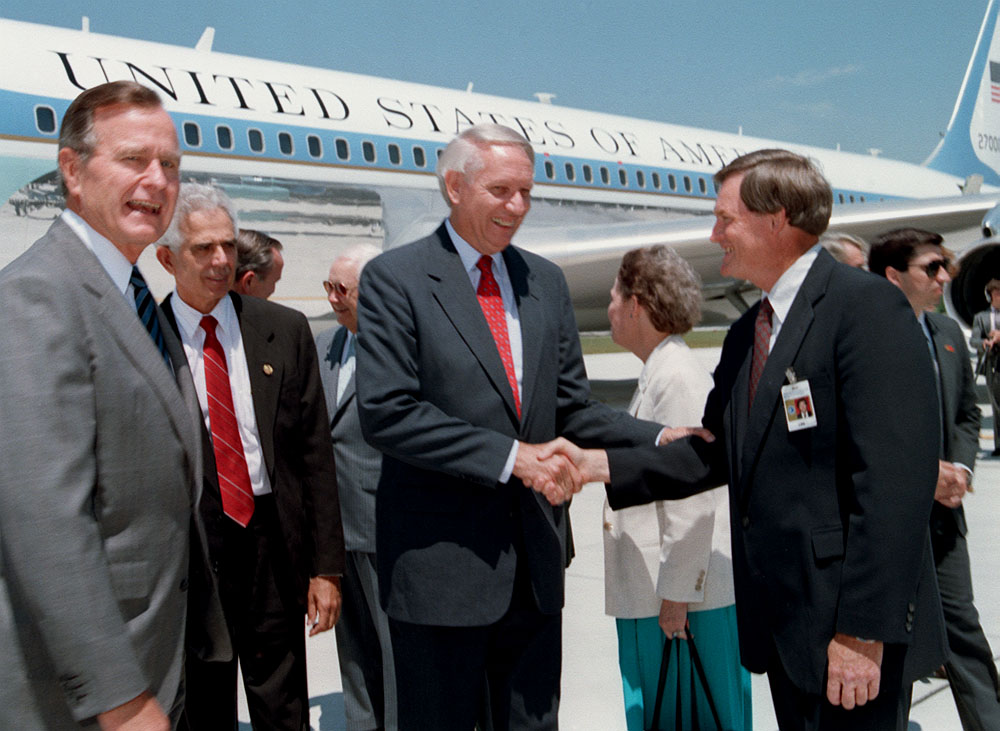

Career and leadership
Lee's tenure as director formally ran from July 6, 1989, until January 6, 1994. In that capacity he was responsible for directing a multi-disciplinary center whose work encompassed propulsion systems, spacecraft integration, scientific payloads, and related advanced technologies. Directors at Marshall are charged with planning, budgeting, oversight of engineering and scientific staff, and interfacing with NASA headquarters, industry partners, and congressional stakeholders.
While specific project assignments varied during his career, the role of Marshall's director traditionally includes:
- Guiding the center's involvement in propulsion and launch vehicle development.
- Overseeing research and testing infrastructure and facilities.
- Coordinating partnerships with contractors, universities, and other government agencies.
- Managing workforce and safety policies for complex aerospace programs.
Marshall Space Flight Center and context
The Marshall Space Flight Center in Huntsville, Alabama has been a focal point for American rocket and propulsion work since its establishment. Often associated with large launch vehicle engines, satellite integration, and scientific instrumentation, the center has been central to many civil space efforts. As director, Lee led an organization with both historical legacy and ongoing responsibilities for enabling human and robotic access to space.
Personal life and legacy
Born and raised in rural Alabama, Lee maintained ties to the region through his work in Huntsville and later life. He died on February 24, 2019, in Birmingham, Alabama, of pancreatic cancer, at the age of 83. His passing was noted by colleagues and local institutions that recognized his leadership during a transitional period for NASA programs.
Lee's career illustrates the mix of technical expertise and organizational leadership required to run a major government research and development center. While directors are often remembered for particular programs, their broader impact lies in maintaining institutional capability, safety standards, and partnerships that enable long‑term scientific and engineering achievement.
Related articles
Author
AlegsaOnline.com T. Jack Lee — NASA Engineer and Director of Marshall Space Flight Center Leandro Alegsa
URL: https://en.alegsaonline.com/art/95747
Sources
- history.msfc.nasa.gov : history.msfc.nasa.gov
- obits.al.com : "Thomas Lee Obituary - Huntsville, AL | The Huntsville Times"