
Summer of Sam (1999 film)
1999 crime drama by Spike Lee that fictionalizes the community impact of the 1977 'Son of Sam' murders in New York City, noted for its ensemble cast, period detail and controversies at release.
Overview
Summer of Sam is a 1999 crime drama written, produced and directed by Spike Lee. The film uses a real series of murders as a backdrop for a fictional account of a working-class neighborhood under strain. It explores how fear, rumor and social tensions can affect ordinary lives when a city is gripped by a violent criminal case. The real events that inspired the setting are often referred to in contemporary accounts as a series of murders carried out during a single summer, and the assailant later identified by authorities was David Berkowitz, known in the press as "Son of Sam". The film situates these crimes within the heat and unrest of New York City in 1977.
Image gallery
1 Image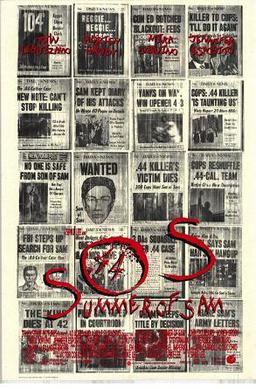
Background and historical context
The story is set against historically documented pressures of the late 1970s: urban decline, high temperatures, labor strikes and an anxious press environment. Lee frames the violence not as the central spectacle but as a catalyst for suspicion and scapegoating that affects neighborhoods. While the killings themselves are part of the narrative, the screenplay concentrates on the social atmosphere—the way friends and neighbors respond to the murder spree and to one another amid rumors and heightened policing.
Plot summary
The plot follows a group of fictional residents whose lives intersect and fray during that summer. Relationships, marriages and friendships are tested as paranoia spreads. Rather than offering a procedural account of police work, the film traces personal consequences: lost trust, jealousies inflamed by the press, and the ways in which ordinary people seek explanations for senseless violence. These invented storylines are intended to reflect typical reactions in affected communities rather than to document a single true-life person’s experience.
Cast and characters
The ensemble cast includes John Leguizamo, Mira Sorvino, Adrien Brody and Jennifer Esposito, among others. Most characters are fictional creations (fictional characters) who serve as stand-ins for the kinds of residents who might have lived through the events. Their interactions provide the dramatic engine for the film and invite viewers to consider how social identity, masculinity and community dynamics respond to fear.
Style, themes and production
Lee employs familiar stylistic devices—ensemble staging, music and period detail—to evoke 1977. Production design, costumes and soundtrack choices aim to suggest the era without presenting the film as a documentary. Prominent themes include the psychology of scapegoating, tensions around masculinity and ethnic identity, media influence, and the ripple effects of public violence on everyday relationships. The film mixes personal drama with wider civic anxiety to ask how communities interpret and react to crime.
Release, rating dispute and controversy
Before theatrical release the motion picture faced a rating dispute: the Motion Picture Association raised the prospect of an NC-17 rating over a sexual scene, and a subsequent edit was made for distribution. The film opened in July 1999 and prompted discussions about artistic responsibility when fictionalizing or dramatizing recent violent events. Some commentators praised its ambition and performances, while others questioned whether the dramatization exploited real suffering.
Reception and legacy
Contemporary reviews were mixed to positive, with critics often noting strong acting and provocative themes even as they debated the ethics and effectiveness of blending real tragedies with fictional lives. Over time the film has been considered as part of Spike Lee's wider body of work concerned with how social forces shape private life and as a cultural portrait of late-1970s urban America. It continues to be discussed in relation to debates about representation, historical fiction and the responsibilities of filmmakers who draw on traumatic events.
Related articles
Author
AlegsaOnline.com Summer of Sam (1999 film) Leandro Alegsa
URL: https://en.alegsaonline.com/art/94784