
Submandibular gland
One of the paired major salivary glands beneath the lower jaw; produces mixed saliva, drains via Wharton’s duct, and is clinically important for stones, infections, and tumors.
The submandibular glands are a pair of major salivary glands located beneath the lower jaw (mandible) in the submandibular triangle. They lie partly superficial and partly deep to the mylohyoid muscle and open into the mouth at the sublingual caruncle via the submandibular (Wharton’s) ducts. These glands are an important source of unstimulated saliva and contribute to oral lubrication, digestion and antimicrobial defense.
Image gallery
10 Images


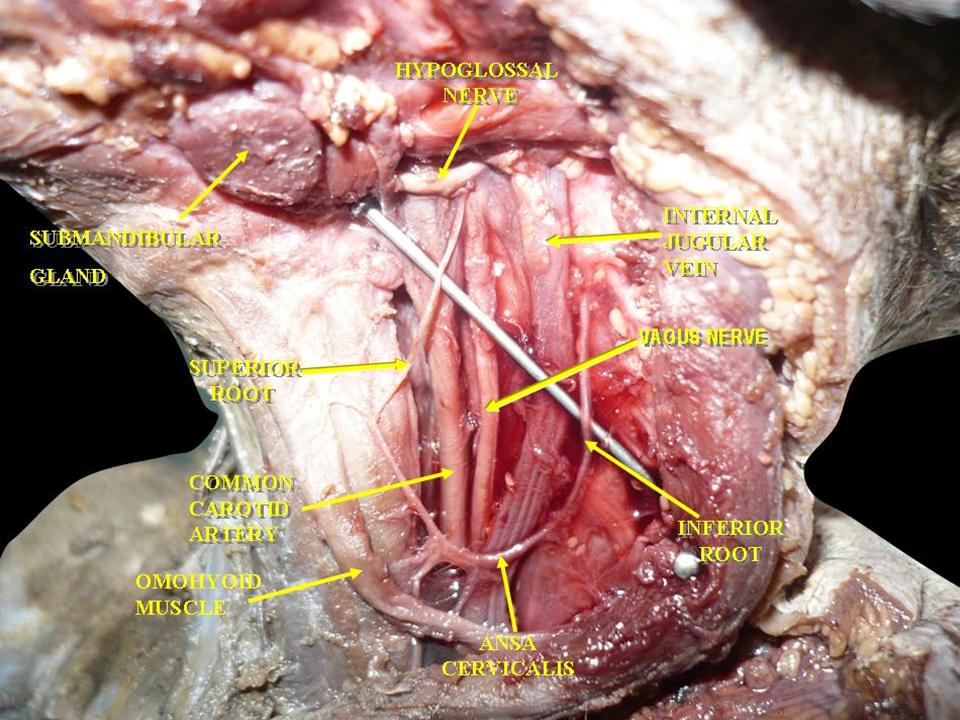
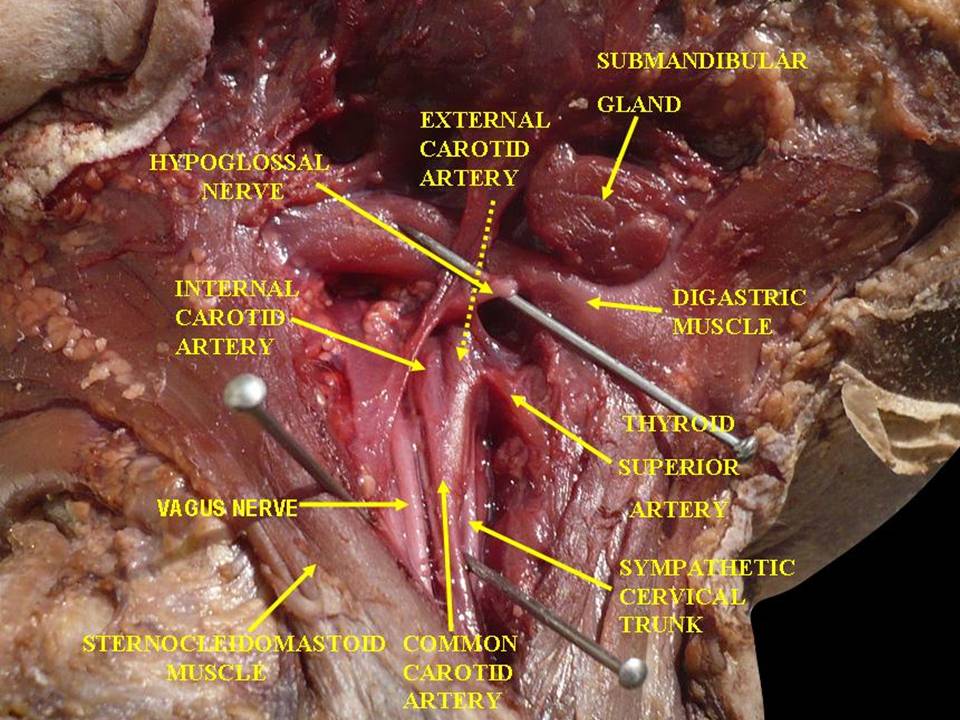
Structure and relations
Each gland has a larger superficial lobe and a smaller deep lobe that wraps around the posterior edge of the mylohyoid. The duct emerges from the deep lobe, courses forward on the floor of the mouth and opens beside the lingual frenulum. Nearby structures include the lingual nerve, hypoglossal nerve and the facial artery; venous drainage communicates with the facial and lingual veins. Lymphatic drainage reaches the submandibular lymph nodes.
Function and secretion
Submandibular glands produce a mixed serous and mucous secretion but are richer in serous components than the sublingual glands. Their saliva contains enzymes (such as amylase), mucins, immunoglobulins and antimicrobial proteins that aid initial carbohydrate digestion, lubricate food, protect oral tissues and help maintain oral pH.
Innervation and development
Parasympathetic fibers from the facial nerve reach the gland via the chorda tympani and lingual nerve, stimulating copious, watery secretion. Sympathetic fibers modulate the composition and reduce flow. Embryologically the salivary glands develop from oral epithelium with branching morphogenesis that forms ducts and secretory acini.
Clinical significance
- Sialolithiasis (salivary stones) commonly affects the submandibular duct because of its long, uphill course and thicker, mucous-rich secretions; stones can cause painful swelling, especially at mealtimes.
- Infections (sialadenitis), autoimmune conditions (such as Sjögren-like presentations), and benign or malignant tumors can involve the gland and require imaging and sometimes biopsy.
- Diagnosis is aided by ultrasound, CT, MRI or sialography. Initial treatment for stones and infection may include hydration, sialogogues, gland massage and antibiotics; persistent problems can require minimally invasive stone removal or surgical excision of the gland. Careful technique is needed to protect nearby nerves.
Compared with the parotid (largely serous) and the sublingual (mainly mucous), the submandibular gland is a major contributor to resting saliva and plays a central role in everyday oral comfort and oral health.
Related articles
Author
AlegsaOnline.com Submandibular gland Leandro Alegsa
URL: https://en.alegsaonline.com/art/94493