
Battle of Balaclava (25 October 1854)
A major engagement of the Crimean War, noted for the Thin Red Line, the Heavy Brigade's success and the ill-fated Charge of the Light Brigade; a clash with lasting military and cultural impact.
Overview
The Battle of Balaclava took place on 25 October 1854 during the larger conflict known as the Crimean War. It occurred near the supply port of Balaclava, south of Sevastopol, and involved Allied forces — principally troops of the United Kingdom, the French Empire and the Ottoman Empire — confronting elements of the Russian Empire. The engagement is remembered less for a single decisive outcome than for several dramatic and well-documented episodes that exposed command, communication and logistical weaknesses on both sides.
Image gallery
10 Images



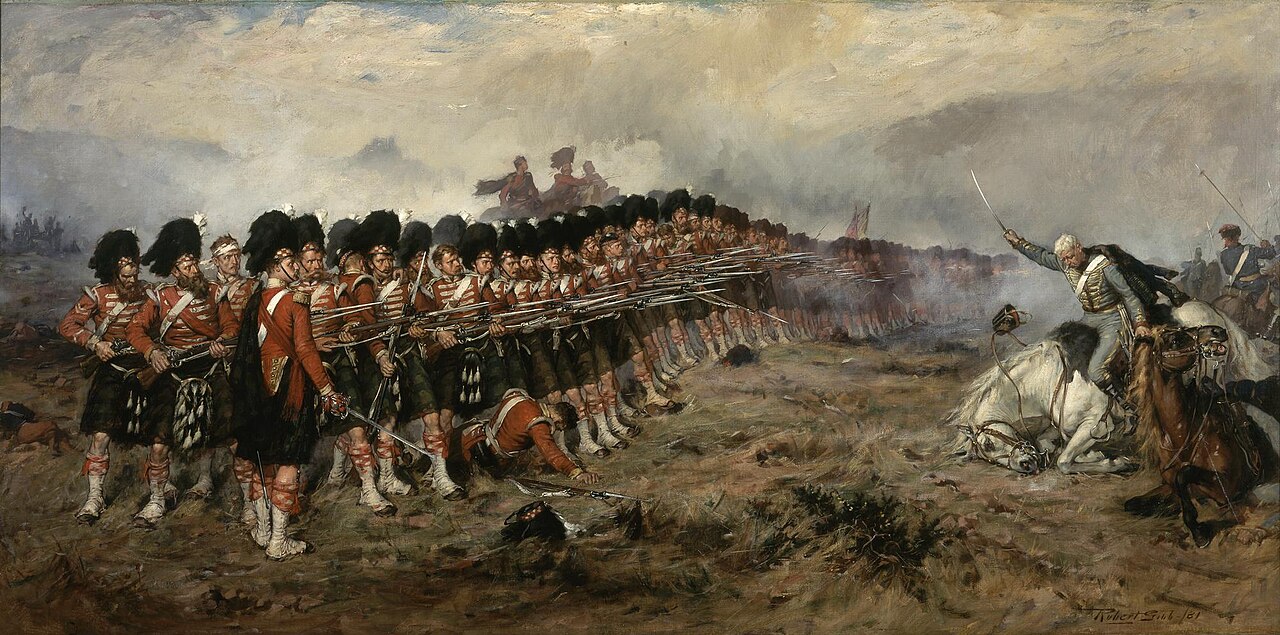


Key actions and characteristics
The fight at Balaclava produced three widely reported incidents that have shaped its reputation in history:
- The Thin Red Line — a small force of British infantry (the 93rd Highlanders) held off a Russian cavalry advance without forming full squares, an episode celebrated for discipline under pressure.
- The Charge of the Heavy Brigade — an uphill counter-charge by British heavy cavalry that successfully repulsed a larger Russian cavalry force earlier in the day.
- The Charge of the Light Brigade — a later and far more famous cavalry charge ordered against well-defended Russian artillery positions after an ambiguous command; it resulted from miscommunication among senior officers and caused heavy British losses.
Command problems — including unclear orders issued by Lord Raglan and the confused transmission by subordinate commanders such as Lord Lucan and Lord Cardigan — played a central role in the most costly episode. Russian field commanders, notably Pavel Liprandi, probed Allied lines with mixed success.
Outcome, aftermath and significance
Militarily the battle produced local Russian successes but no decisive strategic breakthrough: the Allies retained control of Balaclava as a supply base for the ongoing siege of Sevastopol, while both sides suffered significant casualties. The event prompted public outcry in Britain, inquiries into command and communication failures, and wide cultural attention — most famously Alfred, Lord Tennyson's poem memorialising the Light Brigade.
Balaclava remains an important case study in 19th‑century warfare. It highlights the limits of cavalry against well‑prepared positions, the impact of poor communication in the chain of command, and the growing role of media and public opinion in wartime. For further reading on the wider campaign and its participants see related resources on the Crimean War and the principal belligerents: the Ottoman Empire, the French Empire, the United Kingdom and the Russian Empire.
Related articles
Author
AlegsaOnline.com Battle of Balaclava (25 October 1854) Leandro Alegsa
URL: https://en.alegsaonline.com/art/9438