
Stephen R. Covey
American educator and author best known for The 7 Habits of Highly Effective People; influential consultant, speaker and founder of leadership and training programs used worldwide.
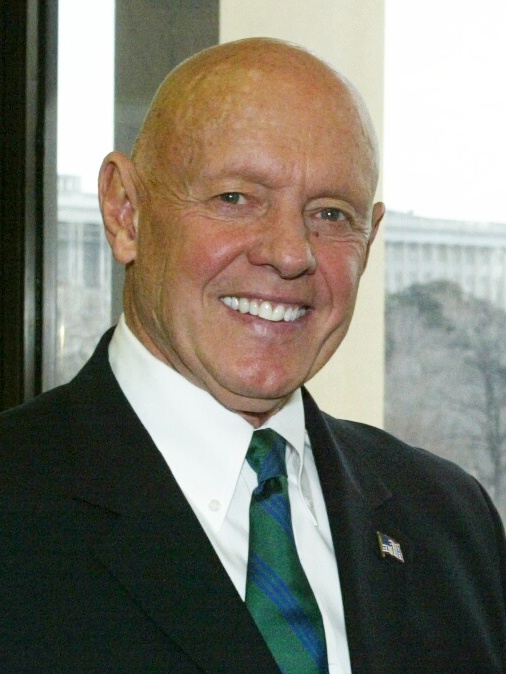
Stephen R. Covey (1932–2012) was an American educator, author, businessman and keynote speaker whose work on personal and organizational effectiveness reached a global audience. He wrote several bestselling books, most famously The 7 Habits of Highly Effective People (1989), and helped popularize a values-based approach to leadership and time management. His work bridged self-help, management training and education, and it continues to inform courses, corporate programs and school curricula.
Image gallery
2 Images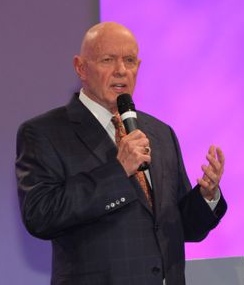
Major works and key concepts
Covey's ideas emphasize timeless principles, character development and the alignment of daily actions with deeper values. His best-known concepts include the seven habits—often summarized as:
- Be proactive
- Begin with the end in mind
- Put first things first
- Think win–win
- Seek first to understand, then to be understood
- Synergize
- Sharpen the saw
Later books extended these themes: The 8th Habit encourages people to find their voice and help others find theirs, while Principle-Centered Leadership and First Things First apply the approach to organizations and personal time management. Covey also promoted programs for families and schools, notably The Leader in Me, which adapts his frameworks for children and educators.
Life and career
Born in Salt Lake City, Utah, Covey trained as an academic and spent much of his career teaching, consulting and speaking. He was widely described as an educator and served as a professor and advisor in business education. He co-founded a training and consulting company that grew into a global firm offering workshops, books and licensing of leadership materials. Covey balanced a public career with family life; he was married to Sandra Covey and they raised nine children. He was also a member of The Church of Jesus Christ of Latter-day Saints, a background that influenced his emphasis on character and service.
Influence and legacy
Covey's books have been translated into many languages and are commonly used in corporate training, non-profit leadership development and school programs. In 1996 Time magazine named him one of the 25 most influential people, reflecting his impact on management thinking and popular culture. His firm and the methods derived from his writing continue to be taught in workshops and incorporated into organizational curricula worldwide.
Reception, adaptations and distinctions
Supporters praise Covey for focusing attention on principles over quick-fix tactics and for offering practical exercises and case examples. Critics sometimes argue his work simplifies complex organizational issues or is presented in a moralizing tone; nonetheless, many practitioners regard his habits as a useful framework for personal discipline and collaborative work. His approach is often contrasted with personality-focused or purely skills-based management models, favoring a "character ethic" as the foundation for lasting effectiveness.
Final years and death
In April 2012 Covey suffered a bicycle accident in Provo, Utah that resulted in serious injuries. He died on July 16, 2012 in a hospital in Idaho Falls from complications related to that accident. At the time of his passing he held an appointment as a professor at the Jon M. Huntsman School of Business at Utah State University, and his work continued to be referenced across leadership and education communities.
For further reading on his books and programs, see official publishers and organizational materials that describe practical exercises, case studies and licensing options for schools and companies. Many business schools and executive education providers still teach elements of his framework as part of leadership courses.
More on his role as an educator · Jon M. Huntsman School of Business affiliation · Birthplace · State · Religious affiliation · Accident location
Related articles
Author
AlegsaOnline.com Stephen R. Covey Leandro Alegsa
URL: https://en.alegsaonline.com/art/93750
Sources
- forbes.com : "Stephen R. Covey, '7 Habits' Author, Dies At 79"
- edition.cnn.com : "'7 Habits' author Stephen Covey dead at 79"