
Stanisław Ulam
Polish-American mathematician (1909–1984) known for contributions to set theory, number theory and topology, co‑inventor of the Monte Carlo method and a key figure in early thermonuclear weapons research.
Overview
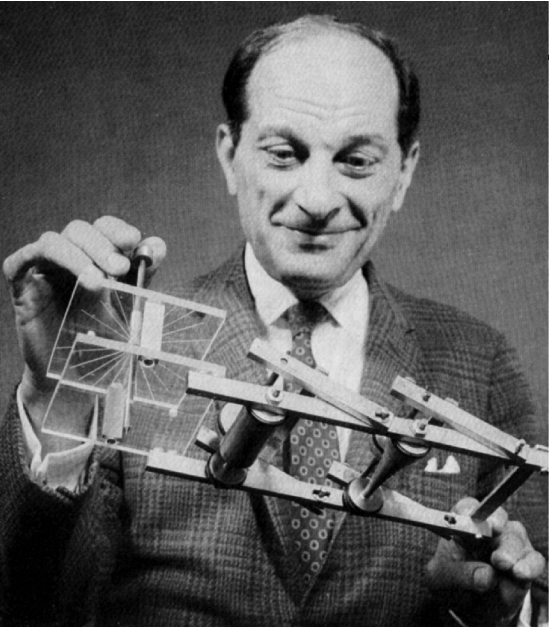
Stanisław Marcin Ulam (13 April 1909 – 13 May 1984) was a Polish-born mathematician who spent much of his career in the United States. He made enduring contributions across pure and applied mathematics and became widely known for work that bridged computation, theoretical problems and practical engineering. Ulam was of Jewish descent and left Europe as political turmoil deepened; he later worked on wartime and postwar scientific projects in America. Poland appears in accounts of his early life and training, and he is identified in many sources simply as a mathematician of broad interests.
Image gallery
10 Images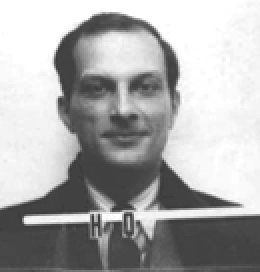




Career and historical context
After moving to the United States, Ulam joined research efforts that shaped mid‑20th century science. He was a member of teams at Los Alamos associated with the Manhattan Project, and he participated in the intense theoretical work that led to thermonuclear weapons. His exchanges with colleagues influenced the practical staging concepts that became central to most modern thermonuclear designs. Outside weapons research, Ulam became an advocate for numerical experiment and interdisciplinary approaches to scientific problems.
Mathematical contributions
Ulam’s mathematical output ranged from abstract set theory to concrete computational ideas. He wrote and lectured on questions in number theory and discovered patterns and sequences that now carry his name, while also contributing to problems in set theory and combinatorics. He conducted work relevant to ergodic theory and algebraic topology, and his questions and conjectures stimulated follow‑on research in many subfields.
Monte Carlo method and computational work
One of Ulam’s most influential legacies is his role in creating and popularizing stochastic simulation techniques. Together with Nicholas Metropolis and others, he helped develop the approach known as the Monte Carlo method, a family of algorithms that use random sampling to approximate solutions of problems in physics, mathematics and finance. The method became essential to computational science and is often cited in connection with his name; see work associated with the Monte Carlo algorithm.
Applied ideas and notable projects
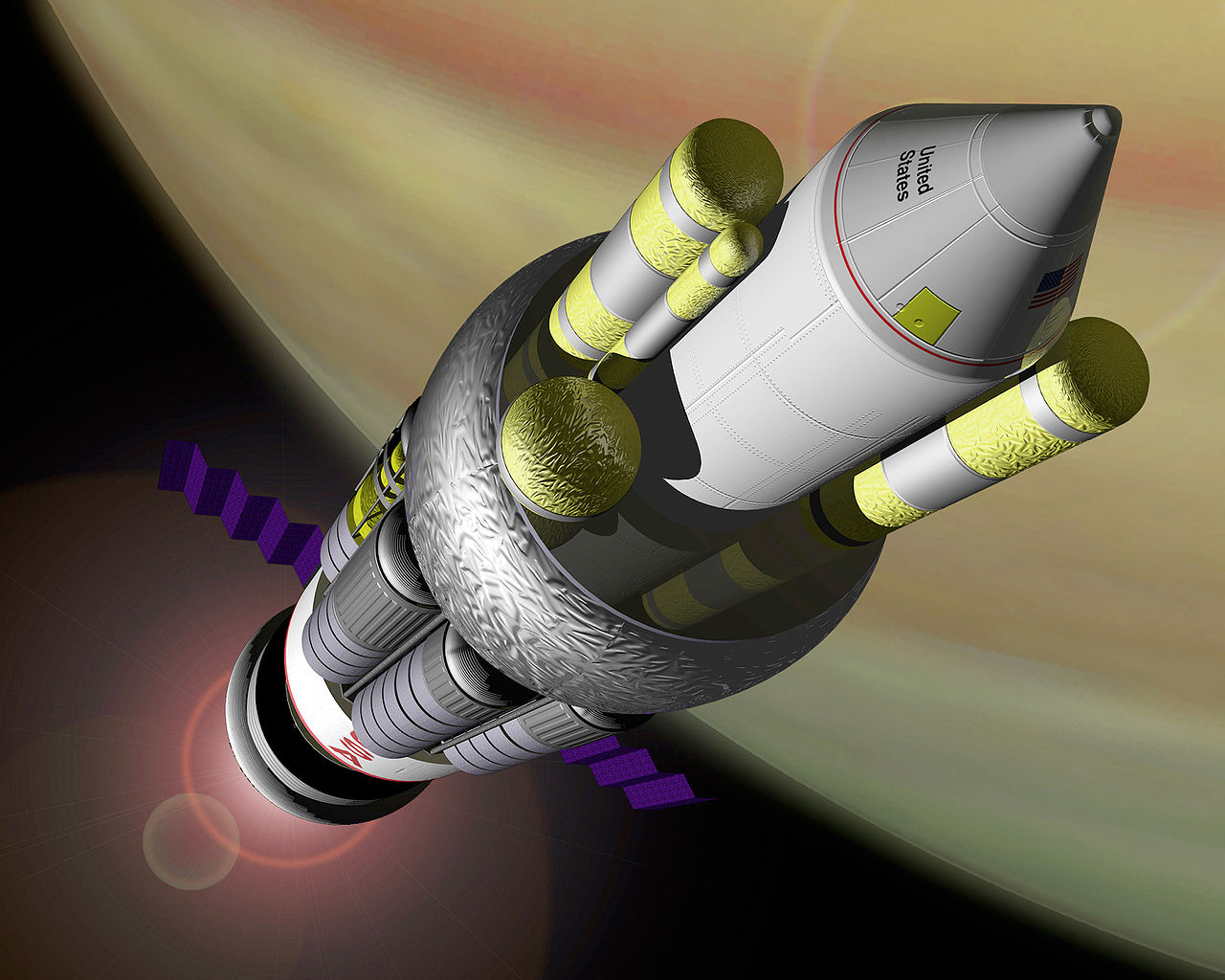
Beyond pure mathematics and computation, Ulam proposed imaginative applied concepts. He suggested using sequences of nuclear detonations to propel very large spacecraft — an idea that influenced explorations of nuclear pulse propulsion — and contributed to discussions about the controlled use of nuclear explosives for engineering tasks. His work illustrates a rare mix of abstract thinking and willingness to engage with technological possibilities.
Legacy and selected highlights
- Introduced questions and constructions that produced named objects such as Ulam numbers and the Ulam spiral; these continue to interest recreational and research mathematicians.
- Co‑developed Monte Carlo approaches that transformed computational practice across disciplines.
- Played a formative role in wartime theoretical physics at Los Alamos and in the early design concepts for thermonuclear devices.
Ulam’s career is remembered for its breadth: deep theoretical inquiry, inventiveness in computation, and engagement with large technical problems. His work continues to be cited both in specialized mathematical literature and in broader histories of 20th‑century science.
Related articles
Author
AlegsaOnline.com Stanisław Ulam Leandro Alegsa
URL: https://en.alegsaonline.com/art/93358
Sources
- wikidata.org : wikidata.org/wiki/Q234357
- catalogo.bne.es : XX1328838
- catalogue.bnf.fr : cb122810867
- data.bnf.fr : (data)
- d-nb.info : 119103281
- isni.org : 0000 0000 8103 2039
- id.loc.gov : n50046814
- genealogy.math.ndsu.nodak.edu : 12682
- id.ndl.go.jp : 00459345
- aleph.nkp.cz : xx0081561
- data.bibliotheken.nl : 068920598
- snaccooperative.org : w63s4p0g
- idref.fr : 031632645
- viaf.org : 24663415
- worldcat.org : lccn-n50046814