
Stanisław Wyspiański
Polish painter, playwright, poet and designer (1869–1907). A leading figure of Young Poland, known for the play Wesele, stained glass and stage designs that fused national motifs with Symbolist modernism.
Stanisław Mateusz Ignacy Wyspiański (15 January 1869 – 28 November 1907) was a Polish artist whose work spanned literature, painting, graphic design and applied arts. Based in Kraków for most of his life, he is remembered as a central figure of the Young Poland (Młoda Polska) movement that combined modernist aesthetics with an interest in national history and folk tradition.
Image gallery
10 Images


Education and early career
Wyspiański trained as a painter and studied at the Academy of Fine Arts in Kraków and later in Paris. He quickly gained recognition for portraits, drawings and decorative designs. His training allowed him to move freely between easel painting, large-scale decoration, and practical design work for interiors and theatres.
Principal media and works
He produced work in many forms: theatrical texts and libretti, oil and pastel portraits, stained-glass windows and mural decoration, furniture and interior schemes, and stage sets. His dramatic output — especially the play commonly known in English as The Wedding (Wesele) — remains widely staged in Poland and is considered formative in modern Polish theatre.
- Plays and poetry: blending symbolism, social observation and national themes
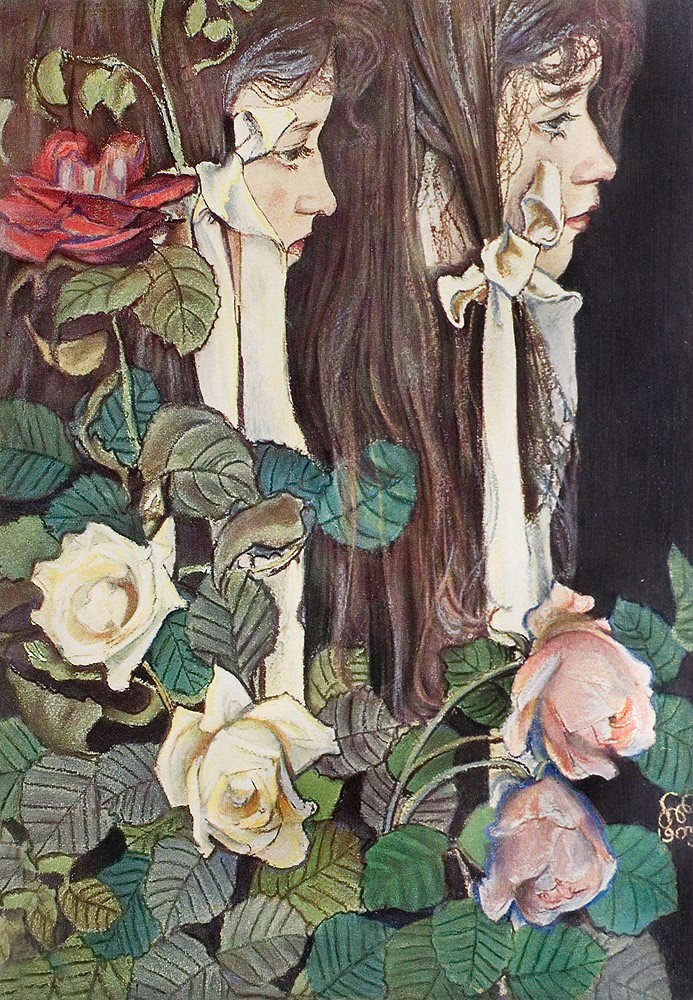
- Painting and drawing: portraits and studies characterized by expressive line and color
- Applied arts: stained glass, church windows and interior design
- Theatre design: sets and costumes that integrated visual and textual ideas
Wyspiański's work often revisited historical and folk motifs, reinterpreting them through a modern sensibility. His visual language is notable for ornamental patterns, stylized figures and a fusion of medieval and contemporary references.
Legacy and significance
Regarded as one of Poland's most versatile artists of the turn of the 20th century, Wyspiański influenced both visual arts and theatre practice in his country. Museums, theatres and schools study and stage his works, and his designs remain a reference point in Polish decorative and theatrical traditions. For a concise biographical overview see biography, and for collections of his visual and architectural projects consult sources on art and architecture.
While his life was relatively brief, Wyspiański's cross-disciplinary practice—combining word, image and space—has made him a lasting figure in Central European culture and an emblematic artist of the Young Poland era.
Related articles
Author
AlegsaOnline.com Stanisław Wyspiański Leandro Alegsa
URL: https://en.alegsaonline.com/art/93359