
St John Passion (Johannes-Passion), BWV 245
Johann Sebastian Bach's sacred oratorio telling the Passion narrative from the Gospel of John. A dramatic liturgical work for soloists, choir and orchestra, first performed in Leipzig in 1724.
Overview
The St John Passion, known in German as the Johannes-Passion, BWV 245, is a large-scale sacred work by Johann Sebastian Bach. It sets the story of Jesus’s suffering and death largely according to the Gospel of John and related devotional texts from the Bible. Intended for liturgical performance, the composition blends narrated Gospel recitative, arias of reflection, congregational chorales and dramatic choral sections to create a sustained musical meditation on the Passion.
Image gallery
1 Image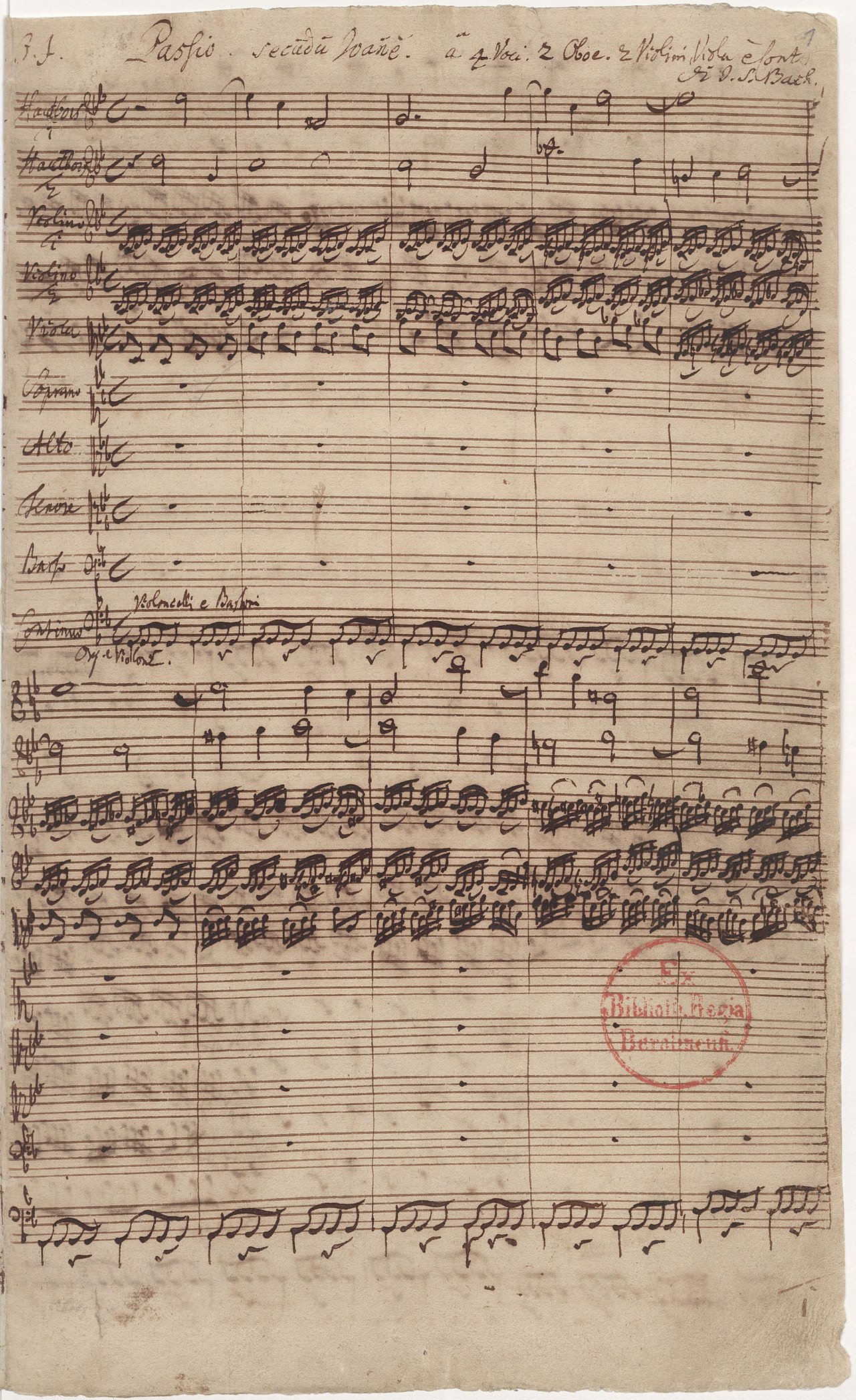
Musical forces and structure
Bach scored the work for choir, solo voices and orchestra, using contrasting vocal roles and instrumental colours to shape the drama. The narrative is carried by a tenor Evangelist; the words of Christ are usually sung by a bass; the crowd or furious groups are represented by the chorus in so-called "turba" passages. Interspersed with the Gospel text are reflective arias, spoken or sung choruses, and Lutheran chorales familiar to Bach's listeners.
- Soloists: Evangelist (tenor), vox Christi (bass), several aria soloists
- Choir: chorus for turba and chorales
- Orchestra and continuo: strings, winds and basso continuo supporting recitative and arias
Origins and revisions
The first documented performance took place in 1724 in Leipzig, at the church known as St. Nicholas (Nikolaikirche), during Bach's early years as Thomaskantor. The libretto combines Gospel narrative with poetic reflections by contemporary writers, some associated with Hamburg poetry and devotional literature, and with well-known Lutheran chorales. Bach revisited and revised the work on several occasions, adapting solo parts, orchestration and the placement of arias and chorales for different performances over time.
Textual sources and dramatic approach
Bach's setting does not simply illustrate the Gospel text but frames it with commentary: the Evangelist recounts, the chorus mimics public reactions, solo arias invite inward reflection, and chorales provide communal response. This alternation cultivates both narrative clarity and theological reflection, a hallmark that distinguishes this Passion from earlier settings by other composers such as Heinrich Schütz, whose own St John Passion reflects an earlier stylistic era.
Reception, performance and importance
The St John Passion has held a central place in the sacred and concert repertory since the 19th-century revival of Bach’s music and is often performed alongside Bach's other major choral works, such as the St Matthew Passion and the Mass in B minor. Musicians and audiences value it for its dramatic immediacy, concentrated architecture and the emotional directness of its arias and choruses. Modern performances range from historically informed ensembles to large-scale choral renditions in concert halls.
Notable features include the vivid use of the chorus as an acting crowd, the centrality of Lutheran chorales that allow congregational identification, and the balance between narrative and meditative elements that makes the St John Passion both a work of devotion and a dramatic masterpiece.
Related articles
Author
AlegsaOnline.com St John Passion (Johannes-Passion), BWV 245 Leandro Alegsa
URL: https://en.alegsaonline.com/art/93172