
Spitting Image (British satirical puppet show)
British satirical puppet television series created by Peter Fluck, Roger Law and Martin Lambie-Nairn. Noted for exaggerated puppet caricatures of politicians; original run 1984–1996, revived in 2020s.
Overview
Spitting Image is a British television comedy programme that used grotesque, exaggerated puppets to lampoon public figures and current events. Conceived by artists and designers Peter Fluck and Roger Law with graphic designer Martin Lambie-Nairn, the show blended sketch comedy, political satire and visual caricature. Its style relied on blunt parody rather than subtle humour and aimed to expose the foibles of politicians, celebrities and institutions.
Image gallery
10 Images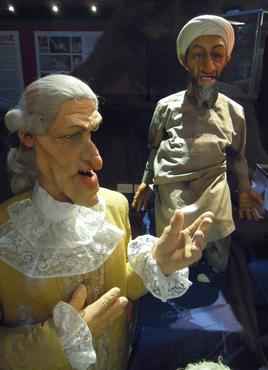




Format and characteristics
The programme featured hand-operated latex puppets performed by a team of puppeteers and voiced by impressionists and actors. Episodes typically consisted of short sketches and recurring segments that mimicked news programmes, talk shows and musical numbers. Puppets were purposefully exaggerated to emphasise mannerisms and speech patterns: this made targets instantly recognisable and allowed satirists to compress complex personalities into a single visual gag.
Recurring targets and contributors
- Ronald Reagan, American presidents and foreign leaders were frequent subjects.
- Margaret Thatcher and other UK politicians appeared repeatedly.
- Other notable figures lampooned included Mikhail Gorbachev, Queen Elizabeth, George H. W. Bush and Konstantin Chernenko.
- The show combined the visual artistry of its puppet creators with writers, impressionists and musicians to produce sharp topical comedy.
History and broadcast
The original series premiered in the 1980s and was produced for the ITV network in the United Kingdom; its run extended through much of the late 20th century. During that period the programme became notorious for its fearless treatment of politicians and public figures, attracting both praise and controversy. Key production design elements, such as the distinctive caricatured heads and hyperbolic features, influenced later satirical work.
Impact, reception and revival
At its peak the show sparked public debate about the limits of satire, media responsibility and the portrayal of authority. While some critics accused it of mean-spiritedness, many supporters argued that its caricature offered an important channel for political criticism and public catharsis. After the original series ended, the format and aesthetic continued to be referenced across comedy and animation.
Legacy and modern editions
Decades after its debut, the concept was revived for contemporary audiences, with new productions appearing on streaming services and digital platforms. These revivals preserved the core approach—visual caricature and topical sketches—while updating targets and references for a new era. The series remains a frequently cited example of how puppetry and satire can combine to create influential political comedy.
For more context on satire and puppetry see entries on satire and puppet comedy. Original broadcasts were carried by ITV, and later editions appeared on modern streaming services.
Related articles
Author
AlegsaOnline.com Spitting Image (British satirical puppet show) Leandro Alegsa
URL: https://en.alegsaonline.com/art/92735