
Spectrophotometer: Principles, Types, and Practical Uses
An introduction to spectrophotometers covering how they work, main components and types, historical context, typical applications in science and industry, and key distinctions.
A spectrophotometer is an instrument that quantifies how much light a sample transmits, absorbs, or reflects across specific wavelengths. Instruments used in spectrophotometry compare incident and emergent light to produce a spectrum or a numeric measure of absorbance or transmittance. The technique is a foundation of analytical chemistry, colorimetry, and materials science; for broader context see spectrophotometry.
Image gallery
5 Images
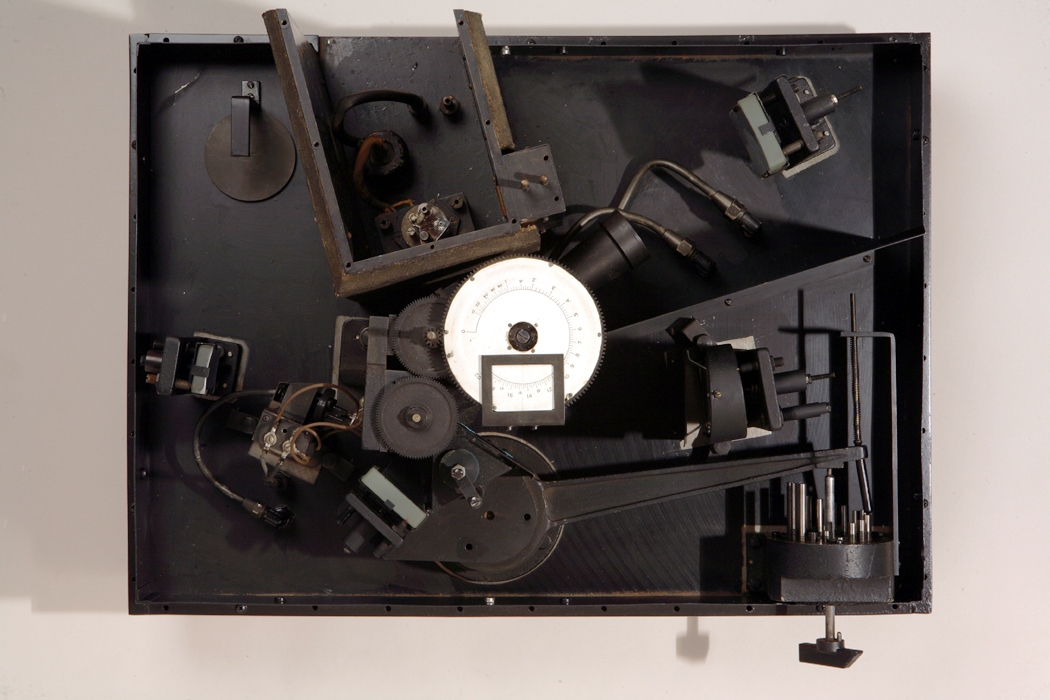


How it works
Basic operation relies on three steps: a light source generates a broad or narrow band of wavelengths; an element such as a monochromator or filter selects the wavelength of interest; and a detector measures the light intensity after interaction with the sample. Measured values are often reported as absorbance (logarithmic scale) or percent transmittance. Careful instrument calibration and reference measurements are required to obtain reliable results.
Main components and common types
- Light source: deuterium, tungsten, xenon or LED lamps, chosen for their spectral output.
- Wavelength selector: prism, diffraction grating or interference filters.
- Sample holder: cuvettes for liquids, integrating spheres for solids and powders.
- Detector: photodiodes, photomultiplier tubes or CCD arrays.
- Types: single-beam, double-beam and portable/handheld models for field use.
Different configurations trade off precision, speed, spectral range and cost. Double-beam instruments reduce source fluctuation by comparing sample and reference beams simultaneously.
History and development
Spectrophotometric methods evolved from early studies of light and color in the 19th century and were refined with electronic detectors in the 20th century. Advances in solid-state detectors, diffraction gratings and LEDs have made compact, affordable instruments widely available to laboratories and industry.
Applications and notable distinctions
Spectrophotometers are used to determine concentrations of dissolved substances by applying Beer–Lambert law, to control color in manufacturing, to characterize optical properties of coatings and materials, and to monitor biological assays. Distinct instruments focus on ultraviolet, visible, or near-infrared regions; choice depends on the sample and the analytical question. Accuracy depends on factors such as stray light, wavelength accuracy, and sample preparation.
When selecting an instrument, consider spectral range, resolution, detector type and the intended throughput. Proper training and quality control are essential for reproducible results in research and routine testing.
Related articles
Author
AlegsaOnline.com Spectrophotometer: Principles, Types, and Practical Uses Leandro Alegsa
URL: https://en.alegsaonline.com/art/92584