
Southern Railway (UK): 1923–1948 British railway company
One of Britain’s 'Big Four' (1923–1948). The Southern Railway linked London with Channel ports, Kent and the south-west, notable for suburban electrification, boat trains and engineers such as Maunsell and Bulleid.
Overview
The Southern Railway (commonly abbreviated SR) was one of the four large British railway companies created by the Railways Act 1921 and operated from 1923 until nationalisation in 1948. It served London and large parts of southern England, providing commuter, regional and long‑distance services. The company is widely remembered for its dense suburban network around London, early and extensive adoption of third‑rail electrification for local services, and a distinctive record of civil engineering and rolling stock development.
Image gallery
10 Images


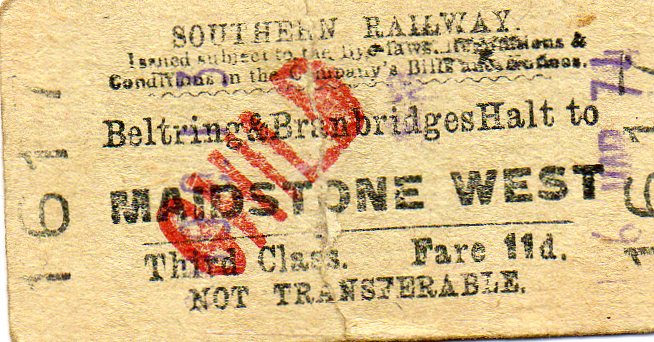


Formation
The SR was formed by the amalgamation of several pre‑grouping companies under the 1921 Act. The principal constituents were the London and South Western Railway (LSWR), the London, Brighton and South Coast Railway (LB&SCR) and the South Eastern and Chatham Railway (SECR), together with smaller independent lines and joint railways. The grouping aimed to rationalise services, reduce duplication and produce a coordinated management for routes radiating from London to the south coast. For other uses see Southern Railway.
Network and principal terminals
The Southern inherited multiple London termini and a network focused on short, intensive commuter traffic as well as long‑distance links to coastal towns and ports. Major London termini serving its routes included Waterloo, Victoria, Charing Cross and Cannon Street, each associated with different pre‑grouping companies. The railway linked London with the Channel ports and cross‑Channel ferry connections, served holiday resorts and provided routes into South West England and the county of Kent. Important main lines ran to ports and towns such as Portsmouth, Brighton, Dover and Folkestone, supporting both civilian travel and continental connections.
Civil engineering and infrastructure
The SR managed a varied infrastructure of stations, bridges, tunnels and embankments, some of which dated from early Victorian construction. The region contained notable engineering works required to maintain busy coastal and suburban corridors, and the company invested in upgrades and signalling improvements between the wars. Its route geometry and coastal locations demanded ongoing attention to sea defences, slopes and maintenance where lines ran close to the shore or on chalk and clay formations.
Electrification and services
One of the Southern's defining features was its emphasis on electric traction for suburban and some main‑line services. The company expanded third‑rail direct current systems that had begun on constituent lines before grouping and developed extensive electric multiple‑unit (EMU) services delivering high frequency commuter timetables. This approach improved acceleration, reduced platform occupation times and shaped travel patterns in the London suburbs. The SR also operated steam‑hauled expresses, local diesel and mixed traffic services where electrification did not extend.
Rolling stock and engineering leadership
Between the wars the Southern developed a range of locomotives and coaching stock suited to its mixed duties. Chief Mechanical Engineers such as Richard Maunsell (early SR years) and his successor Oliver Bulleid (from the late 1930s) introduced new steam designs and modernised workshops, leading to several influential locomotive types and innovative carriage construction. The company also commissioned purpose‑built EMUs and improved passenger accommodation to meet the needs of intensive suburban operation.
Wartime role
During the Second World War the Southern's proximity to the south coast and Channel ports made it strategically important for troop movements, military logistics and civil evacuation. The network suffered damage from bombing and required substantial post‑war repair. Services were adapted to wartime needs, with locomotives, rolling stock and staff under considerable strain to maintain essential transport links.
Nationalisation and legacy
In 1948 the Southern Railway was nationalised and became the Southern Region of British Railways. Although its corporate identity ended, many operational practices, electrification systems and route patterns continued and influenced post‑war railway policy. The SR's early commitment to third‑rail electrification set the pattern for suburban services in the south of England, and its engineering achievements and station architecture remain subjects of study.
Preservation and historical study
Several Southern locomotives, carriages and electric multiple units have been preserved on heritage lines, and the company is the focus of extensive historical research, photographic archives and enthusiast study. Historians examine the SR for its operational innovations, its responses to the pressures of inter‑war modernisation and war, and its role in shaping commuter travel and seaside tourism in southern England. More information and other uses of the name are listed under Southern Railway. For route maps and regional details see references relating to the Channel ports, South West England services and connections in Kent.
Further reading
- General histories of British railway grouping and the Big Four.
- Technical studies of third‑rail electrification and suburban EMU development.
- Biographical accounts of key engineers and company managers in the inter‑war period.
Related articles
Author
AlegsaOnline.com Southern Railway (UK): 1923–1948 British railway company Leandro Alegsa
URL: https://en.alegsaonline.com/art/92314