
Southampton Island (Nunavut)
Large Arctic island at the entrance to Hudson Bay in Nunavut, Canada. Noted for its Inuit community of Coral Harbour (Salliq), migratory bird sanctuaries, Arctic wildlife and long history of Indigenous occupation.
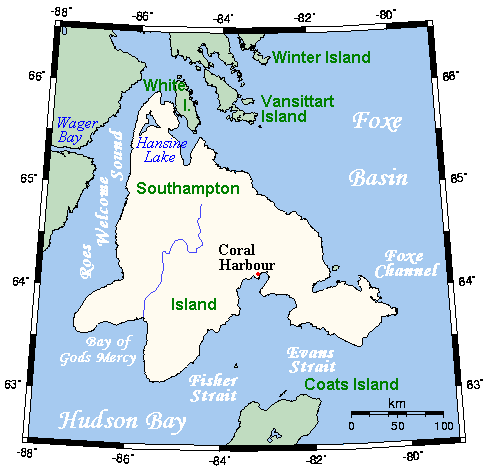
Southampton Island lies at the northern entrance to Hudson Bay, and is a major landmass of the Canadian Arctic Archipelago. Administratively it is part of the Kivalliq Region of Nunavut within Canada. With an area of about 41,214 km² it is one of Canada's largest islands and a distinctive feature of the western Arctic seascape.
Image gallery
4 Images


Geography and climate
The island has a generally low, rolling topography with tundra, wetlands and coastal cliffs. Permafrost and sea-ice dynamics shape the landscape and ecology. Summers are short and cool while long winters are frigid and dark; seasonal sea ice restricts marine navigation for much of the year. The island’s coasts include bays, inlets and river deltas that provide habitat for birds and marine mammals.
People and history
Archaeological evidence shows that the island and surrounding waters have been used by Arctic Indigenous peoples for millennia. The present-day Inuit community at Coral Harbour, known in Inuktitut as Salliq, is the island’s only permanent settlement. Traditional hunting, fishing and craft-making remain central to local life, and seasonal movements have long followed wildlife patterns.
Wildlife and conservation
Southampton Island is an important breeding and staging area for migratory birds and supports populations of Arctic wildlife. Notable animals include various waterfowl and shorebirds, seals, walrus and occasional polar bears. Parts of the island are recognized for bird conservation and are managed to protect nesting and feeding sites.
Economy and access
The local economy combines traditional subsistence activities with public services and small-scale commerce. Coral Harbour is served by an airstrip and by seasonal marine supply vessels; there are no road connections to the rest of Canada. Life on the island is shaped by remoteness, harsh climate and a reliance on community infrastructure.
Notable facts
- Key role as a northern gateway to Hudson Bay and part of the broader Arctic island system.
- Important bird habitat and cultural landscape for Inuit residents.
- Access and services are limited; travel is usually by aircraft or seasonal ship.
Related articles
Author
AlegsaOnline.com Southampton Island (Nunavut) Leandro Alegsa
URL: https://en.alegsaonline.com/art/92252