
Southampton Corporation Tramways
Municipal tram system operating in Southampton from 1879 to 1949, which transitioned from horse-drawn vehicles to electric trams and served the city, docks, and suburbs before being replaced by buses.
Southampton Corporation Tramways was the municipal transport undertaking that introduced public streetcars to the city in 1879. Operated by the local corporation, the system evolved as technology and urban needs changed. It is remembered as a key part of Southampton's late 19th and early 20th century transport network and civic development. Transport company is the broader category for such municipal operations.
Image gallery
8 Images


History and development
The system began with horse-drawn traction and gradually adopted mechanical propulsion. During the turn of the century the network was modernized and electrified, improving speed, capacity and reliability. Services continued through the interwar years, suffered disruption and damage during the Second World War, and were ultimately phased out in the post-war period when buses were judged more flexible and economical; the tram system closed in 1949.
Operation and vehicles
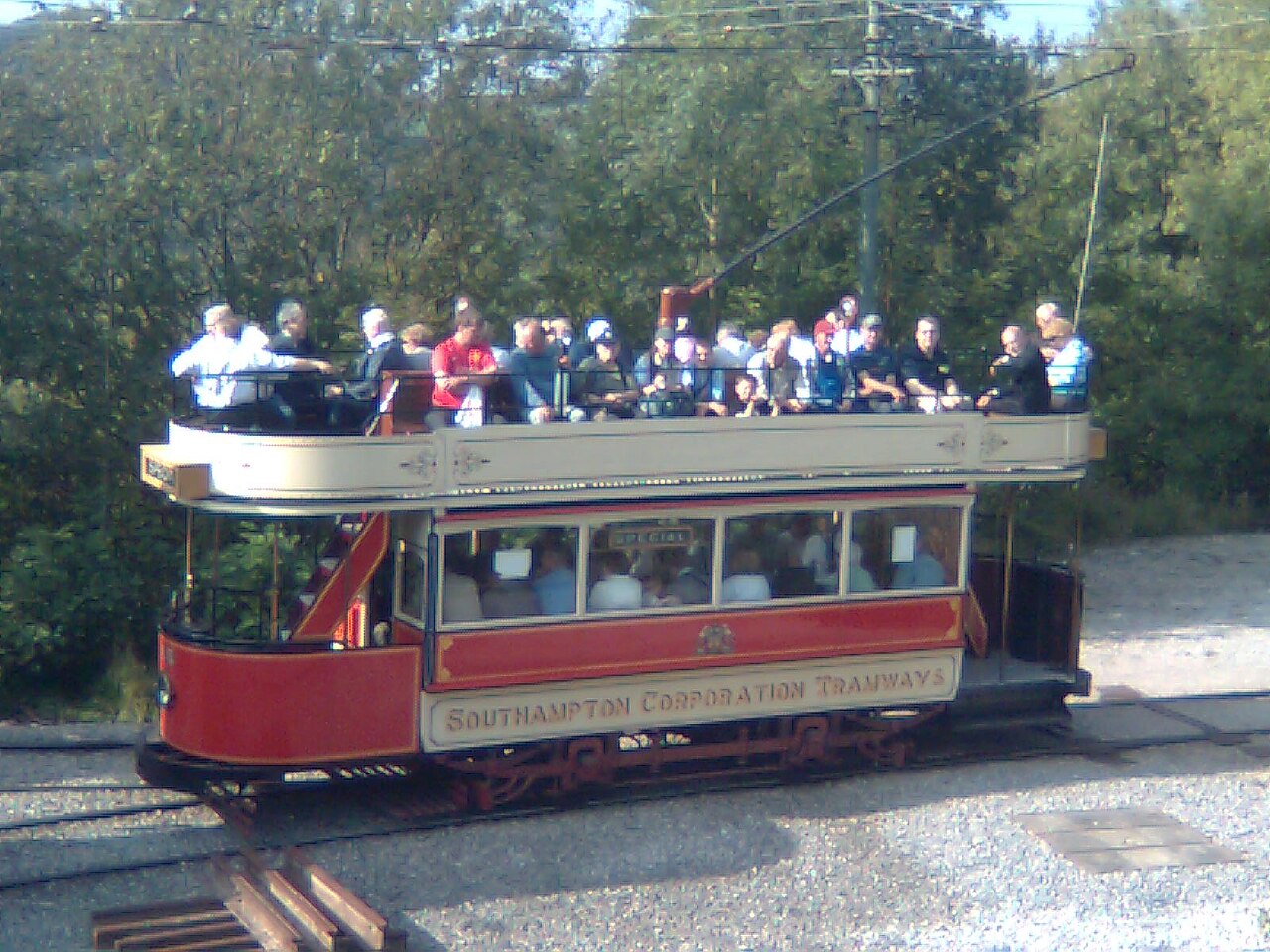
Early services relied on horse-drawn vehicles before the arrival of electric power. Later rolling stock included closed and open cars designed for street running, with features intended for heavy passenger flows to and from the docks and commercial areas. Maintenance depots, overhead wiring and tramway sheds supported daily operation and repairs.
Routes and service pattern
Routes concentrated on linking the city centre with quays, industrial areas and expanding suburbs. Timetables aimed to match commuter flows, goods-worker shifts and market days. The network was typical of municipal tramways that balanced local journeys with connections to key employment and port facilities.
Significance and legacy
The tramways shaped urban growth patterns and provided reliable mass transit for decades. After closure, most infrastructure was removed but documentary records, engineering plans and occasional physical traces remain in local archives and museums. Enthusiasts and local historians study maps, photographs and surviving artifacts to reconstruct the system's layout and operation.
Further reading
- Introductory accounts of municipal tram systems and their transition to motor buses.
- Archival images and timetables in local repositories and transport collections.
- General histories of British tramway electrification and urban public transport.
For more on the vehicles themselves see contemporary accounts of the trams that ran in British towns and cities, and resources held by regional history centres for Southampton.
Related articles
Author
AlegsaOnline.com Southampton Corporation Tramways Leandro Alegsa
URL: https://en.alegsaonline.com/art/92250
Sources
- hias.hampshire.org.uk : "FOCUS on Industrial Archaeology No. 60, June 2003"
- britishtramsonline.co.uk : "Hall of Fame: Southampton 45"