
Tram: urban rail vehicle (streetcar, trolley, light rail)
A tram (streetcar or trolley) is a rail vehicle for urban passenger transit. Usually electric and street-based, trams reduce congestion and emissions and range from historic cars to modern articulated light-rail vehicles.
Overview
A tram (also called a streetcar or trolley in some regions) is a rail vehicle designed primarily for short- to medium-distance passenger transport within urban and suburban areas. Trams typically run on steel rails embedded in streets or on segregated corridors and are commonly electrically powered. Because a single tram can carry many passengers at once, using trams instead of private cars helps reduce pollution and ease traffic congestion, supporting more sustainable urban mobility and denser, walkable neighbourhoods.
Image gallery
10 Images




Terminology and classification
The term "tram" is used widely outside North America, where equivalent vehicles are often called "streetcars" or "trolleys." Modern vehicles that are larger, faster or operate partly on dedicated track are frequently described as light rail. Distinctions among trams, streetcars and light rail depend on factors such as vehicle length, capacity, stop spacing and extent of segregated right-of-way rather than a single technical standard.
Characteristics and vehicle types
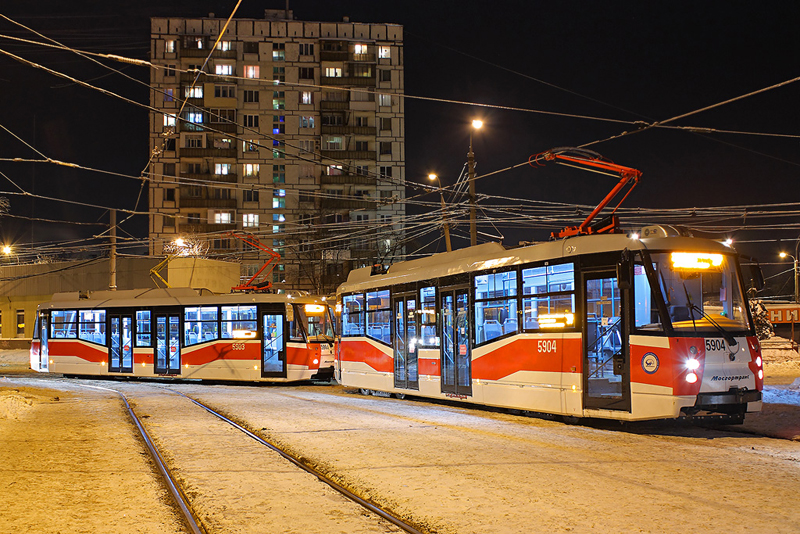
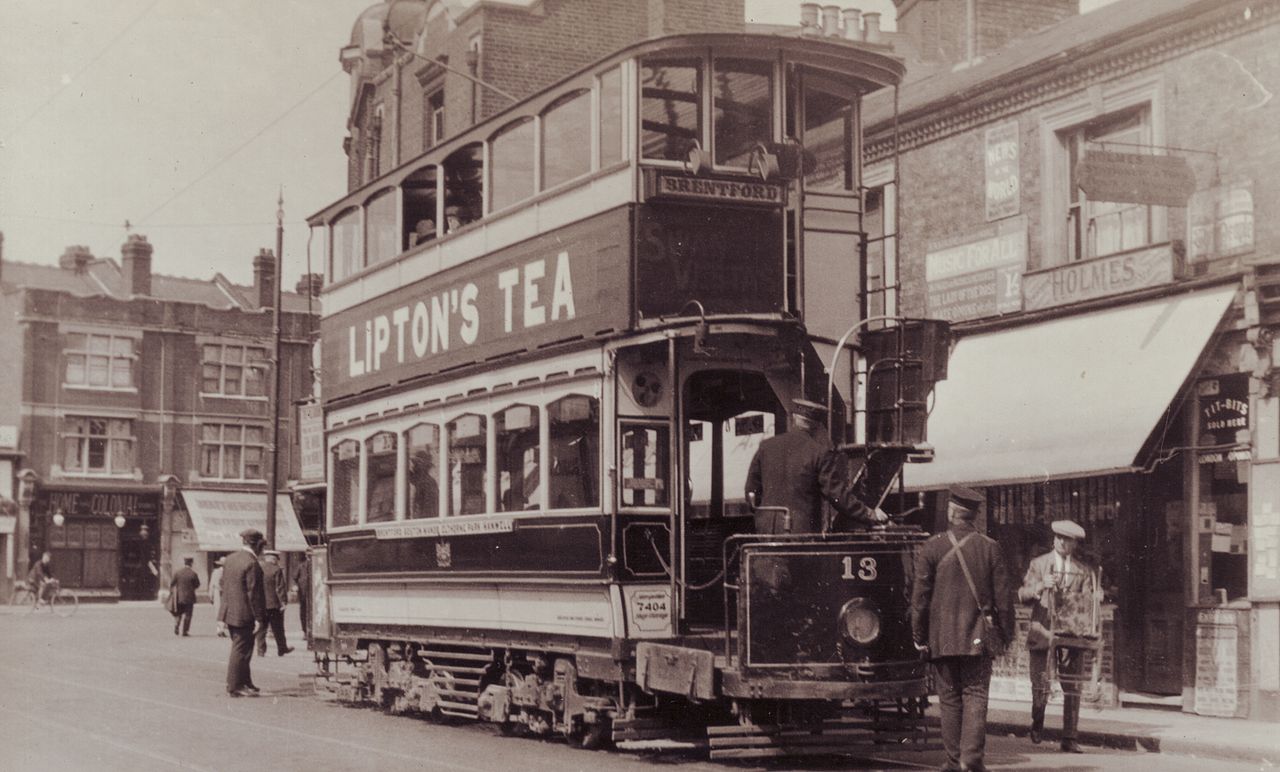
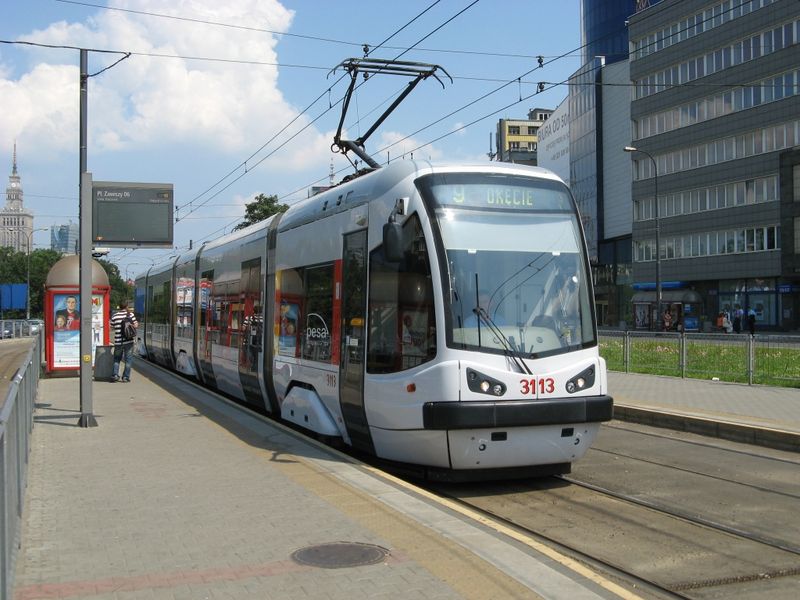
Trams range from single-bodied, historic cars to long, multi-section vehicles. Many contemporary models are articulated, composed of two or more sections joined by a flexible or pivoting connection often called a flexible joint, which provides extra capacity while allowing the vehicle to negotiate urban curves. Other notable types include double-decker trams, low-floor designs for step-free access, and tram-train vehicles capable of running on both urban tramlines and mainline railway tracks.
Power and infrastructure
Historically most trams have drawn power from overhead lines using trolley poles or modern pantographs, but alternative solutions are increasingly used. These include ground-level power supply systems that avoid overhead wiring for aesthetic or heritage reasons, on-board batteries for short wire-free sections, and hybrid arrangements. Track may be embedded in street pavement or laid on segregated corridors; stops vary from simple kerbside bays to raised platforms allowing level boarding. Maintenance facilities such as depots and workshops are essential for daily servicing and storage.
Operation, fares and accessibility
Operational planning balances frequency, speed and urban integration. Trams generally make frequent stops and therefore emphasise rapid boarding through multiple wide doors and level or low-floor entrances. Fare collection practices differ: some networks use off-board payment with validators to speed boarding, others rely on onboard fare machines and occasional inspections. Accessibility features commonly include dedicated spaces for wheelchairs, priority seating, tactile surfaces for visually impaired passengers, audio-visual next-stop displays and low-floor access to reduce barriers for people with reduced mobility.
History and development
Trams developed from 19th-century horse-drawn and cable-hauled street lines to electrically powered vehicles around the late 1800s and early 1900s. Many cities built extensive networks in the early 20th century; however, mid-century policies favouring buses and private cars led to the removal of tram lines in some regions. From the 1970s onwards, a revival took place with the introduction of modern light-rail and upgraded tram systems that combined improved accessibility, higher capacity and contemporary vehicle design. Heritage and historic streetcar lines are preserved in several cities for tourism and cultural value.
Safety, environmental benefits and urban role
Trams generally offer a safe mode of transport when well integrated into street design, with measures such as segregated lanes, clear signalling and pedestrian protection at stops. Their environmental advantages stem from higher per-vehicle passenger capacity and, in most systems, low tailpipe emissions due to electric traction; when electricity comes from low-carbon sources, trams contribute significantly to reducing transport-sector greenhouse gas emissions. By encouraging public transport use and denser development around stops, trams can play an important role in broader sustainable urban planning.
Notable examples and preservation
- Historic streetcar services, such as those on Market Street in San Francisco, retain vehicles from the early 20th century and serve both transport and tourism functions.
- Double-deck trams in Hong Kong are a distinctive, high-capacity form rarely found elsewhere.
- Modern articulated trams, similar to the contemporary vehicle seen in Warsaw, illustrate multi-section design for increased capacity and comfort.
- Large, historic or expanded networks operate in cities such as Melbourne, Amsterdam, Berlin, Moscow and Vienna, each reflecting differing planning traditions and service models.
Current trends and future developments
Recent developments in tram technology and planning include wire-free operation for sensitive urban areas using batteries or ground-level power, improved energy efficiency through regenerative braking, enhanced passenger information and contactless ticketing, and trial projects combining tram and mainline rail operations (tram-train). Automation and smart traffic signalling are being explored to increase reliability and reduce journey times. As many cities pursue decarbonisation and more liveable urban spaces, trams are likely to remain a key element of integrated public transport networks.
Questions and answers
Q: What is a tram?
A: A tram is a passenger vehicle that is like a light train. It carries people to places within a city.
Q: How can riding on a tram help prevent pollution and stop the roads from getting too busy?
A: Riding on a tram instead of driving a car can help prevent pollution and stop the roads from getting too busy because it can carry many people at the same time.
Q: What are trams called in North America?
A: In North America, trams are called streetcars or trolleys as they run mainly on streets.
Q: What are more modern and larger trams called?
A: More modern and larger trams manufactured since the 1970s are called light rail vehicles.
Q: What type of vehicle has its own right-of-way instead of traveling on the street?
A: Light rail vehicles may sometimes have their own right-of-way instead of traveling on the street.
Q: Where can tourists ride vintage streetcars from 1910s through 1940s?
A: Tourists can ride vintage streetcars from 1910s through 1940s in San Francisco's Market Street, which is part of the F Market line.
Q: Which cities have some of the largest tram networks in the world?
A: The largest tram networks in the world are located in Melbourne, St. Petersburg, Amsterdam, Berlin, Moscow and Vienna.
Related articles
Author
AlegsaOnline.com Tram: urban rail vehicle (streetcar, trolley, light rail) Leandro Alegsa
URL: https://en.alegsaonline.com/art/101076
Sources
- urbanrail.net : www.urbanrail.net