
South West Africa
Historic name for the territory now known as Namibia during German and South African rule; covers colonial administration, legal status, independence movement, and lasting legacy.
South West Africa was the designation applied to the territory now known as Namibia while it was administered by European powers between the late 19th century and 1990. The name appears in local languages (see Afrikaans form, Dutch form and German form) and in official documents of the administrations that governed it.
Image gallery
2 Images
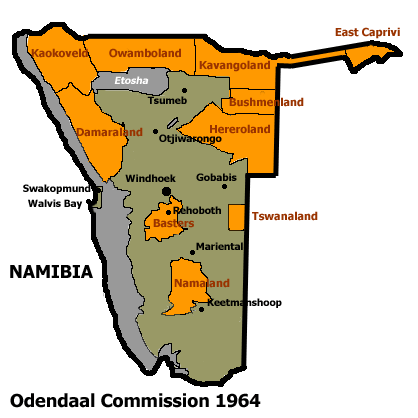
Geographic and administrative outline
The territory lies on the southwest coast of Africa, bordered by the South Atlantic Ocean and neighboring colonial possessions. During the period in question its governance evolved from a colonial possession to a mandated territory and then to a unit under South African administration. Administrations and political status were distinct: it was a German colony, later placed under South African control, and finally recognized as an independent state under a new name.
History and major events
- German colonization (late 19th century–1915): Germany established control as part of its colonial expansion. The period included armed resistance by indigenous peoples and episodes of extreme violence between about 1904 and 1908.
- South African administration (after World War I): South Africa occupied the territory and governed it first under a League of Nations mandate and later under its own administration. This era is associated with policies that mirrored South African segregation and racial discrimination.
- Path to independence (mid-20th century–1990): International challenges to South African rule, political mobilization by local movements such as SWAPO, and United Nations action contributed to a process that led to internationally supervised independence in 1990.
Throughout the 20th century, legal and diplomatic disputes concerned the status of the mandate and the right of South Africa to administer the territory. South African governments, including the German Empire era’s successors and later the Union of South Africa and the Republic of South Africa, played roles in administering or contesting the territory’s status at different times.
Today the name "South West Africa" is primarily used in historical contexts. The independent state that emerged in 1990 adopted the name Namibia and established its own constitution, institutions, and international recognition. The colonial and mandate periods remain important for understanding regional history, the legacy of colonial violence, and the legal debates that shaped decolonization in southern Africa.
Related articles
Author
AlegsaOnline.com South West Africa Leandro Alegsa
URL: https://en.alegsaonline.com/art/92236