
Sodium dichromate (Na2Cr2O7)
Inorganic orange crystalline salt used as an oxidizing reagent and industrial intermediate. Highly soluble and toxic; contains hexavalent chromium and is regulated for health and environmental risks.
Overview
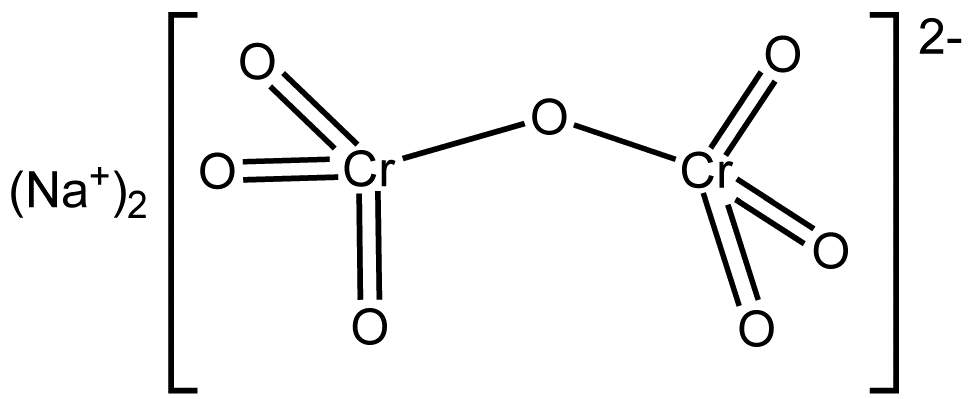
Sodium dichromate is an inorganic salt with the formula Na2Cr2O7. It appears as orange to red crystalline granules that dissolve in water to give solutions containing the dichromate ion. The solid is composed of sodium cations and dichromate anions; the sodium component is the common alkali metal sodium and the anionic portion is the dichromate ion, Cr2O7(2−). Its vivid color and strong oxidizing properties make it distinctive among industrial chemicals.
Image gallery
2 Images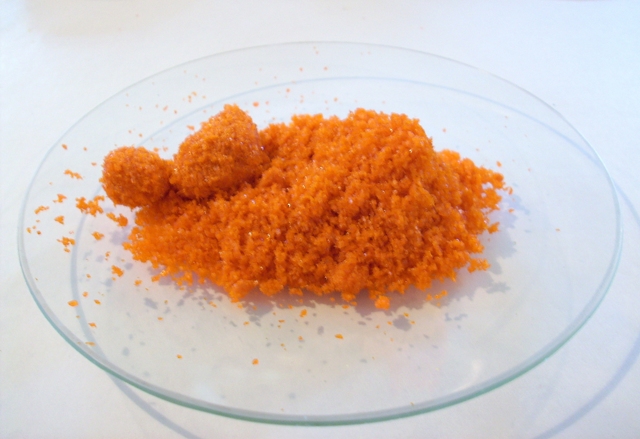
Chemical properties
Sodium dichromate is a strong oxidizing agent, especially in acidic media, where it can accept electrons and be reduced from chromium(VI) to the less toxic chromium(III) state. The chromate–dichromate equilibrium is pH-dependent: in basic conditions chromate (CrO4(2−)) predominates while in acidic solution dichromate predominates. As a crystalline inorganic salt it is hygroscopic and thermally stable to moderate temperatures, and it is readily soluble in water.
Production and historical context
Industrially, sodium dichromate is produced from mined chromite ores. The ore is roasted with sodium carbonate and oxidized to yield soluble sodium chromate; that chromate is then acidified and concentrated to give sodium dichromate, which can be crystallized. The compound has been produced and used since the 19th century as part of the broader development of chromium chemistry and related industries, including the manufacture of chromium metal and chromium compounds for pigments and plating (chromium production).
Uses and applications
Sodium dichromate is an intermediate and reagent in several industrial and laboratory processes. Common applications include:
- Conversion to other chromium compounds used in metal finishing and pigment manufacture (chromium compounds).
- Leather tanning, where chromium salts help stabilize collagen fibers (leather processing).
- Organic chemistry oxidations and synthesis steps, where dichromate acts as a stoichiometric oxidant (organic reagents).
- Specialty uses in surface treatment and as a precursor in some industrial formulations.
Health, safety and environmental concerns
Chromium in the hexavalent state (Cr(VI)), as present in sodium dichromate, is acutely toxic and a recognized occupational carcinogen. It can cause skin ulcers, respiratory irritation, allergic dermatitis and long-term risks including lung cancer. For these reasons it is handled under strict controls: protective equipment, spill containment, and regulatory limits for emissions and waste. Disposal typically requires chemical reduction of Cr(VI) to Cr(III) followed by precipitation and secure disposal to reduce environmental mobility and biological uptake (carcinogenic risk).
Notable distinctions and precautions
Sodium dichromate is closely related to potassium dichromate but differs in solubility and handling; both supply the dichromate anion and share similar chemistry. Because of its powerful oxidizing behavior (oxidizing agent), it can react violently with reducers and organic materials, so storage and transport require segregation from incompatible substances. Regulations and safer alternatives have reduced some historical uses, but the compound remains important where chromium-based chemistry is required.
For general reference and safety data consult technical datasheets and regulatory guidance from appropriate agencies (compound information, element data, anion chemistry, industrial context, tanning, organic synthesis, oxidizer precautions, health classifications).
Related articles
Author
AlegsaOnline.com Sodium dichromate (Na2Cr2O7) Leandro Alegsa
URL: https://en.alegsaonline.com/art/91525