
Sodium amide (NaNH2): properties, synthesis, uses and safety
Sodium amide (NaNH2) is a white ionic solid containing Na+ and NH2−. A very strong base used in organic synthesis and industrial chemistry; it is highly reactive toward water and must be handled dry and inert.
Overview
Sodium amide is an inorganic compound with the formula NaNH2. It is composed of sodium cations and the amide anion, formally written as Na+ and NH2−. As an ionic solid it typically appears white to gray; discoloration to yellow or brown commonly indicates contamination or decomposition. Sodium amide is widely recognized as a very strong base, significantly stronger than typical hydroxide bases such as sodium hydroxide (NaOH).
Image gallery
5 Images


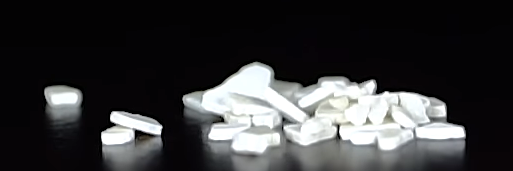
Physical and chemical characteristics
NaNH2 is a crystalline solid that is highly reactive toward protic substances. On contact with water it hydrolyzes to give sodium hydroxide and ammonia (NH3), releasing heat and making the interaction vigorous and potentially hazardous. It also reacts with oxygen and moisture in air; burning or oxidation can produce various sodium and nitrogen oxides, including gases such as nitrogen dioxide, so exposure to air is avoided in practical handling.
Preparation and basic reactions
Industrially and in the laboratory, sodium amide is commonly prepared by reacting metallic sodium with liquid or gaseous ammonia. A simplified equation for this process is 2 Na + 2 NH3 → 2 NaNH2 + H2, with hydrogen gas released. Because of the evolving hydrogen and the reactivity of the reagents, the synthesis is carried out under controlled, dry conditions.
Uses and applications
Sodium amide's principal value is as a strong, non-nucleophilic base and deprotonating reagent in organic synthesis. Typical applications include:
- Deprotonation of terminal alkynes to give acetylide anions for coupling reactions.
- Promoting elimination (E2) reactions to form alkynes or to remove acidic protons adjacent to electron-withdrawing groups.
- As an intermediate reagent in the manufacture or laboratory preparation of other nitrogen-containing compounds; it has been used in routes that lead to products such as hydrazine and sodium azide, although industrial processes vary.
Handling, storage and hazards
Sodium amide is corrosive and poses multiple hazards. It reacts violently with water, liberating ammonia and producing caustic sodium hydroxide, so all contact with moisture must be prevented. It is typically stored under an inert atmosphere or covered with a dry hydrocarbon oil to keep air and moisture away. Discolored material should be treated as degraded and segregated: discoloration often signals formation of oxidized or otherwise unstable nitrogen species and contaminated solids should be disposed of by qualified professionals. Avoid ignition sources and keep it separate from acids, oxidizers and water.
Related compounds and distinctions
NaNH2 is often compared with other strong bases such as sodium hydride (NaH) or organolithium reagents. Compared with hydroxide bases it is much stronger and more suitable when deprotonation of weakly acidic C–H bonds is required. Relative to pyrophoric organometallic bases, sodium amide is sometimes preferred for selectivity and cost, although each reagent has its own suitability depending on the transformation and the need to control nucleophilicity versus basicity.
For additional technical information and safety data consult material safety resources or specialized chemical references: see sources on general reagent handling and specific entries for ions, sodium amide and related substances. When researching procedures, confirm methods against current literature and supplier datasheets to account for practical variations in grade and formulation.
Further reading and supplier or regulatory details can be found via chemistry databases and safety repositories: sodium, amide ion, strong base, hydroxides, sodium hydroxide, ammonia, hydrazine, sodium azide, nitrogen dioxide.
Related articles
Author
AlegsaOnline.com Sodium amide (NaNH2): properties, synthesis, uses and safety Leandro Alegsa
URL: https://en.alegsaonline.com/art/91513