
Sodium bromide (NaBr): properties, uses, history and safety
Sodium bromide (NaBr) is an ionic inorganic salt used as a laboratory reagent and historical medicine. This article outlines its properties, preparation, applications, and safety considerations.
Overview
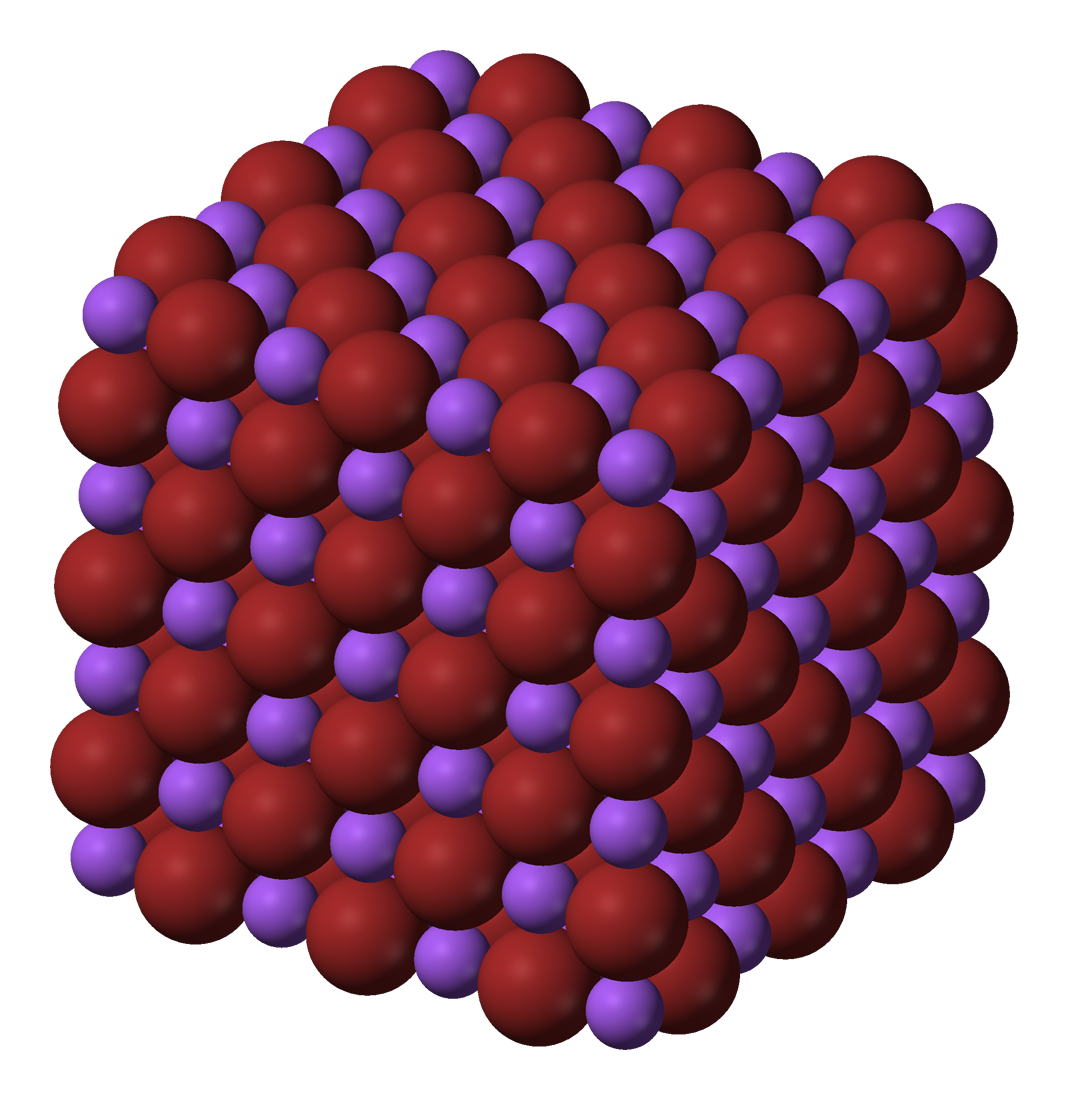
Sodium bromide is an ionic inorganic compound with the formula NaBr, composed of sodium cations and bromide anions. In its pure form it is a white, crystalline, water‑soluble solid that dissociates readily to Na+ and Br− in aqueous solution. It is commonly handled as a dry salt or in concentrated brine solutions.
Image gallery
3 Images

Properties and preparation
NaBr has the typical characteristics of an alkali metal halide: a crystalline lattice, relatively high melting point and good electrical conductivity when molten or dissolved. It is prepared industrially by neutralizing hydrobromic acid with sodium hydroxide or sodium carbonate, or by reacting sodium salts with bromine sources. The bromide ion can be oxidized to bromine by strong oxidizing agents.
Uses and applications
Sodium bromide serves primarily as a convenient source of bromide ion in chemical synthesis and in the manufacture of other bromine compounds. Historically it was used in photographic processes as a precursor to light‑sensitive silver bromide emulsions. It has seen medical use in the past as a sedative and anticonvulsant, although such uses have largely been replaced by safer modern drugs. In industry it is a feedstock for organic bromination reactions and a component in some industrial brines.
History and context
Bromine chemistry expanded after the element’s isolation in the 19th century, and salts like sodium bromide became important reagents and pharmaceuticals in the late 1800s and early 1900s. Improvements in organic chemistry and the development of modern pharmaceuticals reduced the medicinal role of bromide salts, but NaBr remains useful in laboratories and niche industrial processes.
Safety and environmental notes
As an inorganic salt, sodium bromide has moderate acute toxicity; inhalation or ingestion of large amounts can cause adverse effects. Chronic exposure to bromide ion may lead to neurological symptoms historically termed "bromism." In aqueous systems bromide can be converted to bromine or to disinfectant by‑products during chlorination, so its presence is considered in water treatment and environmental monitoring.
Related compounds and distinctions
NaBr is closely related to other bromide salts such as potassium bromide and silver bromide. Compared with sodium chloride it supplies the larger, more polarizable bromide ion, which affects reactivity in organic synthesis and photochemistry. Silver bromide, in particular, is notable for its strong light sensitivity and role in photographic emulsions, where NaBr may be used as a precursor.
Related articles
Author
AlegsaOnline.com Sodium bromide (NaBr): properties, uses, history and safety Leandro Alegsa
URL: https://en.alegsaonline.com/art/91520