
Social Programs in the United States
Overview of major U.S. social programs: types of benefits, historical development, administration, and common examples such as Social Security, Medicaid, SNAP, housing and cash assistance.

Overview
Social programs in the United States are public efforts to reduce poverty, provide basic services, and promote economic security. Often called welfare or social safety net programs, they include a mix of direct payments, in-kind benefits, insurance schemes, and service delivery intended to meet needs for food, shelter, health care, education, and income stability.
Image gallery
6 Images
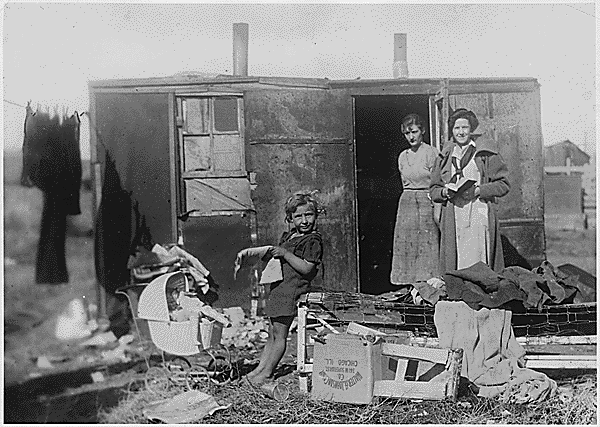


Major components and examples
Programs can be delivered at the federal, state, or local level and are administered by a range of agencies. Typical categories include:
- Cash and income supports — monthly or one-time payments to individuals or families.
- Health and medical programs — public insurance and subsidies for medical care.
- Food and nutrition assistance — targeted benefits for low-income households.
- Housing and utility aid — rental subsidies, public housing, and energy assistance.
- Services and human capital — childcare, education aid, job training, and employment services.
Examples commonly recognized by the public include Social Security and Medicare for the elderly, Medicaid for low-income people, SNAP for food assistance (food), Temporary Assistance for Needy Families, housing vouchers (housing), and programs that provide money assistance or tax credits to working families.
History and development
Federal involvement in social welfare expanded markedly during the 20th century. Early national programs grew from economic crises and wartime needs; the New Deal and later social legislation broadened public responsibility for unemployment relief, retirement security, and health programs. Subsequent reforms adjusted eligibility, benefits, and delivery methods to reflect changing economic and political priorities.
Administration and funding
Funding comes from federal and state budgets, payroll taxes, and general revenues. Administration varies: some programs are nationwide with uniform rules, while others are block-granted or state-run with differing eligibility and benefit levels. Coordination among agencies and levels of government is a key administrative challenge.
Purpose, debates, and notable facts
Supporters argue these programs reduce hardship, improve health and educational outcomes, and stabilize the economy. Critics raise concerns about cost, incentive effects, and program complexity. Empirical evaluations often focus on trade-offs between adequacy of benefits and long-term labor market outcomes. For further context on policy design and program lists, see related resources on subsidies and program summaries available from government agencies and research organizations.
Related articles
Author
AlegsaOnline.com Social Programs in the United States Leandro Alegsa
URL: https://en.alegsaonline.com/art/91440