
Snow angel
A snow angel is a figure pressed into fresh snow by lying on the back and sweeping arms and legs. It is a simple winter pastime, a visual motif and occasional subject for photography or public art.
Overview
A snow angel is a shallow impression in fresh, undisturbed snow that resembles the outline of a person with outstretched wings and a flowing robe. The image is produced by a person lying on their back and moving their arms and legs to displace snow, leaving a symmetrical silhouette that many people associate with an angel-like shape.
Image gallery
4 Images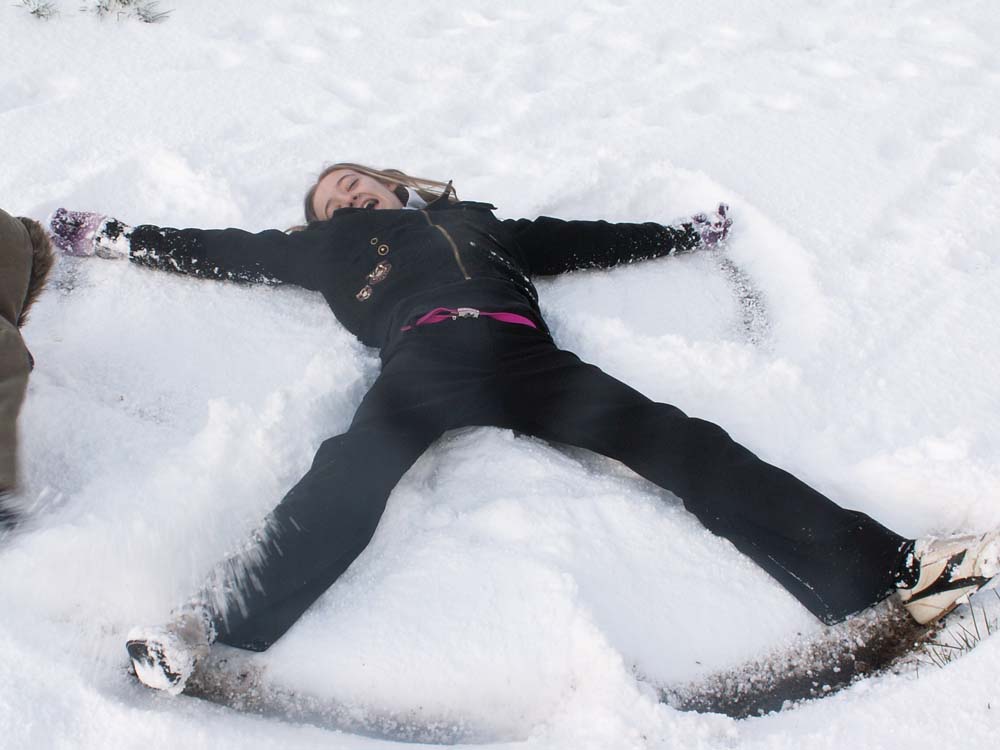


How to make a snow angel
The basic method is straightforward and popular with children and adults alike. Lie flat on your back on clean, powdery snow, extend your arms and legs, then sweep arms upward and outward and legs apart several times before standing up carefully. The motion creates a head, wing-like arm impressions and a skirt formed by the leg movements.
Conditions and variations
- Best made in fresh, powdery snow that is deep enough to leave a clear impression but not so deep that movement is difficult.
- Variations include making larger designs by lying in a group, using props to add texture, or cutting outlines with tools for more permanent displays.
- Similar gestures are sometimes applied to sand or loose soil to create comparable silhouettes.
Cultural uses and significance
Snow angels are mostly a recreational activity associated with childhood and winter leisure, but they also appear in photography, seasonal greeting imagery and informal public-art projects. The simple form and instant visual appeal make them a recurring motif in holiday culture and family memories.
Safety, etiquette and notable facts
Take care to choose a safe, level spot away from roads, driveways and frozen water. Dressing warmly and moving slowly when getting up reduces the chance of cold injury or wet clothing. While the exact origin of the practice is unclear, it has long been part of winter play in regions that receive dry, packable snow. Snow angels are ephemeral and non-invasive, making them a low-impact form of outdoor creativity.
Related articles
Author
AlegsaOnline.com Snow angel Leandro Alegsa
URL: https://en.alegsaonline.com/art/91335