
Skeleton (sport)
Skeleton is a head‑first winter sliding sport in which an athlete rides a small sled down an iced, banked track. It emphasizes starts, steering by body movement and fast, timed runs at very high speed.
Overview
Skeleton is a winter sliding sport in which an individual rides a small, minimal sled down an artificially refrigerated, banked ice track while lying face down and travelling head‑first. Competitors make a running start, push the sled, then dive onto it and steer using subtle body movements. Races are decided by time: athletes complete a number of runs and the lowest aggregate time wins. The sport is noted for its combination of explosive sprinting, aerodynamic position and fine vehicle control; top runs can reach very high speeds, sometimes approaching 140 km/h.
Image gallery
6 Images
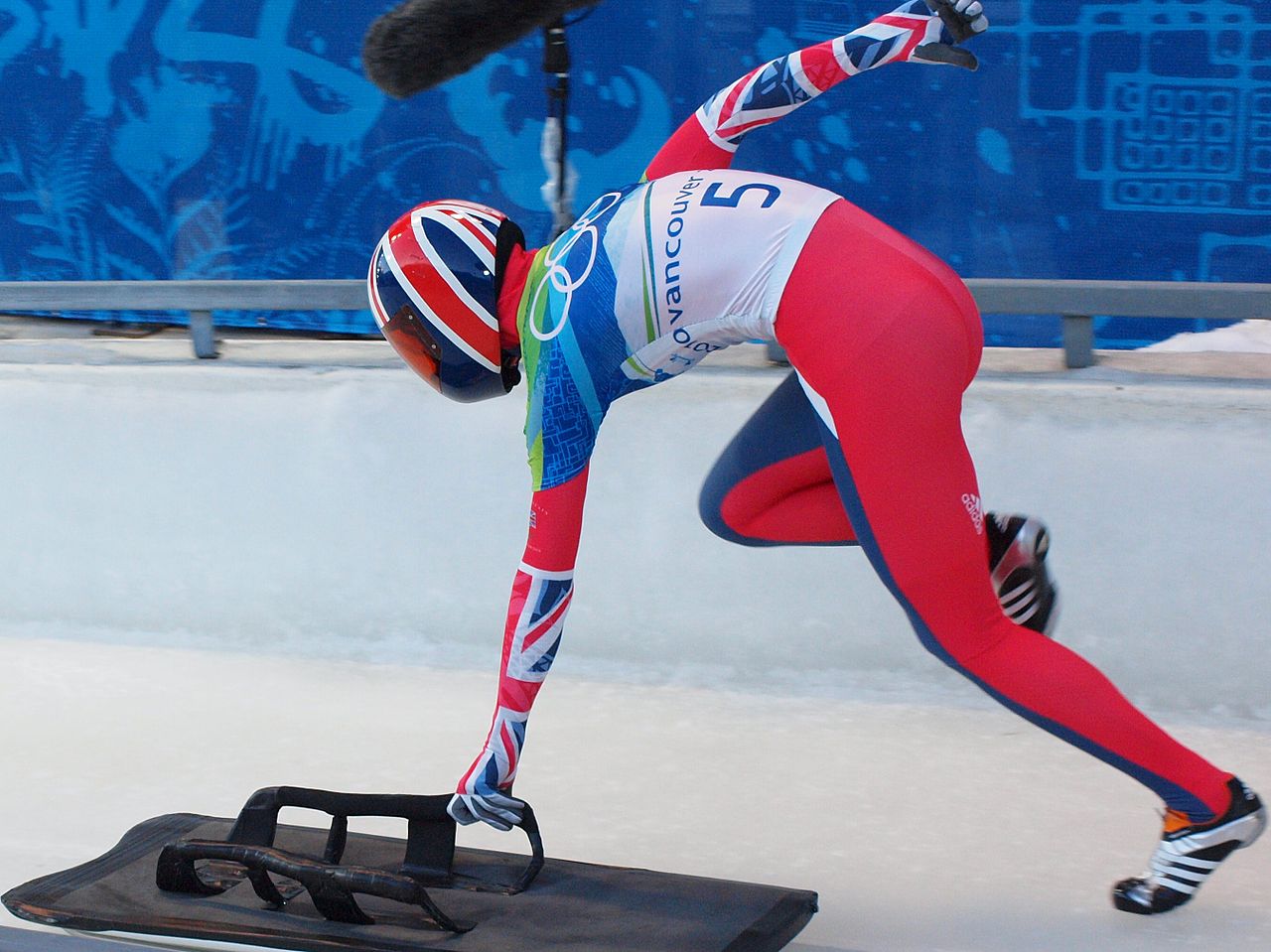



Equipment and track
The skeleton sled is compact and lightweight, with a metal frame and steel runners. It has no enclosure or suspension, so the rider is exposed to the elements and to the ice. Protective equipment includes a hard-shell helmet, an aerodynamic racing suit and shoes with spikes for the running start. Tracks are the same refrigerated, banked courses used by bobsleigh and luge; these courses feature a series of curves and straights purpose‑built to test steering and speed. Basic information about sled design can be found here: sled, and about tracks here: ice track.
Technique and competition format
Successful skeleton runs depend on a powerful, well‑timed start and the ability to maintain an aerodynamic position while steering through turns. Steering is achieved primarily by shifting body weight, applying shoulder pressure and subtle knee and foot movements; there are no brakes. Competitions at major events typically consist of multiple timed runs over one or more days, with the winner determined by the lowest total time. International competition is organized into seasonal circuits such as the World Cup and is governed by the sport's international federation.
History and governance
Skeleton has roots in late 19th‑century Alpine sledding and early head‑first runs such as the Cresta Run. It appeared in the Winter Olympic Games in the early 20th century at selected editions and was contested at the 1928 and 1948 Games; after a long absence it was reintroduced as a permanent Olympic discipline in 2002. The sport is administered internationally, with world championships and regular World Cup seasons that attract athletes from many countries. For more on the Olympic history see the modern return (2002) and the earlier appearances (1928, 1948).
Safety, training and athlete development
Because competitors ride head‑first and close to the ice at high speed, skeleton carries inherent risks including collisions with track walls, significant impacts and the potential for concussion or other injuries. To manage risk, athletes undergo systematic training in start technique, sled control and physical conditioning; events follow strict safety protocols and medical preparedness standards. Many nations run development programs that emphasize sprinting, core strength, reaction timing and repeated practice runs on diverse tracks.
Distinctive features and related sports
Skeleton is closely related to luge and bobsleigh but is distinguished by the head‑first position and the use of a single, open sled. Luge athletes lie on their backs and ride feet‑first, while bobsleigh uses multi‑person, enclosed sleds and different pushing and driving dynamics. Together these disciplines form the family of sliding sports that feature on the Winter Olympic programme.
Further reading and equipment references are available: sled, ice track, the Olympic return in 2002 and the early Winter Games of 1928 and 1948.
Related articles
Author
AlegsaOnline.com Skeleton (sport) Leandro Alegsa
URL: https://en.alegsaonline.com/art/90892