
Siren (noisemaker)
A siren is an acoustic warning device—mechanical or electronic—that produces loud, attention‑getting sounds used for emergency vehicles, civil alerts, industrial alarms and signalling.
A siren is an instrument designed to generate a powerful, attention‑getting sound so people nearby notice and respond. Sirens are intended for warning, signalling and persuasion rather than music. They may be installed on vehicles, mounted on buildings, or integrated into portable equipment for civil defence, emergency services and industrial safety.
Image gallery
9 Images


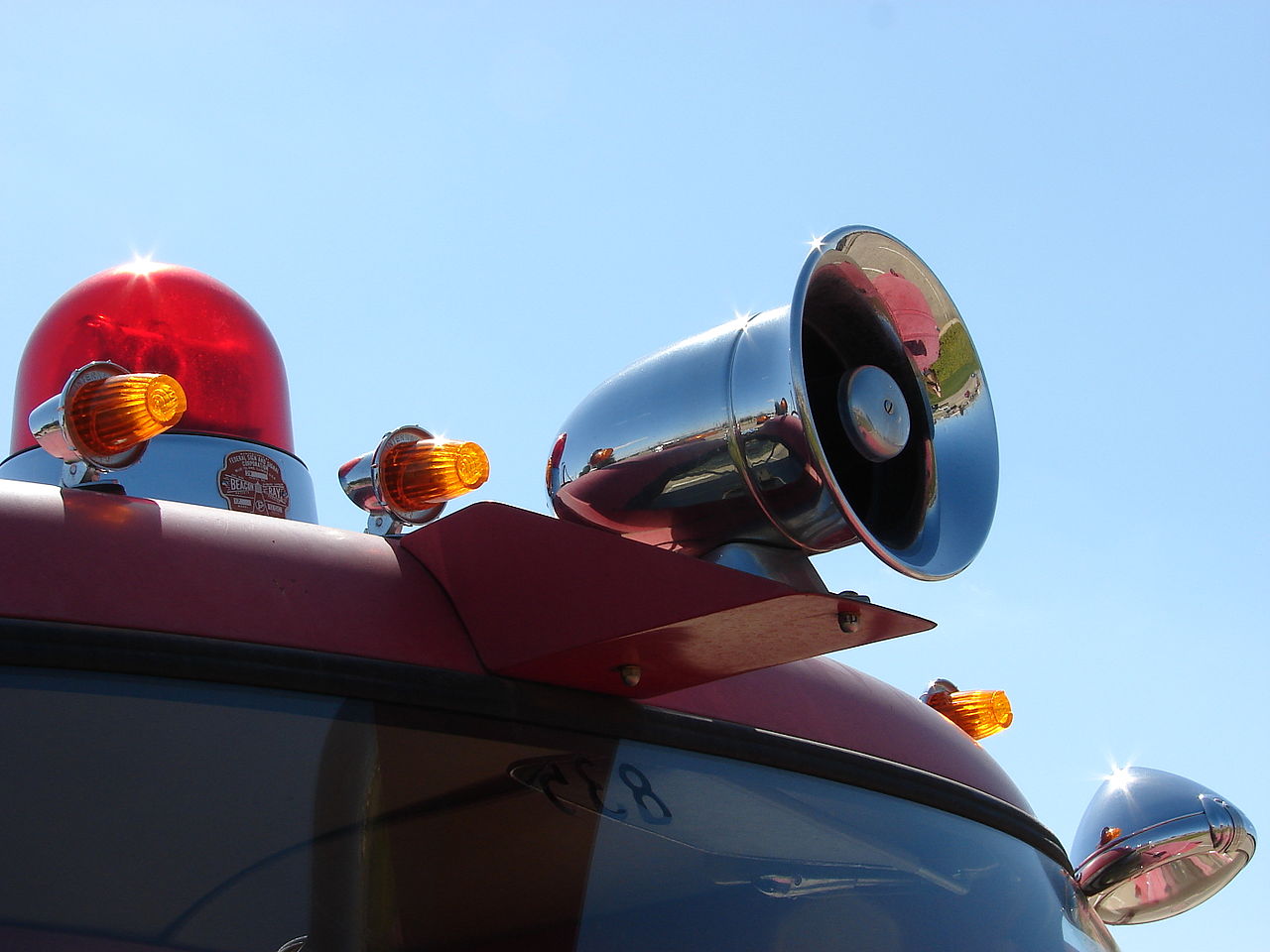


How sirens produce sound
Different designs accomplish the same goal: create rapid pressure fluctuations in air. Mechanical sirens use rotating disks or slotted rotors that interrupt airflow to make a tonal, wailing sound. Electronic sirens synthesize tones and patterns through amplifiers and loudspeakers. The perceived pitch, volume and modulation (steady, wail, yelp) communicate urgency and type of alert.
History and development
Early sirens were developed in the 19th and early 20th centuries as simple mechanical noisemakers and later adapted for air‑raid warning systems and ambulances. Advances in electronics in the mid‑20th century produced compact, programmable sirens with multiple tones and voice capability. Modern municipal systems now combine outdoor sirens with digital control and centralized monitoring.
Common uses and examples
- Emergency vehicles (ambulances, fire trucks, police) to clear traffic and announce approach.
- Civil warning systems—tornado and air‑raid sirens that alert communities to imminent danger.
- Industrial sites and factories to signal shift changes, evacuations, or hazardous conditions.
- Maritime and railway contexts where loud signals are needed to warn or communicate.
Types and notable distinctions
Sirens are often categorized as mechanical or electronic, omnidirectional or directional, and fixed or mobile. Mechanical models produce a characteristic tonal quality while electronic units offer varied patterns and can play prerecorded voice instructions. Designers balance audibility with annoyance, aiming for signals that are distinctive but reduce unnecessary noise exposure.
Because sirens are intended to produce loud noises, their placement, testing schedules and public education are important to ensure they are effective without causing undue panic or hearing harm. Maintenance, legal restrictions and community standards shape how sirens are used today.
Related articles
Author
AlegsaOnline.com Siren (noisemaker) Leandro Alegsa
URL: https://en.alegsaonline.com/art/90751