
Silicon Graphics (SGI): high‑performance graphics workstations, servers and legacy
Silicon Graphics (SGI) developed high‑end graphics workstations, the IRIX OS and technologies behind OpenGL; its systems powered film, broadcast and scientific visualization and influenced modern GPU design.
Overview
Silicon Graphics, Inc. (commonly SGI) was founded in 1982 by Jim Clark and Abbey Silverstone to produce specialized computers for interactive three‑dimensional graphics and visualization. SGI combined dedicated graphics hardware with a Unix‑based environment to serve professional markets that required real‑time rendering and large‑scale visualization. An official company overview is frequently cited in retrospectives and corporate summaries: company overview.
Image gallery
7 Images




Products and architecture
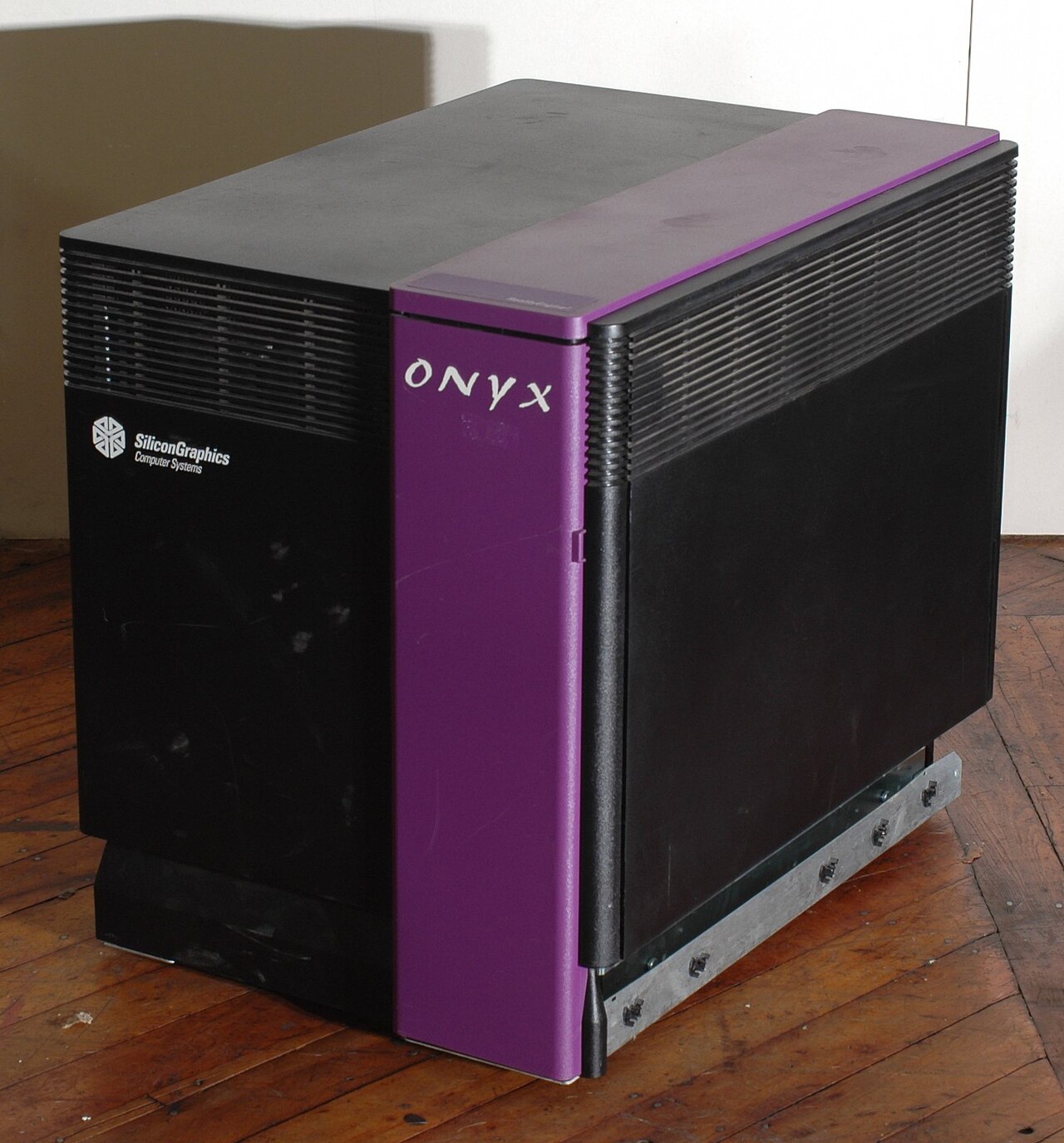
SGI built a range of desktop workstations and larger server systems that accelerated geometry processing, texture mapping and rasterization. Well‑known product families included the Indigo desktop workstations and the Onyx family of visualization systems, along with high‑end graphics subsystems such as RealityEngine. Many systems were based on MIPS processors and tightly integrated graphics pipelines designed for interactive 3D tasks; technical information and product descriptions are archived at product information.
Software, operating system and APIs
Software was central to SGI's value: the company shipped IRIX, a Unix variant with extensions for real‑time graphics and multiprocessor support. SGI engineers developed the original GL graphics library and were instrumental in the creation and promotion of OpenGL, a cross‑platform API that became a foundation for 2D and 3D graphics programming. For deeper technical histories and API documentation see technical history.
History and corporate changes
Through the 1980s and 1990s SGI grew as a supplier to film studios, broadcasters, research laboratories and industrial designers, becoming synonymous with high‑end visualization. In later years the company faced industry shifts toward commodity PC hardware and new GPU vendors, leading to strategic changes, restructurings and the sale of assets and technologies. Timelines and corporate milestones are summarized at company timeline.
Applications and impact
SGI systems were widely used in computer‑generated imagery, broadcast graphics, scientific modeling and engineering. Film and television visual effects, oil and gas seismic interpretation, aerodynamic simulation and university research centers all benefited from SGI hardware and software. Case studies and notable deployments can be explored via industry resources: industry use cases and media examples.
Legacy and influence
Although the commercial prominence of SGI systems has declined, the company's contributions endure. Ideas about hardware geometry engines, texture management and graphics pipeline design influenced later GPU architectures, and OpenGL remains an important graphics API. Discussions of SGI's influence, later corporate changes and the fate of its technologies are available at corporate changes and acquisitions and legacy.
Summary
- Core technologies: IRIX operating system, MIPS‑based processors, specialized graphics subsystems.
- Primary markets: film and television visual effects, scientific and engineering visualization, research institutions.
- Lasting influence: development of OpenGL and concepts that informed modern GPU design and graphics pipelines.
SGI is remembered for integrating hardware and software around the needs of interactive 3D users, pushing real‑time visualization forward at a time when most computing was optimized for batch processing. Its work helped establish practices and interfaces still used by graphics professionals today.
Related articles
Author
AlegsaOnline.com Silicon Graphics (SGI): high‑performance graphics workstations, servers and legacy Leandro Alegsa
URL: https://en.alegsaonline.com/art/90403