
Sicko (2007 documentary film)
Michael Moore's 2007 documentary examining the US health care system through international comparisons, personal stories, and polemical critique; sparked debate and mixed reviews.
Overview
Sicko is a 2007 documentary written and directed by Michael Moore. The film investigates the American health care system by juxtaposing it with systems in the United Kingdom, Canada, France and Cuba. Combining interviews, case studies and on-camera visits, Moore presents a critical appraisal of how health care is financed, delivered and experienced in the United States.
Image gallery
2 Images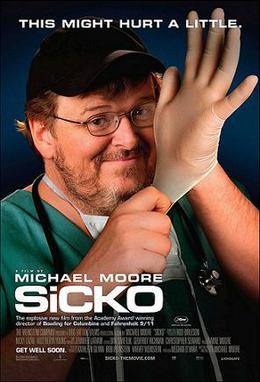

Content and structure
The film interweaves first-person reporting with patient anecdotes, interviews with health care workers, and footage of foreign facilities. Moore highlights instances where insured Americans faced denied claims, high out-of-pocket costs or bureaucratic obstacles, and he contrasts these stories with scenes of care in other countries that emphasize universal or government-supported access. The narrative is constructed to be persuasive rather than neutral: it sets out a clear argument in favor of wider access to medical services.
Themes and methods
Sicko addresses several recurring themes:
- Comparative health systems: contrasts between market-driven and publicly funded models.
- Patient experience: personal stories meant to illustrate systemic problems.
- Accountability and profit: criticism of private insurers and pharmaceutical interests.
Moore’s approach blends investigative reporting with satire and emotional appeal; archival materials and staged moments are used to reinforce key points.
Reception and criticism
On release, Sicko generated substantial public attention and a range of reactions. It performed well commercially for a documentary, grossing about $24.5 million worldwide and becoming one of the higher-grossing films in its category. Critics and commentators praised the film’s passion and accessibility but also faulted it for selective presentation of facts, rhetorical simplification, and occasional factual dispute. Supporters argue it helped broaden discussion about health care policy; detractors say it advanced a partisan case without adequately acknowledging trade-offs or counterexamples.
Legacy and significance
Sicko remains notable as part of Michael Moore’s body of politically outspoken documentaries. It contributed to wider public debate on health care reform in the late 2000s and is often cited in discussions about the comparative merits of universal coverage and market-based systems. The film is also studied as an example of advocacy filmmaking—effective at mobilizing sentiment but controversial as a source of empirical evidence.
Notable facts
- Release year: 2007.
- Style: polemical documentary combining reportage, interviews and staged sequences.
- Impact: stimulated discussion in media, policy circles and among general audiences.
For further context about the director and the countries compared, see the director’s other work and comparative studies of health systems in the United Kingdom, Canada, France and Cuba through reputable sources and policy analyses.
Related articles
Author
AlegsaOnline.com Sicko (2007 documentary film) Leandro Alegsa
URL: https://en.alegsaonline.com/art/90203
Sources
- imdb.com : "Sicko - Box office / business"