
Sicilian language (Lu sicilianu)
A concise overview of the Sicilian language: features, history, regional use in Sicily and Calabria, influences, varieties, and cultural significance.
Overview
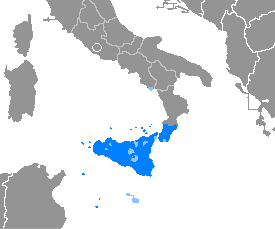
The Sicilian language, often called lu sicilianu, is a Romance language traditionally spoken across the island of Sicily and in parts of southern Italy, including central Calabria. It exists alongside standard Italian and serves as the everyday tongue for many communities, as well as a marker of regional identity. Sicilian is used in speech, song, oral storytelling and in literary and folkloric traditions.
Image gallery
7 Images


Distinctive features
Sicilian differs from standard Italian in vocabulary, pronunciation, and some grammatical structures. Its sound system and lexicon reflect a layered history of contact with other languages. Characteristic features include distinct vowel and consonant patterns, local articles and verb forms, and a wealth of regional vocabulary not shared with standard Italian.
Key historical influences include:
- Latin (the language family origin)
- Greek, from centuries of ancient and medieval presence
- Arabic, from medieval Sicily’s contacts and rule
- Norman French, Catalan and Spanish, from medieval and early modern governance
- Standard Italian and other Italian regional languages through later contact
These layers have produced a language with a rich, hybrid vocabulary and idiom set used in daily life and the arts.
History and development
Sicilian developed from Vulgar Latin in the central Mediterranean and evolved under diverse cultural influences. It maintained distinct features through the Middle Ages and produced a notable medieval literary tradition. Over time, the influence of Tuscan-based Italian increased, especially in formal contexts, while Sicilian remained widely spoken in homes and communities.
Use, varieties and cultural importance
Sicilian is spoken throughout Sicily and by communities in neighboring regions; for example, speakers live in parts of Calabria. See local maps and studies for precise distributions: Sicily and central Calabria. The language shows internal dialectal variation, with island-wide and local varieties that differ in pronunciation and vocabulary. Sicilian figures prominently in folk music, proverbs, theatre and contemporary literature, and it remains a vehicle of cultural expression for emigrant communities worldwide.
Although Italian is the official state language and dominant in education and media, Sicilian continues to be transmitted in families and cultural settings. Its study attracts linguists, historians and those interested in Mediterranean cultural exchange.
Related articles
Author
AlegsaOnline.com Sicilian language (Lu sicilianu) Leandro Alegsa
URL: https://en.alegsaonline.com/art/90189