
IEEE 802.1aq (Shortest Path Bridging): overview, function, and uses
IEEE 802.1aq, or Shortest Path Bridging (SPB), is an Ethernet standard that simplifies network design by enabling loop-free multipath forwarding, faster convergence, and large-scale virtualized networks.
IEEE 802.1aq, commonly called Shortest Path Bridging (SPB), is an IEEE standard that modernizes how Ethernet networks build and maintain paths between switches. Rather than relying on legacy spanning tree techniques that block redundant links, SPB computes shortest paths and uses all available links to carry traffic, improving bandwidth utilization and recovery from failures.
Image gallery
7 Images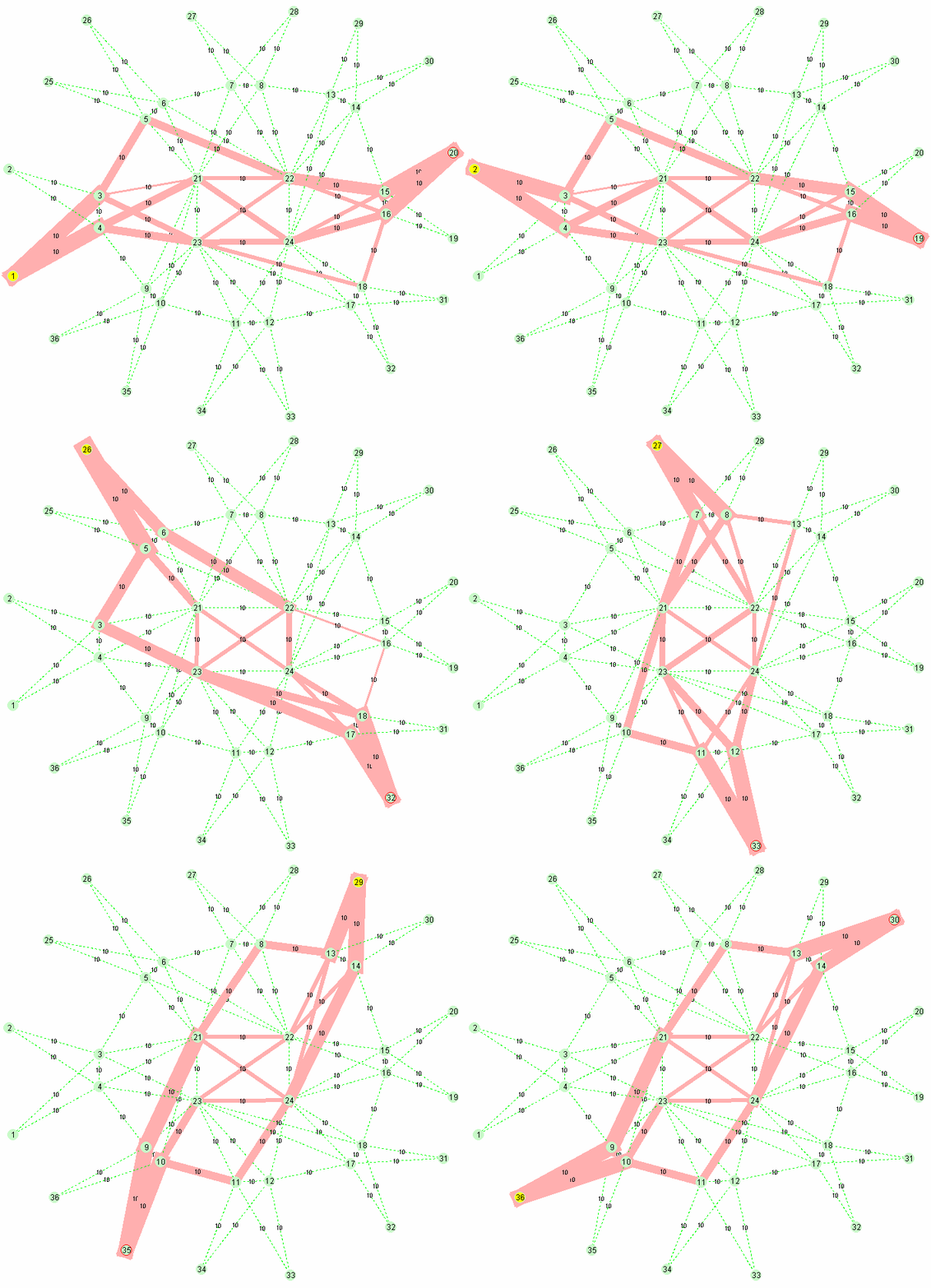




Key characteristics
- Control plane: SPB uses the IS-IS protocol to distribute link topologies and reachability information so each bridge can compute shortest paths.
- Data plane modes: Implementations typically use either MAC-in-MAC encapsulation (SPBM, which leverages IEEE 802.1ah) or a VLAN-based mode (SPBV).
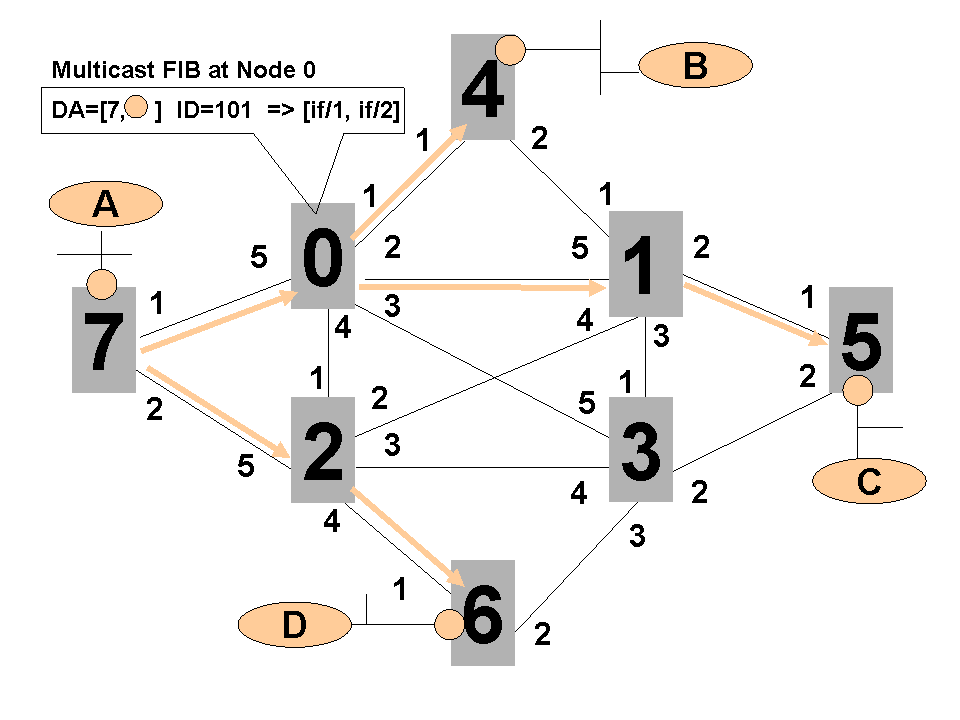
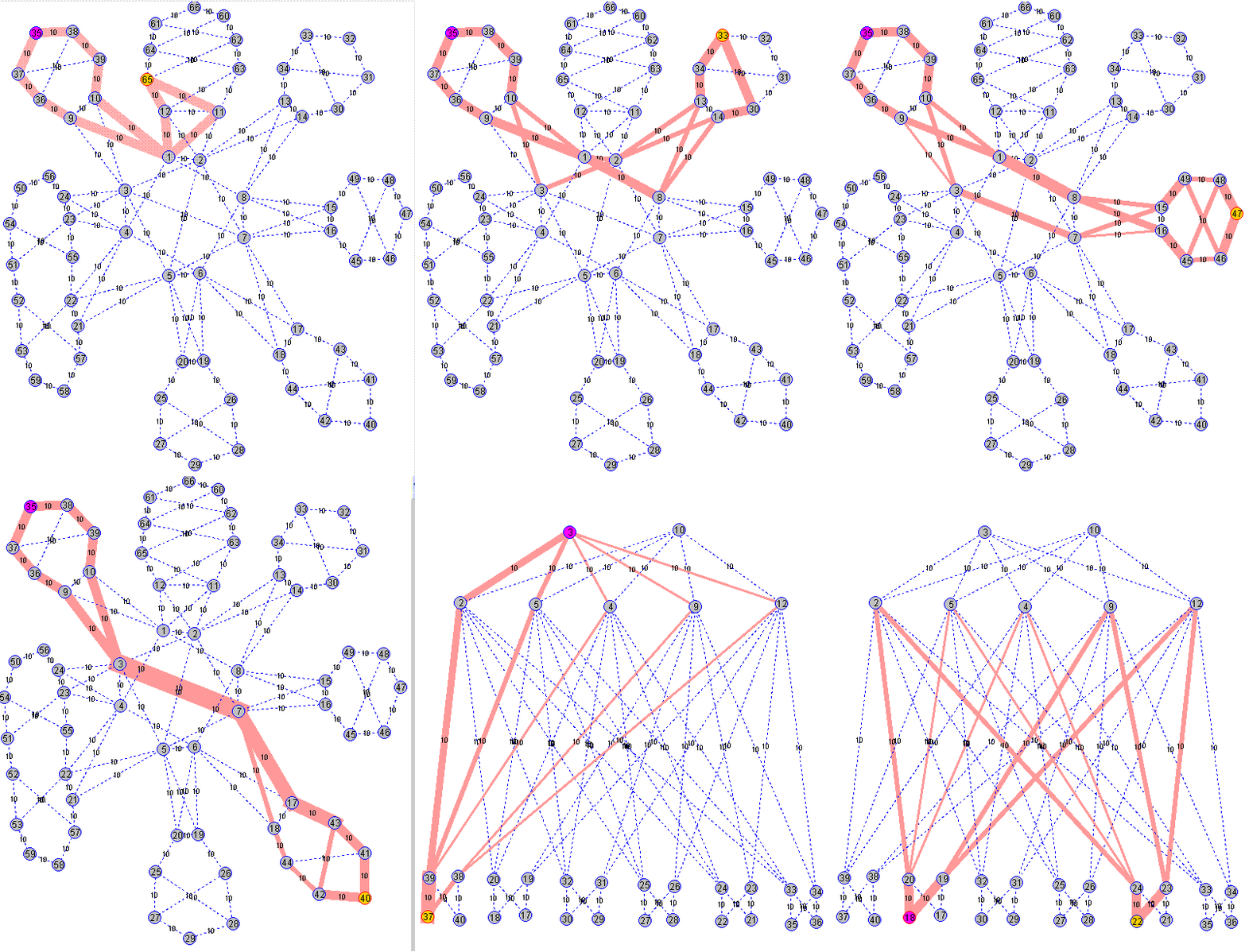
- Multipath and redundancy: Multiple equal-cost paths are supported for load sharing and rapid failover without blocking links.
- Scalability and virtualization: SPB can carry many isolated virtual networks and service topologies over the same physical fabric.
Adopted as IEEE 802.1aq in the early 2010s, SPB was developed to address operational complexity and slow convergence of Spanning Tree Protocols. By providing an integrated control plane and shortest-path forwarding, SPB reduces manual configuration and shortens restoration times after link or node failures.
Typical uses and examples
SPB is used in data centers, campus networks, and carrier/metro Ethernet deployments where efficient use of multiple links, predictable failover, and support for many virtual networks are important. Service providers and enterprises employ SPB to simplify provisioning of Layer 2 services, to build resilient fabrics, and to support large-scale virtual LAN topologies.
Compared with alternative approaches such as TRILL or various SDN overlays, SPB is an IEEE-standardized solution that integrates neatly with traditional Ethernet bridging models while offering modern multipath forwarding. For technical references and further reading, see IEEE 802.1aq resources.
Related articles
Author
AlegsaOnline.com IEEE 802.1aq (Shortest Path Bridging): overview, function, and uses Leandro Alegsa
URL: https://en.alegsaonline.com/art/90005
Sources
- marketwire.com : "Alcatel-Lucent, Avaya, Huawei, Solana and Spirent Showcase Shortest Path Bridging Interoperability"
- ieeexplore.ieee.org : An improved shortest path bridging protocol for Ethernet backbone network
- doi.org : 10.1109/ICOIN.2011.5723169
- worldcat.org : 1976-7684
- docs.media.bitpipe.com : "Lab Testing Summary Report; Data Center Configuration with SPB"