
Bare Mountain (Massachusetts)
Bare Mountain is a 1,014 ft peak on the Holyoke Range in western Massachusetts, part of the Metacomet Ridge. Known for exposed ledges, valley views, and basalt geology, it lies in Amherst and South Hadley.
Overview
Bare Mountain is a conspicuous summit in the Holyoke Range that rises above the Connecticut River Valley in western Massachusetts. Its summit reaches about 1,014 feet (309 m) above sea level and provides broad views westward across the valley and eastward toward adjacent ridge tops. The peak lies within the towns of Amherst and South Hadley.
Image gallery
2 Images
Geology and physical characteristics
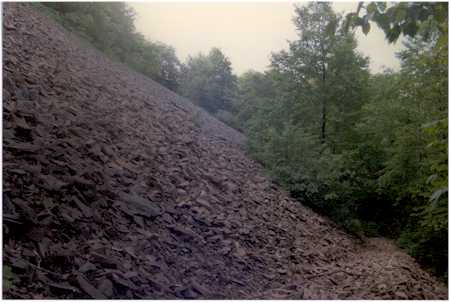
The mountain is part of the larger Metacomet Ridge, a linear traprock (basalt) formation that runs roughly from Long Island Sound northward toward the Vermont border. The ridge was formed during the rifting of the North American continent in the late Triassic and early Jurassic, when lava flows and subsequent fracturing produced resistant cliffs and ledges. Bare Mountain is notable for its exposed rock ledges and relatively sparse tree cover near the summit, which give the peak its descriptive name.
History and name
The summit’s name—Bare Mountain—refers to its open, rocky summit area and should not be confused with similarly named Bear Mountain peaks elsewhere. Human use of the Holyoke Range dates back to Native American presence in the Connecticut River Valley; in more recent centuries the ridgeline has been used for timber, small-scale agriculture on lower slopes, and recreation.
Recreation and conservation
Bare Mountain is a popular destination for hikers, birdwatchers and casual visitors because of its accessible trails and panoramic outlooks. Trails on and around the peak connect to other summits in the Holyoke Range, which also includes peaks such as Mount Norwottuck and Mount Holyoke. Portions of the ridge and surrounding lands are preserved through a mix of state, municipal and nonprofit conservation holdings, protecting habitat and scenic views.
Quick facts and notable points
- Elevation: about 1,014 ft (309 m).
- Range: Holyoke Range, part of the Metacomet Ridge (Holyoke Range).
- Location: Amherst and South Hadley, Massachusetts.
- Character: basalt cliffs and exposed summit with valley views.
Bare Mountain’s mix of geological interest, scenic outlooks, and relatively close proximity to college towns in the Pioneer Valley make it an enduringly popular and accessible natural landmark in western Massachusetts.
Questions and answers
Q: What is Bare Mountain?
A: Bare Mountain is a prominent peak of the Holyoke Range in the Connecticut River Valley of Massachusetts.
Q: Is Bare Mountain part of a greater ridge?
A: Yes, Bare Mountain is part of the greater Metacomet Ridge.
Q: How high is Bare Mountain above sea level?
A: Bare Mountain is 1,014 feet (309 m) above sea level.
Q: Where is Bare Mountain located?
A: Bare Mountain is located in the towns of Amherst and South Hadley, Massachusetts.
Q: What should Bare Mountain not be confused with?
A: Bare Mountain should not be confused with Bear Mountain.
Q: What mountain range is Bare Mountain a part of?
A: Bare Mountain is part of the Holyoke Range.
Q: How far does the Metacomet Ridge go?
A: The Metacomet Ridge goes from Long Island Sound almost to the Vermont border.
Related articles
Author
AlegsaOnline.com Bare Mountain (Massachusetts) Leandro Alegsa
URL: https://en.alegsaonline.com/art/8957
Sources
- mmmtrail.org : "Metacomet-Mattabesett Trail Natural Resource Assessment."
- amherst.edu : Amherst College Library Chronology
- chronos-historical.org : Mt. Holyoke Range Historical Timeline