
Barisal Division (Bangladesh)
Barisal Division is a riverine administrative region in south-central Bangladesh known for its delta plains, waterways, agriculture, fishing, and the city of Barisal as its administrative center.
Overview
Barisal Division is an administrative region in south-central Bangladesh centered on the city of Barisal. The division occupies a low-lying, highly riverine portion of the Ganges–Brahmaputra–Meghna delta. Its landscape, economy and settlement patterns have been shaped by tidal rivers, estuaries and seasonal flooding.
Image gallery
10 Images




Geography and environment
The division is characterized by flat alluvial plains, numerous rivers and tidal creeks, and extensive coastal areas. The soil and water regime supports wet-rice cultivation, vegetable growing and aquaculture. The region is vulnerable to storm surges, cyclones and river erosion; flood control and embankment systems are important parts of local infrastructure. Mangrove patches and coastal mudflats occur along the seaward margins.
Administrative divisions and settlements
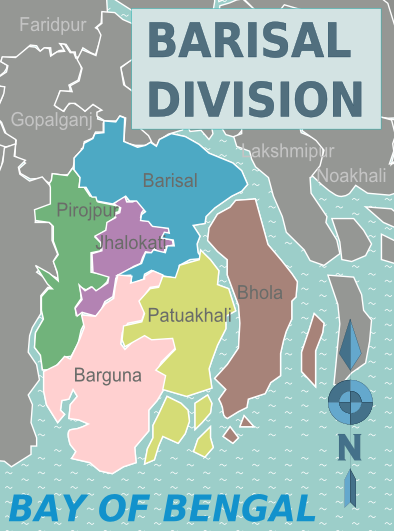
Barisal Division is made up of several districts and many subdistricts (upazilas). Principal districts commonly associated with the division include:
- Barguna
- Barisal (the divisional headquarters)
- Bhola
- Jhalokati
- Patuakhali
- Pirojpur
The city of Barisal functions as the administrative and commercial hub, with river ports that historically connected inland producers to larger markets. Smaller towns and market centres serve the surrounding rural areas.
History and development
The area now governed as Barisal Division has a long history of settlement tied to riverine trade and agriculture. Under British colonial administration, large districts with different names were reorganized; the name Bakerganj was once used for a district covering much of the region. During the twentieth century administrative boundaries and names changed several times through colonial, Pakistani and independent Bangladeshi periods. Local social and economic life has adapted to periodic natural hazards and to improvements in transport and communication.
Economy, culture and transport
The economy is dominated by agriculture (wet rice, pulses, vegetables), fishing and aquaculture—river and estuarine fisheries are significant for local diets and commerce. The division is famous in Bangladesh for fish species such as hilsa, which supports both subsistence and commercial fisheries. Cultural life reflects Bengali linguistic and religious traditions, with local dialects, folk music and riverine livelihoods shaping community identity. Transport relies heavily on waterways as well as roads and regional bus routes; ferries and launches remain important for moving people and goods.
Notable facts and distinctions
Barisal's landscape and economy differ from Bangladesh's more urbanized central areas: its extensive inland waterways make boating and river navigation central to daily life. The division plays an important role in national food production and fisheries. It also attracts attention in studies of coastal management, flood resilience and rural development. Further information and resources about the region can be consulted through regional administrative portals and local academic institutions, including the University of Barisal and other centres of learning.
Related articles
Author
AlegsaOnline.com Barisal Division (Bangladesh) Leandro Alegsa
URL: https://en.alegsaonline.com/art/8987