
Serpent (musical instrument)
The serpent is a large S-shaped bass wind instrument with a wooden body and brass-style mouthpiece, used from the Renaissance through the 19th century and revived by historical ensembles.
Overview
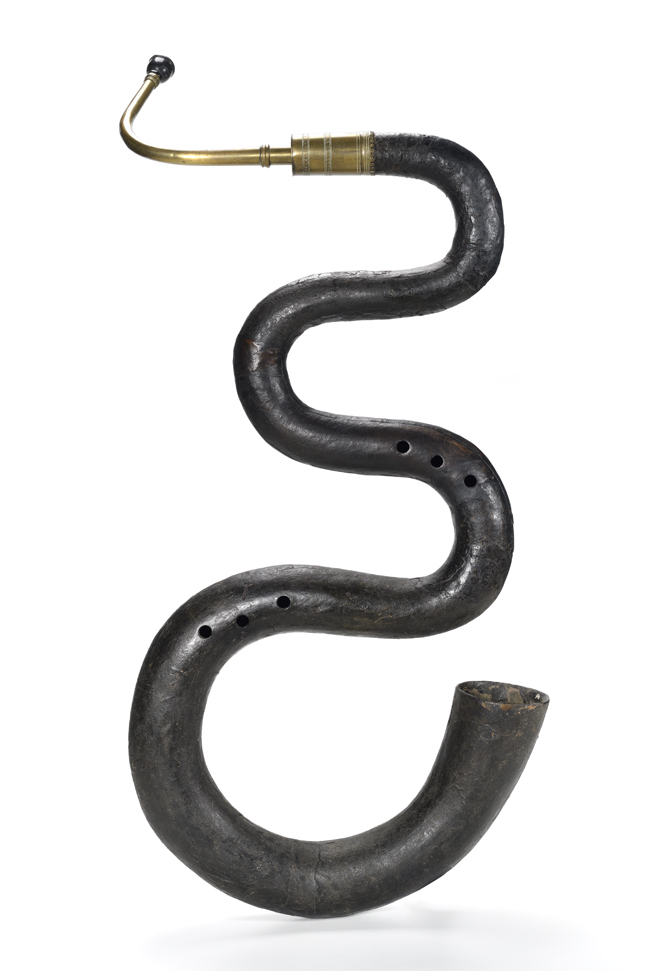
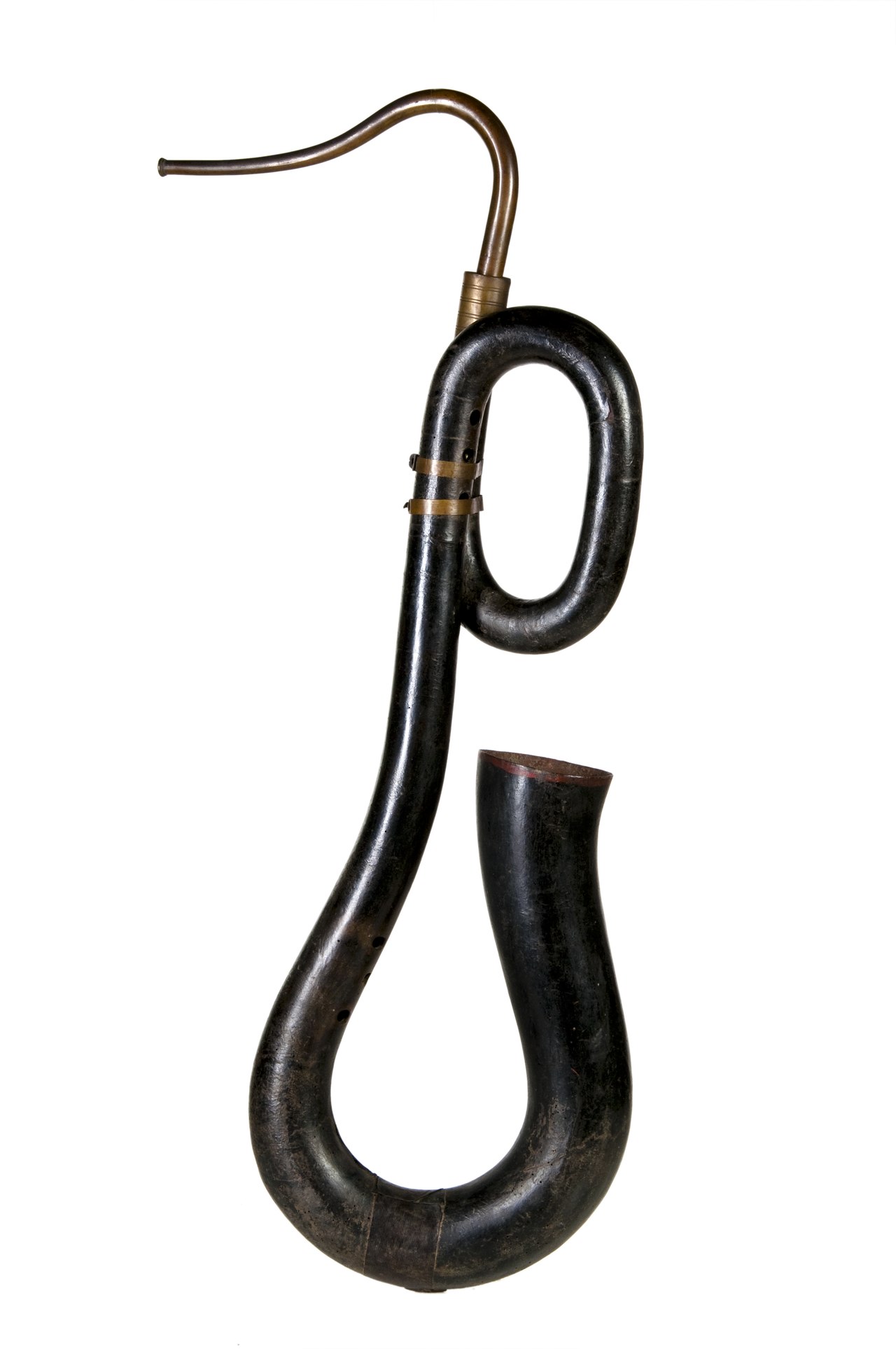
The serpent is a low-pitched wind instrument with a distinctive sinuous, S-shaped form. Although built from wood and fitted with finger holes like many woodwinds, it is traditionally played with a cup-shaped mouthpiece and produces sound by lip vibration, so it is commonly classed with brass instruments. The instrument supplies a deep bass voice and has been used in churches, military bands and orchestral and chamber settings.
Image gallery
10 Images




Construction and sound
Typical serpents are made from several carved wooden sections joined to form the wide, wrapped tube necessary to achieve low pitches. The body may be covered with leather or painted to protect the wood. Pitch is altered both by pressing finger holes drilled along the tube and by changing lip tension and air pressure at the mouthpiece, which resembles that of a small trumpet or cornet. Its tone is dark and mellow, with a somewhat breathy quality; the practical range commonly extends from the C below the bass clef up to notes around F above middle C, though exact limits vary by instrument and player.
History and development
The serpent appears in European sources from the late Renaissance and Baroque periods and is often attributed to late 16th- or early 17th-century makers; a French instrument maker is frequently named in connection with its early history. It remained important as a practical bass instrument through the 18th century. During the 19th century it was gradually superseded by keyed and valved alternatives that offered greater technical facility and intonation stability. Notable composers of the Romantic era, however, still specified or used the instrument occasionally, and it experienced a modest revival among historical-performance ensembles in the 20th century. For an introductory reference, see general discussions of the instrument at serpent entries and catalogs.
Uses, repertoire, and examples
The serpent provided the bass line in many settings where a portable, robust low voice was required, such as church choirs, regimental bands and municipal music groups. Composers sometimes wrote parts with its particular timbre in mind; it appears in a variety of sacred and secular works of the 18th and early 19th centuries and is occasionally included by modern ensembles aiming for authentic sound. Famous orchestral uses include scores by Romantic composers who were interested in varied instrumental colors, and the instrument has been reconstructed for performances of period works. For details about mouthpiece and acoustic comparisons, consult sources treating brass and brass-like instruments such as the trumpet-style mouthpiece at trumpet mouthpiece.
Related instruments and legacy
During the 19th century the serpents’ role in ensembles was largely taken by the ophicleide, a keyed brass instrument with a more homogeneous sound and greater technical agility. Later, valved bass brass instruments such as the euphonium and the tuba became standard in military, orchestral and band contexts and displaced both serpent and ophicleide for many functions. For comparative reading, see articles on the classification of brass instruments brass instruments and on successors like the euphonium and the tuba. In the modern period the serpent is valued mainly by early-music specialists and makers who build replicas for historically informed performances.
- Characteristic: wooden body with brass-style mouthpiece.
- Typical range: low C to roughly F above middle C (variable).
- Typical uses: church bass lines, military bands, period orchestras.
Related articles
Author
AlegsaOnline.com Serpent (musical instrument) Leandro Alegsa
URL: https://en.alegsaonline.com/art/89087