
Euphonium
A tenor-voiced conical-bore brass instrument with a warm, low-midrange tone. Widely used in concert, brass, and military bands, it typically has three or four valves and a distinctive mellow sound.
The euphonium is a member of the valved brass instrument family known for its full, mellow tone and tenor-to-baritone range. With a conical bore and a relatively large bell, it occupies a sonic space between the trombone and tuba. Players produce sound by buzzing their lips into a cup-shaped mouthpiece and shaping pitch with a combination of lip tension, finger valves and occasionally alternate tubing on four-valve models.
Image gallery
10 Images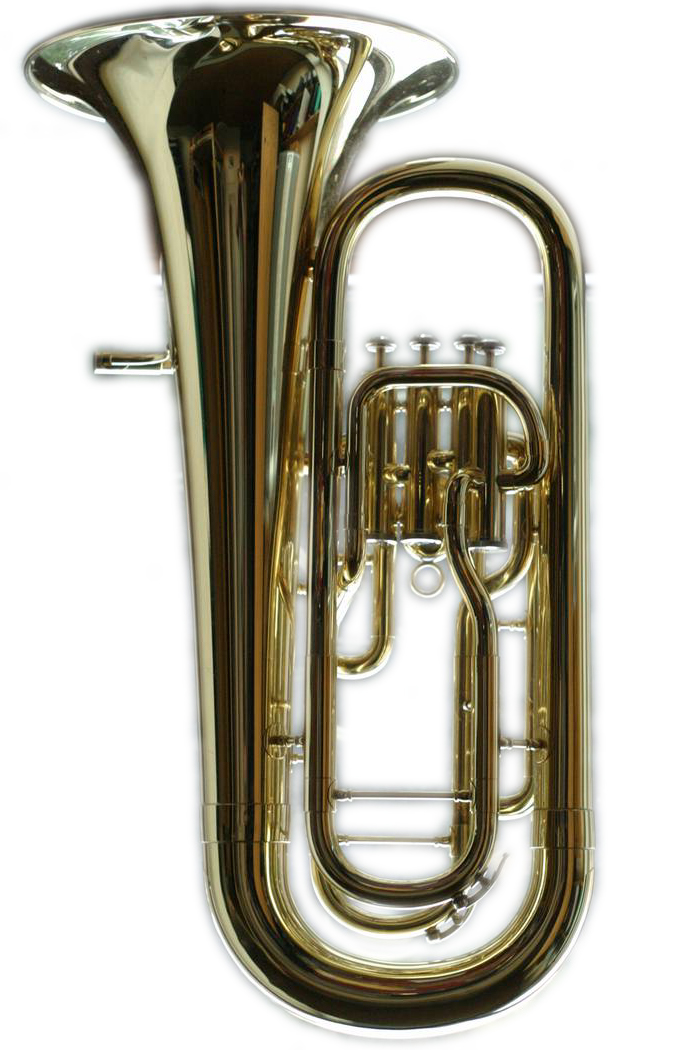



Construction and characteristics
Most euphoniums are built with three or four valves; four-valve instruments often include a fourth valve that provides extra low notes or improves intonation. Some instruments use a compensating valve system that lengthens the tubing automatically when multiple valves are pressed, producing more even intonation in the lower register. The instrument consists of a leadpipe, several lengths of coiled tubing, valve casings, and a flared bell. Water keys, commonly called "spit valves," allow musicians to release condensation; this is normal moisture that forms inside the instrument during playing and is not literal saliva — see the explanation about condensation.
Sound and playing role
The euphonium is prized for its warm, singing tone, which makes it well suited to lyrical solos as well as supportive harmonic and melodic roles in ensembles. It blends smoothly with woodwinds and other brass and often carries important melodies in concert band literature. While not a standard member of the modern symphony orchestra, the instrument appears frequently in wind ensembles, brass bands, military bands and chamber groups for brass.
History and naming
The euphonium emerged in the 19th century as valve technology transformed brass instrument design, creating new possibilities for chromatic playing and agility. Its name derives from Greek roots meaning "sweet-voiced," a reference to the instrument's pleasing timbre; for a concise account of the word origin and use of the name, consult general reference works on instrument nomenclature. Over the decades, builders refined bore size, valve configurations, and bore taper to balance projection with tonal warmth.
Uses and repertoire
- Ensemble roles: solo passages, countermelodies, and low-mid harmonic support in concert and military bands.
- Brass band tradition: in British-style brass bands the euphonium often performs prominent soloistic and ensemble parts distinct from the smaller baritone horn.
- Solo and chamber music: a growing repertoire of concertos, sonatas and chamber pieces showcases the instrument's expressive range.
Distinctions and notable facts
Though similar in appearance to the baritone horn, the euphonium typically has a wider, more conical bore which contributes to a rounder, darker sound. Unlike the slide trombone, the euphonium uses valves to change pitch, which gives it a different technical approach and articulation. Instruments are commonly finished in lacquered brass or silver plate; many performers and makers choose finishes for aesthetic and tonal preferences, including silver-plated options such as silver plating. For additional reading on instrument types and construction, see resources that compare valve arrangements and bore designs across modern low brass families (brass instrument overview).
Related articles
Author
AlegsaOnline.com Euphonium Leandro Alegsa
URL: https://en.alegsaonline.com/art/32538