
Sergio Aragonés: cartoonist, MAD contributor and creator of Groo
Sergio Aragonés (born 1937) is a Spanish-born, Mexico-raised cartoonist best known for his tiny, wordless gag cartoons in MAD Magazine and as co-creator of the comic book Groo the Wanderer.
Overview
Sergio Aragonés is an influential cartoonist known for rapid, economical line work and visual gags. Born in Spain and raised in Mexico, he became widely known for small, wordless cartoons that accompanied articles and filled margins in magazines. Readers praise his ability to tell complete jokes with minimal or no text, relying on facial expressions, body language and timing.
Image gallery
4 Images


Style and characteristics
Aragonés favors concise, pantomime humor: tiny panels or single-page vignettes that resolve in an unexpected punchline. His drawings are marked by clear, fluid lines and dense little scenes populated by many tiny figures. This economy of drawing lets him produce a large volume of material while keeping each gag immediately readable.
Career highlights
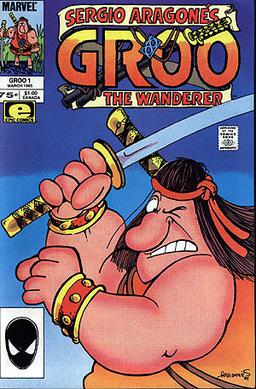
He achieved international recognition through regular contributions to MAD Magazine, where his marginal cartoons became a signature element of the magazine's visual identity. He also co-created the long-running comic-book series Groo the Wanderer with writer Mark Evanier, a parody of sword-and-sorcery stories featuring a well-meaning but disastrously ignorant barbarian.
Background and development
Aragonés was born in Spain and spent his formative years in Mexico. From those early experiences he developed a cross-cultural humor that translated well in many languages because it often relied on visual storytelling rather than words. He later worked extensively for English-language publications and built an international audience; for a concise introduction see a general biography.
Notable works and legacy
- Numerous marginal and spot cartoons for MAD Magazine, widely reproduced and anthologized.
- Groo the Wanderer, a humorous serial comic that mixed parody with detailed artwork.
Sergio Aragonés is widely admired for expanding the possibilities of visual gag comics and for demonstrating how minimal drawing can deliver maximal humor. His work remains a reference for cartoonists who study timing, composition and the craft of silent storytelling.
Related articles
Author
AlegsaOnline.com Sergio Aragonés: cartoonist, MAD contributor and creator of Groo Leandro Alegsa
URL: https://en.alegsaonline.com/art/89029