
Second Battle of Ypres (April–May 1915)
A major 1915 engagement in the First World War around Ypres, Belgium, notable for the first successful large-scale use of chlorine gas on the Western Front and its tactical and humanitarian consequences.
The Second Battle of Ypres was fought in spring 1915 during the First World War around the town of Ypres in western Belgium. It took place from late April into May and involved German forces attacking positions held by British, French and other Allied units. The battle is widely remembered as the first successful, large-scale deployment of chemical weapons on the Western Front, when German forces released clouds of chlorine gas to try to break the Allied line.
Image gallery
10 Images


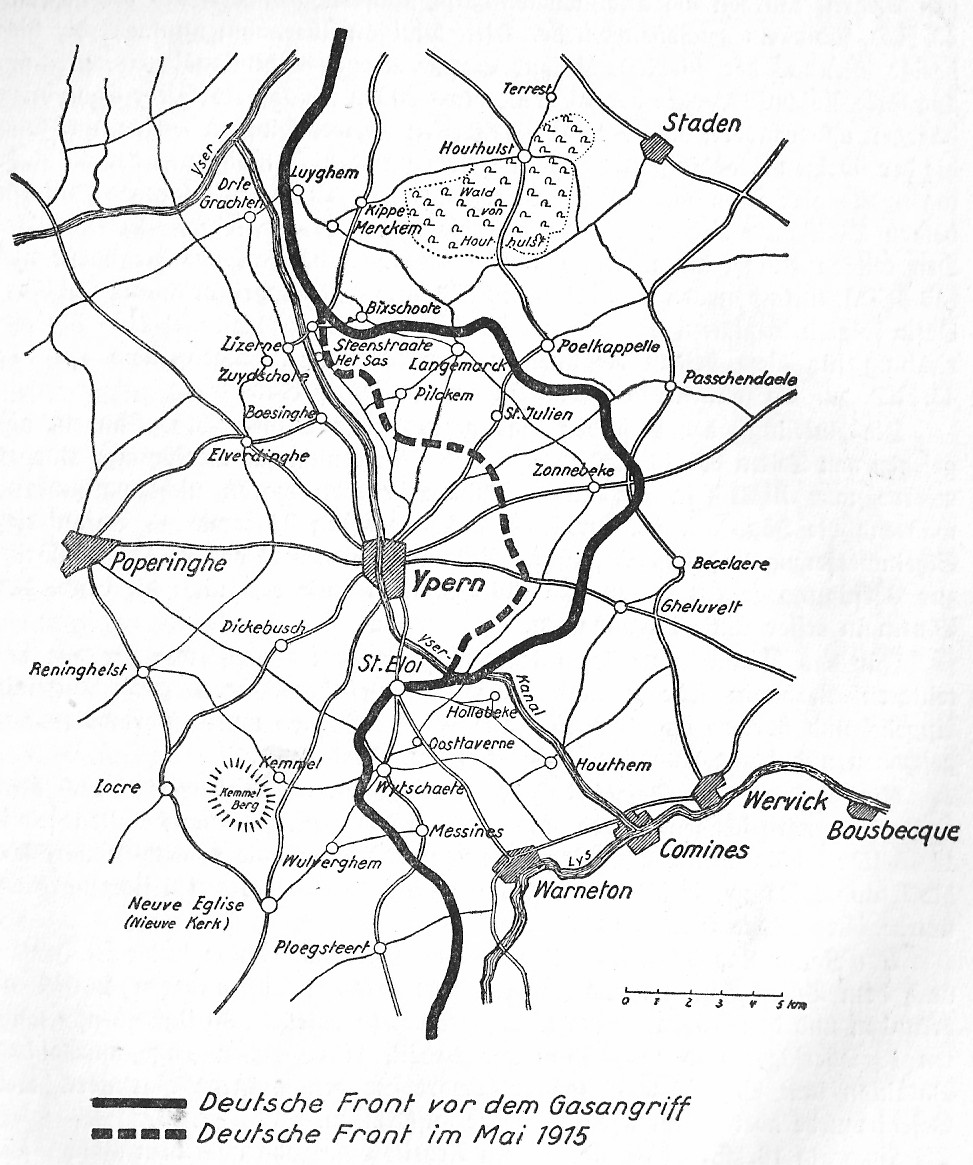


Course of the battle
On 22 April 1915 German troops initiated the attack by opening cylinders of chlorine gas, allowing the gas cloud to drift across Allied trenches. The release caused panic and heavy casualties among exposed troops and created a temporary gap in the front. German infantry exploited the local shock and gained ground on a portion of the Ypres salient. Over the following days and weeks both sides launched counterattacks, consolidated positions and dug in; fighting continued intermittently through May as artillery, infantry assaults and localized gas attacks maintained pressure on the line.
Forces, terrain and immediate effects
The battle involved units from the British Expeditionary Force, including Canadian divisions, French regular and colonial units, and Belgian defenders. The low ridges and undulating ground around Ypres shaped the fighting, allowing any small local gain to be tactically significant. The chlorine introduced a new physical and psychological hazard: soldiers exposed to the cloud suffered severe respiratory damage, and many units had little or no protective equipment. The attack produced many casualties and disrupted formations; contemporaries recorded that the use of gas inflicted thousands of casualties on both sides and forced rapid improvisation of protective measures and tactics thousands of casualties.
Consequences and legacy
Although German troops achieved some local advances, they did not capture Ypres or achieve a decisive breakthrough. The battle marked a turning point in modern warfare by demonstrating that industrialized armies could deploy chemical agents on a battlefield scale. In response, armies developed protective gear, improved medical treatments for gas injuries, and adapted doctrines for defense and decontamination. The incident also intensified ethical and legal debates about chemical weapons, contributing after the war to international restrictions against their use.
Notable aspects
- First successful large-scale use of chlorine gas by Germany in the field.
- Highlighted the vulnerability of entrenched troops and the need for protective equipment.
- Featured determined defensive actions, including notable stands by Canadian and other Allied units that helped stabilize the front.
The Second Battle of Ypres is therefore remembered both for its immediate tactical outcomes around the Ypres salient and for inaugurating a new and grim phase of warfare in which chemical agents became a persistent danger on the battlefield.
Related articles
Author
AlegsaOnline.com Second Battle of Ypres (April–May 1915) Leandro Alegsa
URL: https://en.alegsaonline.com/art/88407
Sources
- highbeam.com : Subscription required
- highbeam.com : Subscription required