
Schuyler County, Illinois: Overview, history, and community profile
A concise encyclopedia entry on Schuyler County, Illinois, covering its location, population (2010), county seat, economy, governance, and notable features.
Overview
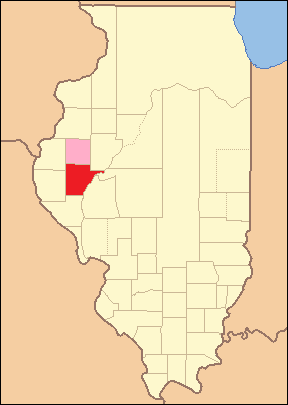
Schuyler County is an administrative county located in the U.S. state of Illinois. It is a predominantly rural jurisdiction within the state and forms part of the region of small towns and farming communities that contribute to Illinois's agricultural output. The county provides local services and government for residents across its townships and unincorporated areas.
Image gallery
5 Images



Population and center
According to the 2010 census, Schuyler County had a population of 7,544 people. The county's principal administrative community is its county seat: the town of Rushville. The role of the county seat is to house key offices such as the courthouse, county clerk, and other local institutions that support civic life.
Characteristics and land use
The county is characterized by small towns, agricultural land, and open countryside. Farming, small-scale manufacturing, retail services and public-sector employment are common economic activities. Infrastructure tends to be centered in the larger towns, while much of the county’s area is devoted to crops, pasture, and related rural uses.
History and name
Schuyler County takes its name from the Schuyler family, a prominent name in early American history; counties and places with the Schuyler name commonly honor Revolutionary War figures. Like many Midwestern counties, its development followed settlement, land surveys and the organization of local government as the surrounding region was settled during the 19th century.
Government and services
- Local government is administered by an elected county board and various county officials (sheriff, clerk, assessor, etc.).
- Public services include courts at the county seat, law enforcement, road maintenance, and public records.
- Education and health services are provided through a mix of local school districts, clinics and regional providers.
Notable facts and context
Schuyler County exemplifies many smaller rural counties in the American Midwest: lower population density, an economy tied to agriculture and local businesses, and a community life centered on small towns. Visitors and researchers seeking administrative or demographic records often start with Rushville and county offices. For general inquiries or summaries about the county’s statistics and civic structure, regional resources and state publications are useful starting points.
For more details or official resources, consult county publications and regional historical references. Additional authoritative sources can be found through state archives and local government pages.
Further information and records may be available via state and municipal repositories.
Related articles
Author
AlegsaOnline.com Schuyler County, Illinois: Overview, history, and community profile Leandro Alegsa
URL: https://en.alegsaonline.com/art/87975